
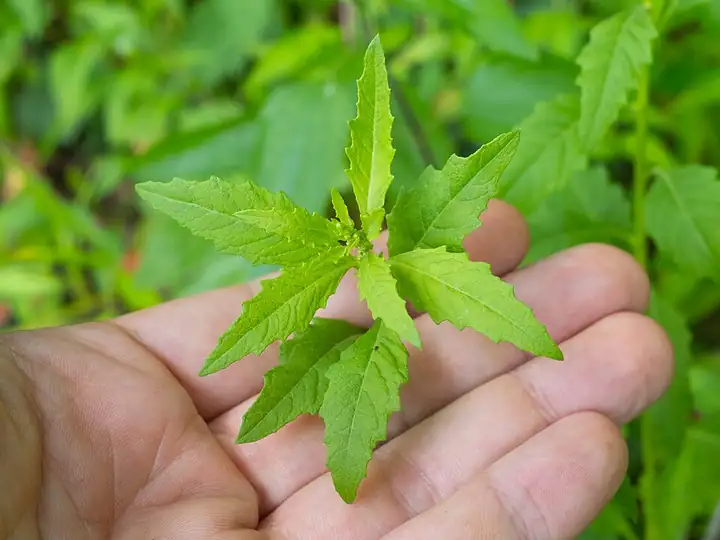
Epazote
Dysphania ambrosioides · Amaranth family (Amaranthaceae)
| Hardiness zones | 2 to 11 |
|---|---|
| Sun | full sun |
| Water | moderate |
| Life cycle | annual |
| Frost | Half-hardy: takes a light frost |
| Soil pH | 5.2–8.3 |
| Days to harvest | 50 days |
| Soil temperature to plant | at least 59°F |
About Epazote
Epazote is a strong-smelling, weedy herb from tropical America, 2 to 5 feet tall, that Mexican and Texas cooks add to pots of beans, quesadillas and soups (NC State, Texas A&M). Use the leaves only, and only a little: the seeds and the oil made from them are poisonous (NC State, UTEP). It is an annual or short-lived perennial that reseeds readily, so pinch off the flowers if you don't want it everywhere.
Grown as a warm-season annual; it can grow year-round where conditions allow (Prairie View A&M) and can stand a little frost (Texas A&M). It is naturalized across most of the U.S. but is not on any state noxious or invasive list we found.
When to plant
Timing is counted from your average last spring frost (and first fall frost). Sow & Tell works out the actual dates for your ZIP code.
Sow in late spring or early summer, or set out seedlings started indoors; seed needs light, so sow it very shallow (1/16 to 1/4 inch), and it sprouts in 7-21 days at about 59-95 F (Prairie View A&M). Plants are ready about 50 days after planting. Keep it away from other herbs: Texas A&M notes a compound in epazote can slow the growth of nearby plants.
Soil
Not fussy: moderately fertile, well-drained soil with a pH of about 5.2 to 8.3 is ideal, and it grows even in sandy or rocky ground (Prairie View A&M, NC State).
Any well-drained, moderately fertile soil works; pH about 5.2 to 8.3.
Feeding
- During the growing season, if growth is pale or slow: balanced fertilizer such as 10-10-10. Feed moderately as needed and keep young plants well watered until they are established.
Don't let it flower and drop seed unless you want it everywhere; pinch flower spikes and keep it apart from other herbs.
Harvest
Pick the larger leaves and leave the small ones to keep growing; pinch stem tips and flower spikes for more young leaves (Prairie View A&M).
Pick the larger leaves and leave the small ones to grow; pinching stem tips and flower spikes keeps young leaves coming.
Pests to watch for
Aphids, Flea beetles, Leafminers
Diseases and problems
Downy mildew
In the kitchen
A sprig or a few leaves go into beans (many Texas cooks say it cuts the gas), soups, quesadillas, tamales and tacos; NPS notes it is also cooked with tomatoes, onions, peppers and squash (Texas A&M, UTEP, NPS).
Keeping it: Use fresh leaves soon after picking; dried leaves keep in airtight jars.
Safety: Use only the leaves, in small cooking amounts. The seeds and seed oil are poisonous (ascaridole): large amounts of seed cause vomiting, convulsions and coma, and the old worm-medicine oil has killed children (NC State, UTEP, Texas A&M). Avoid epazote tea in pregnancy and breastfeeding and don't give it to young children (UTEP, NPS).
Pets: Not listed by the ASPCA (its 'Jerusalem Oak' entry is a related but different plant); NC State flags epazote as a poisoning risk for dogs, cats and horses.
Sources
Photo: Photo: Alex Abair, CC BY 4.0, via Wikimedia Commons (CC BY 4.0). Photo resized for the web.

Planting dates and advice are general guidance; check with your local Cooperative Extension office for your area.