
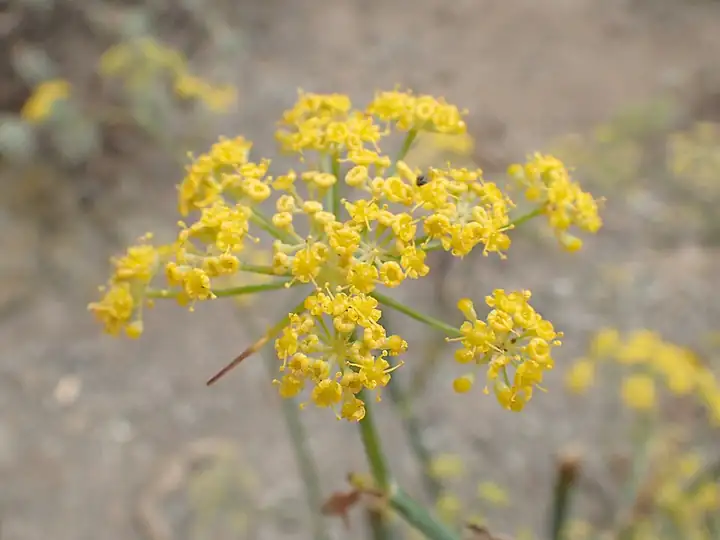
Fennel
Foeniculum vulgare (herb fennel and Florence or bulb fennel) · Carrot family (Apiaceae)
| Hardiness zones | 4 to 9 |
|---|---|
| Sun | full sun |
| Water | moderate |
| Life cycle | perennial |
| Frost | Hardy: takes frost |
| Soil pH | 6.5–8.0 |
| Spacing | 8 to 12 inches |
| Days to harvest | 60 to 90 days |
| Soil temperature to plant | at least 50°F |
About Fennel
Fennel is grown two ways: herb fennel for its feathery anise-flavored leaves and seeds, and Florence fennel for its crisp bulb. It feeds swallowtail caterpillars, and it self-seeds so freely it can escape gardens.
NC State lists fennel as perennial in zones 4-9, though it is normally grown as an annual; Florence fennel is grown as a cool-season crop anywhere.
When to plant
Timing is counted from your average last spring frost (and first fall frost). Sow & Tell works out the actual dates for your ZIP code.
- Start seeds indoors: 4 to 6 weeks before the last frost
- Sow seeds outdoors: up to 2 weeks after the last frost
Days to harvest are for Florence fennel bulbs. Direct sowing is best: herb fennel has a taproot and transplants poorly, so sow 1/4 inch deep after frost (Illinois; Utah State), or start Florence fennel indoors 4-6 weeks before the frost-free date. Grow Florence fennel in spring or late summer, since summer heat makes it bolt (Utah State); Illinois suggests sowing it mid-June to July for a fall crop.
Soil
Deep, well-drained soil with organic matter, kept evenly moist, especially for bulb fennel.
Follow a soil test and work any fertilizer it calls for into the top 6 inches; add no more than 1 inch of well-rotted compost per 100 sq ft. Fennel likes a pH of 6.5 to 8.
Feeding
- when the bulbs start to form: nitrogen fertilizer such as 21-0-0. Side-dress with about 3 Tbsp per 10 ft of row and water it in.
Fennel needs moderate nitrogen but little phosphorus or potassium. Keep Florence fennel evenly moist so the bulb forms well.
Harvest
Cut leaves as needed at any stage. Harvest bulbs while firm and under 4 inches across, about tennis-ball size, and cut seed heads once they turn brown (Utah State; Illinois).
Leaves can be cut at any stage for seasoning, and seed heads are cut when they turn brown. Florence (bulb) fennel is different: each bulb is cut once when it is firm and under 4 inches across.
Varieties (11)
Extension sources document 11 fennel types and cultivars, mostly with one-line descriptions and no days to maturity. Tusco, Conero and Tiber are older (1983) commercial releases listed in NC State's cultivar descriptions.
| Variety | Type | Days | Notes |
|---|---|---|---|
| Cantino | Florence (bulb) fennel | Very slow to bolt, so it suits early planting. | |
| Conero | Florence (bulb) fennel | Open-pollinated and widely adapted. | |
| Florence fennel | Florence (bulb) fennel | Thick, sweet bulb at the stem base, eaten raw or roasted. Grown for the swollen leaf base rather than the leaves. | |
| Mantavo | Florence (bulb) fennel | Slow to bolt with good yields. | |
| Rhondo | Florence (bulb) fennel | Uniform, round bulbs that mature quickly. | |
| Tiber | Florence (bulb) fennel | Open-pollinated; tolerates low temperatures. | |
| Tusco | Florence (bulb) fennel | Open-pollinated, uniform, with no side shoots. | |
| Victoria | Florence (bulb) fennel | Vigorous, with better resistance to bolting. | |
| Bronze fennel (Purpureum) | Herb (leaf) fennel | Purple-bronze, feathery leaves; often grown as an ornamental. | |
| Rubrum | Herb (leaf) fennel | Deep bronze to reddish leaves; used as an ornamental. | |
| Sweet fennel | Herb (leaf) fennel | Anise-flavored leaves and seeds. The standard type for fresh and dried leaves and for seed. |
Pests to watch for
Aphids, Thrips, Slugs
Diseases and problems
Root and crown rot
In the kitchen
Leaves season fish, soups and stews, seeds flavor sausage and tea, and bulbs are eaten raw in salads or cooked.
Keeping it: Florence fennel bulbs keep several weeks in a cool place. Store dried seeds in a moisture-proof container.
Safety: The European Medicines Agency does not recommend medicinal fennel for children under 4 or during pregnancy or breastfeeding, and it should not be used by anyone allergic to fennel. Food amounts are a different matter.
Pets: Not listed as toxic by the ASPCA
Sources
- plants.ces.ncsu.edu
- extension.usu.edu
- extension.illinois.edu
- hgic.clemson.edu
- extension.umn.edu
- ema.europa.eu
- aspca.org
Photo: Photo: Krzysztof Ziarnek, Kenraiz, CC BY-SA 4.0, via Wikimedia Commons (CC BY-SA 4.0). Photo resized for the web.

Planting dates and advice are general guidance; check with your local Cooperative Extension office for your area.