
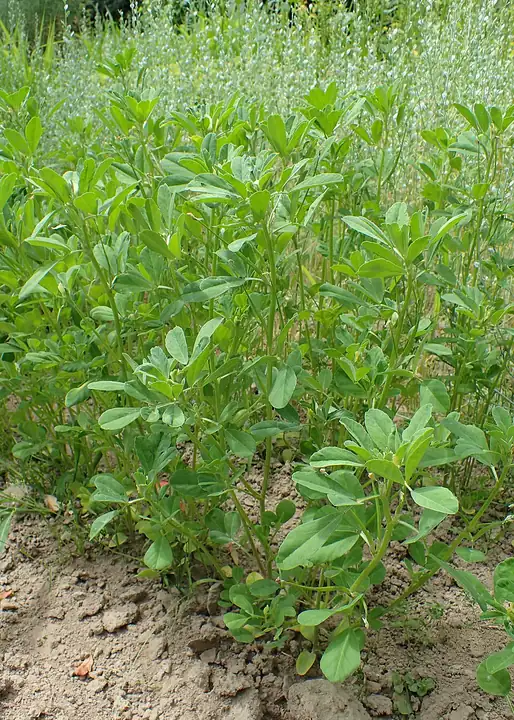
Fenugreek
Trigonella foenum-graecum · Pea family (Fabaceae)
| Hardiness zones | 2 to 11 |
|---|---|
| Sun | full sun |
| Water | low |
| Life cycle | annual |
| Frost | Half-hardy: takes a light frost |
About Fenugreek
Fenugreek is a fast, clover-like annual in the pea family. Its slightly bitter leaves are cooked as greens, and its small, hard seeds smell like maple syrup and season curries. As a legume, it also adds nitrogen to the soil.
Grown as an annual; NC State lists zones 5-9. UC Master Gardeners treat it as a cool-season herb that goes to seed as spring warms up.
When to plant
Timing is counted from your average last spring frost (and first fall frost). Sow & Tell works out the actual dates for your ZIP code.
Sow seed where it will grow; in California, UC gardeners sow it in late summer for a cool-season crop. Seeds ripen best in warm, dry weather between about 45 and 80 F.
Soil
Well-drained loam; it does poorly in wet soil, so don't overwater (NC State, UC ANR).
Use well-amended, well-drained soil; as a legume it adds its own nitrogen.
Feeding
Overwatering and wet soil; fenugreek does poorly when its roots stay soggy.
Harvest
Pick leaves and young shoots for greens while plants are young. For seed, let plants regrow and flower; the thin pods, up to 4 inches long, hold 10 to 20 seeds each.
Pick leaves and young shoots for greens, then let the plant regrow and flower if you also want seed.
Diseases and problems
Charcoal rot
In the kitchen
Cook the leaves as greens or dry them for spice blends, and use the roasted or raw seeds, ground, in curries and as a maple-like flavoring.
Safety: Food amounts are believed safe, but larger amounts are not safe in pregnancy and have been linked to birth defects; large doses can drop blood sugar too far, and it can cause serious allergic reactions (NCCIH). It may raise bleeding risk with warfarin and serotonin syndrome risk with SSRI antidepressants (MSKCC).
Pets: Not listed by the ASPCA
Sources
Photo: Photo: Krzysztof Ziarnek, Kenraiz / Wikimedia Commons, CC BY-SA 4.0 (CC BY-SA 4.0). Photo resized for the web.

Planting dates and advice are general guidance; check with your local Cooperative Extension office for your area.