
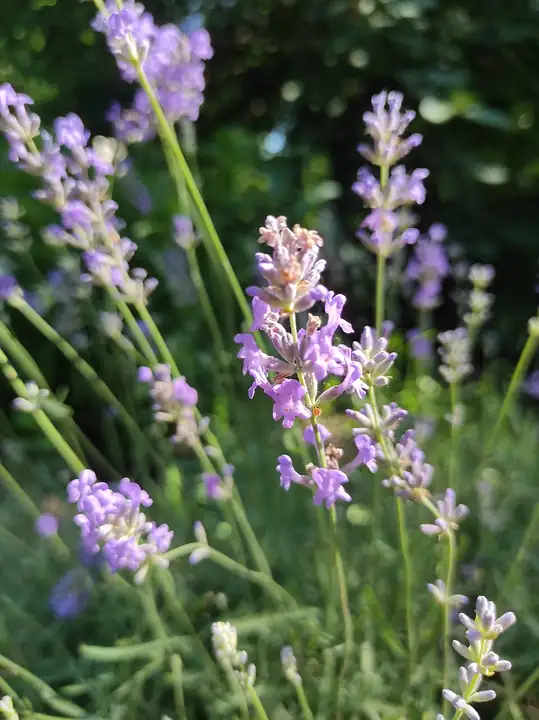
Lavender (English)
Lavandula angustifolia · Mint family (Lamiaceae)
| Hardiness zones | 5 to 9 |
|---|---|
| Sun | full sun |
| Water | low |
| Life cycle | perennial |
| Frost | Hardy: takes frost |
| Soil pH | 6.5–7.5 |
| Spacing | 18 to 24 inches |
| Soil temperature to plant | at least 60°F |
About Lavender (English)
English lavender is a compact, fragrant perennial grown for its purple flower spikes, which are dried for sachets and used in cooking. It is the hardiest common lavender, but it needs sharp drainage and dies out in wet, heavy clay.
English lavender is hardy in zones 5-9 (NC State); French and Spanish lavenders are not cold hardy and are grown as annuals in cold areas (Colorado State).
When to plant
Timing is counted from your average last spring frost (and first fall frost). Sow & Tell works out the actual dates for your ZIP code.
- Set out plants: up to 2 weeks after the last frost
Set out plants after the last spring frost; fall planting also works if plants get about two months to settle in before winter, and Colorado State found fall-planted lavender survived better. Seed sprouts in 14-21 days at about 70 F.
Soil
Perfectly drained sandy or gravelly soil on the dry side; it does not like wet feet and will die out in heavy clay.
Plant in full sun in very well-drained soil with a pH of about 6.5 to 7.5; work 1 inch of coarse compost 4-8 inches deep to help drainage.
Feeding
- once a year from the second year on: compost or a slow-release fertilizer. Spread about 1 inch of compost under the plants, or give one application of slow-release fertilizer at about 1 Tbsp per plant.
Too much fertilizer gives more leaves but fewer flowers, and makes plants more prone to disease and winter injury.
Harvest
Cut flower stems in the morning when the first flowers on the spike, up to about half of them, have opened. Shear plants back after flowering each year.
Cut flower stems once each year when the first flowers on the spikes open, in the morning after the dew dries. Shear plants back by about half after flowering to keep them bushy and productive for next year.
Varieties (45)
| Variety | Type | Days | Notes |
|---|---|---|---|
| Big Time Blue | English lavender | Large, plentiful flowers on silvery green plants 18 to 20 inches tall. | |
| Buena Vista | English lavender | ||
| Edgerton Blue | English lavender | Rich purple flowers that dry blue. | |
| Folgate | English lavender | Compact plant with classic lavender-blue flowers. | |
| Hidcote | English lavender | Compact, mounded plant to about 20 inches with dark flowers. | |
| Hidcote Pink | English lavender | ||
| Irene Doyle | English lavender | Very fragrant. Lavender-blue flowers; notable for blooming twice a season. | |
| Jean Davis | English lavender | Pink-flowered English lavender. | |
| Lady | English lavender | Grows quickly from seed and blooms the first year. | |
| Loddon Pink | English lavender | Pink-flowered English lavender. | |
| Maillette | English lavender | English lavender with lavender-blue flowers. | |
| Melissa | English lavender | Very pale pink, nearly white flowers; originated in Oregon. | |
| Mitcham Gray | English lavender | English lavender with dark flowers; smaller than lavandins. | |
| Munstead | English lavender | English lavender with dark flowers. | |
| Nana Alba | English lavender | Dwarf English lavender with white flowers. | |
| New Zealand Blue | English lavender | Often used for cooking. Light purple flower spikes. | |
| Pacific Blue | English lavender | Bright purple flowers that dry blue. | |
| Rosea | English lavender | Pink-flowered English lavender. | |
| Royal Purple | English lavender | English lavender with dark flowers. | |
| Royal Velvet | English lavender | ||
| SuperBlue | English lavender | English lavender known for dependable winter survival. | |
| Sweet Romance | English lavender | Silvery-green foliage and blue-purple flowers on plants 12 to 18 inches tall. | |
| Twickel Purple | English lavender | English lavender with dark flowers. | |
| Vera | English lavender | ||
| English lavender | English lavender (Lavandula angustifolia) | The type most often used in cooking. The hardiest common lavender, 1-2 feet tall, with blue-violet (sometimes pink or white) flower spikes. | |
| French lavender | French (fringed) lavender (Lavandula dentata) | Up to 3 feet with toothed leaves and dark purple spikes. | |
| Dutch | Lavandin | Heat-tolerant lavandin. | |
| Edelweiss | Lavandin | Nearly white flowers over gray-green leaves. | |
| Grosso | Lavandin | Long, light purple flower spikes with the strongest fragrance; grown for oil and cut flowers. | |
| Hidcote Giant | Lavandin | Bright violet flower spikes. | |
| Impress Purple | Lavandin | Dark purple flower spikes. | |
| Phenomenal | Lavandin | Bushy, compact plant with bright violet-blue spikes. | |
| Provence | Lavandin | Long, light purple flower spikes. | |
| Seal | Lavandin | Violet-blue flower spikes. | |
| Abrialii | Lavandin (Lavandula x intermedia) | ||
| Grappenhall | Lavandin (Lavandula x intermedia) | ||
| Lavandin | Lavandin (Lavandula x intermedia) | Bigger plant, 2-3 feet, with long-stemmed flower spikes and more essential oil than English lavender. | |
| Super | Lavandin (Lavandula x intermedia) | Long-stemmed, light purple flowers. | |
| White Grosso | Lavandin (Lavandula x intermedia) | Tall lavandin with white flowers. | |
| Sweet lavender | Lavandula heterophylla | Up to 4 feet with toothed gray-green leaves; good in containers. | |
| Anouk | Spanish lavender | 1-2 feet tall with dark plum flower heads and violet-blue bracts; reblooms. | |
| Bandera Deep Rose | Spanish lavender | Compact, 6-9 inches tall. | |
| Kew Red | Spanish lavender | Two-toned flowers. | |
| Castilliano Lilac | Spanish lavender (Lavandula stoechas) | Very uniform, vigorous plants 12 to 14 inches tall. | |
| Spanish lavender | Spanish lavender (Lavandula stoechas) | Dark purple flower heads topped with petal-like 'rabbit ear' bracts; 2-3 feet tall. |
Pests to watch for
Grasshoppers, Four-lined plant bug
Diseases and problems
Phytophthora root rot, Alfalfa mosaic
In the kitchen
Flowers and leaves are edible and are used in jellies, vinegars and baking.
Keeping it: Stand fresh stems in water for a few days. Dried buds keep their scent best in a sealed jar away from light and heat, for about a year.
Safety: Lavender on the skin can cause allergic reactions, and a few cases of breast swelling have been reported in children who used lavender skin products. Oral products may cause diarrhea, headache or nausea; little is known about safety in pregnancy, and it might add to the effect of sedative drugs (NCCIH).
Pets: Toxic to dogs, cats and horses (ASPCA): linalool and linalyl acetate can cause nausea, vomiting (not in horses) and loss of appetite
Sources
- plants.ces.ncsu.edu
- extension.usu.edu
- extension.colostate.edu
- extension.umn.edu
- nccih.nih.gov
- aspca.org
- newcropsorganics.ces.ncsu.edu
Photo: Photo: Валерія Матвєєва, CC0, via Wikimedia Commons (CC0). Photo resized for the web.

Planting dates and advice are general guidance; check with your local Cooperative Extension office for your area.