
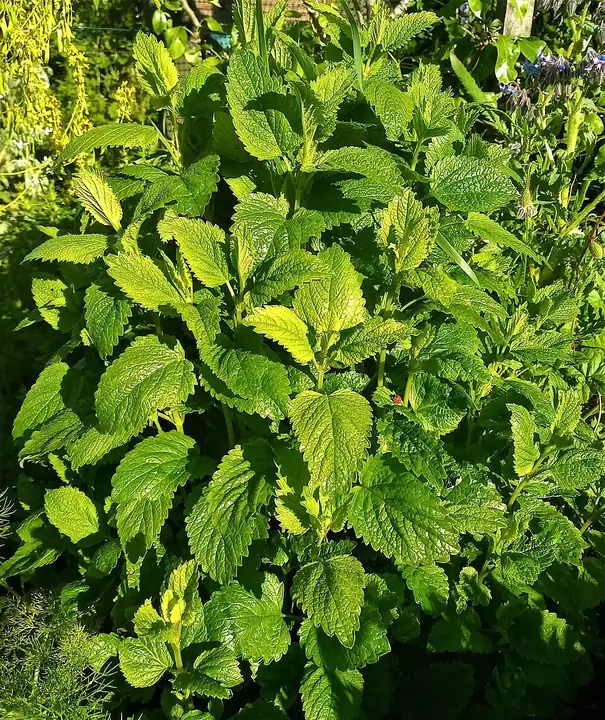
Lemon balm
Melissa officinalis · Mint family (Lamiaceae)
| Hardiness zones | 3 to 7 |
|---|---|
| Sun | full sun to part shade |
| Water | moderate |
| Life cycle | perennial |
| Frost | Hardy: takes frost |
| Soil pH | 6.0–7.5 |
| Spacing | 12 to 36 inches |
About Lemon balm
Lemon balm is a leafy, lemon-scented perennial in the mint family, grown for tea and flavoring. It self-seeds and spreads by roots, so it can get weedy if not cut back.
NC State lists lemon balm as hardy in zones 3-7.
When to plant
Timing is counted from your average last spring frost (and first fall frost). Sow & Tell works out the actual dates for your ZIP code.
Start from seed, division or root cuttings. Cut it back to limit self-seeding, since it spreads aggressively.
Soil
Adapts to clay, loam, sandy or rocky soil.
Plant in sun to part shade in moist, well-drained, fertile soil; like most herbs it does best at a pH of 6.0 to 7.5. Base fertilizer and lime on a soil test.
Feeding
- once during the growing season, only if the soil is poor or plants look pale: complete fertilizer such as 5-10-5. Scatter about 3 oz per 10 ft of row beside the plants and water it in; potted plants outdoors can get half-strength liquid fertilizer every 3-4 weeks.
Rich soil or heavy feeding gives fast, lush growth with less essential oil, so leaves have weaker flavor and scent.
Harvest
Pick young leaves, which have more flavor than older ones, and use them fresh or dried.
It can be cut several times a season, though the first cutting is considered the best; perennial herbs can be cut back by about half their height.
Varieties (9)
Extension sources document 8 lemon balm cultivars plus the species. 'Citronella' was not found in an acceptable source and is left out.
| Variety | Type | Days | Notes |
|---|---|---|---|
| All Gold | Lemon balm | Yellow leaves that color best in part shade. | |
| Compacta | Lemon balm | Compact form with sterile flowers that do not set seed, so it self-sows less. | |
| Lemona | Lemon balm | Seed-grown type developed for commercial leaf and essential oil production. | |
| Lime | Lemon balm | Lime scent instead of lemon. 1-2 feet tall; grown from cuttings. | |
| Mandarina | Lemon balm | Mandarin orange scent. | |
| Quedlinburger Niederliegende | Lemon balm | Seed-grown German selection that stays low its first year, then grows more upright. | |
| Lemon balm | Lemon balm (Melissa officinalis) | Strong, sweet lemon scent. Leafy perennial 1.5-2 feet tall with crinkled, heart-shaped bright green leaves and small white flowers. | |
| Aurea | Lemon balm (variegated) | Dark green leaves splashed with yellow along the edges; brightest in spring and fall. | |
| Variegata | Lemon balm (variegated) | Dark green leaves with golden-yellow margins that fade in summer heat and once the plant flowers. |
Pests to watch for
Four-lined plant bug
In the kitchen
Leaves and flowers are used in tea and to flavor soups and stews.
Keeping it: Keep sprigs in a glass of water or wrapped in the fridge and use within a few days. Fresh leaves have more flavor than dried.
Safety: No side effects had been reported when the European Medicines Agency reviewed it. The agency limits medicinal use to people over 12 and advises seeing a doctor if symptoms last more than two weeks.
Pets: Not listed as toxic by the ASPCA
Sources
- plants.ces.ncsu.edu
- extension.umn.edu
- ema.europa.eu
- pubmed.ncbi.nlm.nih.gov
- aspca.org
- aspca.org
- aspca.org
- hort.extension.wisc.edu
- extension.illinois.edu
- hgic.clemson.edu
Photo: Photo: Amitchell125, CC BY-SA 4.0, via Wikimedia Commons (CC BY-SA 4.0). Photo resized for the web.

Planting dates and advice are general guidance; check with your local Cooperative Extension office for your area.