
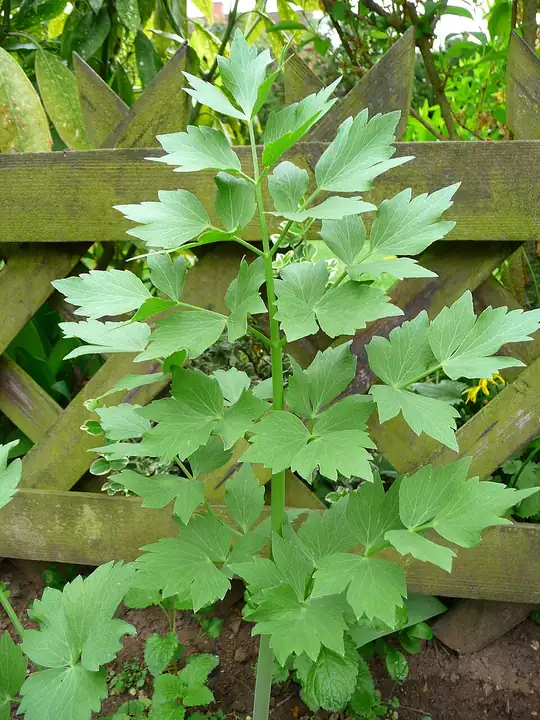
Lovage
Levisticum officinale · Carrot family (Apiaceae)
| Hardiness zones | 4 to 9 |
|---|---|
| Sun | full sun to part shade |
| Water | moderate |
| Life cycle | perennial |
| Frost | Hardy: takes frost |
| Spacing | 30 inches |
About Lovage
Lovage is a big, hardy perennial herb, often 4 to 6 feet tall, with glossy leaves that taste like a stronger, sweeter celery. One plant gives plenty of leaves, stems and seeds for soups and stews for years. It can spread by seed: NC State notes it has escaped gardens in New England, so cut seed heads if you don't want volunteers.
NC State lists zones 4-9; it is grown in the Mountains and Piedmont of North Carolina, and Florida gardeners sow it from fall through spring.
When to plant
Timing is counted from your average last spring frost (and first fall frost). Sow & Tell works out the actual dates for your ZIP code.
Start from fresh seed in late summer or fall, or plant divisions in spring or fall. Cover seed lightly and keep it moist until it sprouts; seed stays good only about 2 to 3 years. Give each plant about 30 inches.
Soil
Deep, rich, well-drained soil that stays fairly moist; light shade gives better-quality leaves (Illinois, NC State).
Give it deep, fairly rich, moist soil with about the fertility you'd use for most vegetables; work in about 4 inches of compost and follow a soil test.
Feeding
Don't let every seed head ripen and drop, or volunteers spread; cut old foliage back in late fall.
Harvest
Pick leaves and young stems whenever you need them; young leaves are the most tender, and cutting through the season brings fresh growth. Cut seed heads as they start to turn brown, and dig roots in late fall or early spring, usually after the second or third year.
Pick leaves and young stems whenever you need them from spring to fall; trimming through the season brings fresh, tender growth. Seeds come in fall, and roots can be dug after the second or third year.
Pests to watch for
Tarnished plant bug, Leafminers
Diseases and problems
Early blight, Late blight, Leaf spots
In the kitchen
Leaves and stems give a strong celery flavor to soups, stews, salads, gravy and chicken; stems can be blanched or candied, roots cooked as a vegetable, and the seeds used in breads.
Keeping it: Wash dug roots and keep them cool until you use them; store dried seeds in sealed containers.
Safety: NC State rates lovage low in toxicity to people; its oils can make you urinate more. For lovage root taken as a medicine, the European Medicines Agency advises against use in pregnancy, while breastfeeding, under age 18, or for anyone allergic to carrot-family plants.
Pets: Toxic to dogs, cats and horses (ASPCA): its volatile oils act as a diuretic and cause increased urination.
Sources
- plants.ces.ncsu.edu
- extension.illinois.edu
- extension.umd.edu
- edis.ifas.ufl.edu
- extension.missouri.edu
- class.ucanr.edu
- ema.europa.eu
- aspca.org
- portal.ct.gov
- maine.gov
Photo: Photo: 4028mdk09 / Wikimedia Commons, CC BY-SA 3.0 (CC BY-SA 3.0). Photo resized for the web.

Planting dates and advice are general guidance; check with your local Cooperative Extension office for your area.