
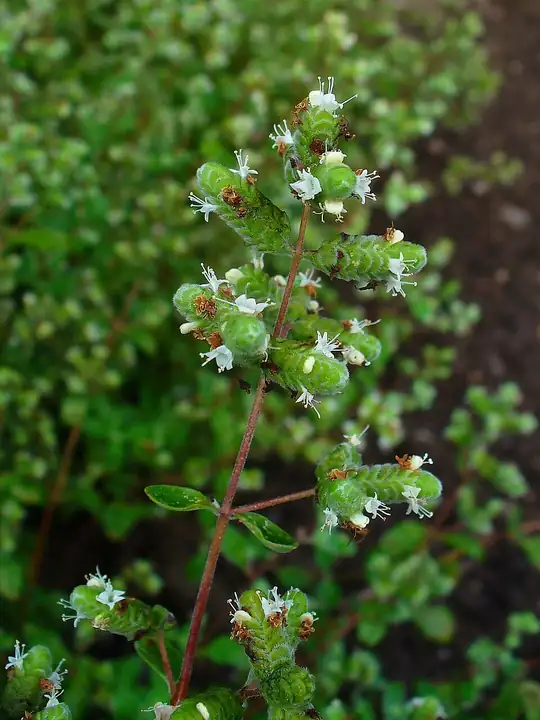
Sweet marjoram
Origanum majorana · Mint family (Lamiaceae)
| Hardiness zones | 9 to 10 |
|---|---|
| Sun | full sun |
| Water | low |
| Life cycle | tender perennial (grown as an annual) |
| Frost | Tender: killed by frost |
| Soil pH | 6.0–8.0 |
| Spacing | 12 to 36 inches |
About Sweet marjoram
Sweet marjoram is a low, bushy relative of oregano with a milder, sweeter flavor. It loves heat and tolerates dry soil once established, and in most of the country it is grown as an annual.
Survives winter only in about zones 9-10 (NC State); elsewhere grow it as a summer annual or dig it up before frost and bring it indoors (Illinois).
When to plant
Timing is counted from your average last spring frost (and first fall frost). Sow & Tell works out the actual dates for your ZIP code.
- Start seeds indoors: 6 to 8 weeks before the last frost
Start seed indoors 6-8 weeks before the last spring frost (NC State; Clemson); soaking seed overnight helps germination (Illinois). Pinch plants at 6-8 inches tall to make them bushy (Illinois).
Soil
Well-drained, even rocky or sandy soil; it rots in soggy soil.
Plant in full sun in average, well-drained or sandy loam soil; like most herbs it does best at a pH of 6.0 to 7.5. Base fertilizer on a soil test.
Feeding
- once during the growing season, only if the soil is poor or plants look pale: complete fertilizer such as 5-10-5. Scatter about 3 oz per 10 ft of row beside the plants and water it in; potted plants outdoors can get half-strength liquid fertilizer every 3-4 weeks.
Rich soil or heavy feeding gives fast, lush growth with less essential oil, so leaves have weaker flavor and scent.
Harvest
Harvest leaves before the flowers open, when ball-like buds appear at the stem tips; once plants bloom, cut them back close to the ground for a new flush (Illinois; NC State).
Harvest when ball-like buds appear at the stem tips. Once it starts to bloom, cut plants back close to the ground; the second flush of growth is often better than the first.
Varieties (3)
Extension sources describe sweet marjoram and name only two selections; no days to maturity were found.
| Variety | Type | Days | Notes |
|---|---|---|---|
| Variegated marjoram | Marjoram | Low-growing, with yellow-green variegated leaves; useful as an ornamental. | |
| Compactum | Sweet marjoram | A named compact selection listed by NC State. | |
| Sweet marjoram | Sweet marjoram (Origanum majorana) | Sweeter and milder than oregano. A very tender perennial usually grown as an annual. |
Pests to watch for
Four-lined plant bug
Diseases and problems
Root and crown rot
In the kitchen
Used in soups, egg dishes, beef, chicken, sausage, cheese and tomato dishes.
Keeping it: Stand fresh sprigs in a glass with an inch of water in the fridge, loosely covered, and change the water daily; use within about a week or freeze them. Dried leaves keep best airtight in a cool, dark cupboard.
Pets: Toxic to dogs and cats (ASPCA): can cause vomiting and diarrhea
Sources
Photo: Photo: H. Zell, CC BY-SA 3.0, via Wikimedia Commons (CC BY-SA 3.0). Photo resized for the web.

Planting dates and advice are general guidance; check with your local Cooperative Extension office for your area.