
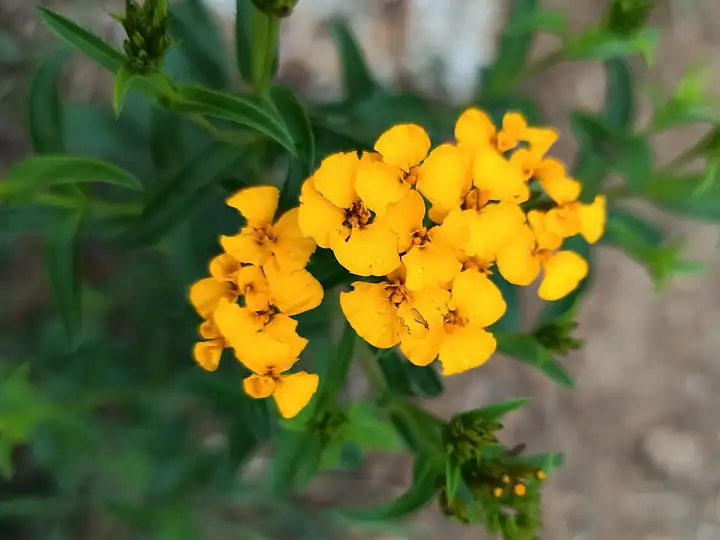
Mexican mint marigold (Texas tarragon)
Tagetes lucida · Daisy family (Asteraceae)
| Hardiness zones | 8 to 11 |
|---|---|
| Sun | full sun |
| Water | low |
| Life cycle | perennial |
| Frost | Tender: killed by frost |
| Spacing | 12 to 18 inches |
About Mexican mint marigold (Texas tarragon)
Mexican mint marigold is a bushy marigold with shiny, toothed leaves that taste of anise and licorice. Its leaves stand in for French tarragon, it shrugs off Texas heat, and it covers itself in small golden flowers in late summer and fall. Texas A&M AgriLife named it a Texas Superstar plant in 2025.
Perennial in zones 8-11; it dies to the ground at the first freeze and regrows from the roots in spring. In colder zones grow it as an annual or in a pot brought indoors (NC State; Texas A&M AgriLife; Dallas County Master Gardeners).
When to plant
Timing is counted from your average last spring frost (and first fall frost). Sow & Tell works out the actual dates for your ZIP code.
Sow seed in spring after the last frost, covering it lightly and keeping it moist, or set out container plants from early spring through fall (Texas A&M AgriLife; Dallas County Master Gardeners). It also roots from 4-6 inch cuttings taken in late spring or early summer.
Soil
Any well-drained soil, from sand to clay, including poor soil; good drainage matters most because wet roots rot (NC State; Texas A&M AgriLife).
Loosen the soil about 12 inches deep and mix in compost; drainage matters more than richness.
Feeding
- early spring, as new growth starts: balanced fertilizer such as 10-10-10. One light feeding is enough, and it is often unnecessary in rich soil; follow the label.
- midsummer, only in long growing seasons: balanced fertilizer such as 10-10-10. An optional second light feeding; water it in.
Overwatering or a poorly drained spot causes root rot, its main problem.
Harvest
Snip leaves and stem tips through the growing season; use them fresh or dry them (NC State). Deadheading the flowers keeps it blooming longer.
Snip leaves through the season; it dies to the ground at the first freeze and regrows from the roots in spring in zones 8-11.
Good neighbors
NC State suggests planting it with tomatoes in the vegetable garden; that is a design pairing, not a tested pest benefit.
Pests to watch for
Aphids, Twospotted spider mite, Slugs, Brown garden snail
Diseases and problems
Root rot, Botrytis, Powdery mildew, Rust
In the kitchen
Use the leaves fresh or dried as a tarragon stand-in with fish, chicken, salads, soups and sauces (Texas A&M AgriLife; NC State).
Keeping it: Use leaves fresh, or dry them for winter; fresh herbs keep only a few days in the refrigerator.
Safety: NC State rates it low in toxicity but says large amounts can be harmful. The sap can cause a sunlight-triggered skin rash with redness and blisters, and the scent can irritate eyes and nose; wear gloves when cutting it back.
Pets: Not listed by the ASPCA. (The ASPCA's 'tarragon' entry is French tarragon, Artemisia dracunculus, a different plant.)
Sources
- agrilifetoday.tamu.edu
- plants.ces.ncsu.edu
- dallascountymastergardeners.org
- aspca.org
- aspca.org
- aspca.org
- aspca.org
- aspca.org
- aspca.org
- aspca.org
- aspca.org
- aspca.org
Photo: Photo: Juan Carlos Fonseca Mata, CC BY-SA 4.0, via Wikimedia Commons (CC BY-SA 4.0). Photo resized for the web.

Planting dates and advice are general guidance; check with your local Cooperative Extension office for your area.