
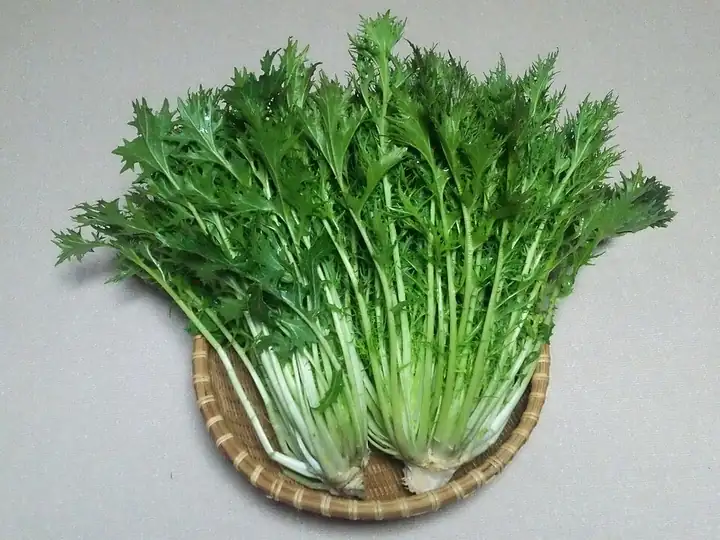
Mizuna
Brassica rapa var. japonica (var. nipposinica) · Cabbage family (Brassicaceae)
| Hardiness zones | 2 to 11 |
|---|---|
| Sun | full sun to part shade |
| Water | moderate |
| Life cycle | annual |
| Frost | Half-hardy: takes a light frost |
| Spacing | 5 to 10 inches |
| Days to harvest | 40 to 50 days |
| Soil temperature to plant | at least 40°F |
About Mizuna
Mizuna is a Japanese mustard green with feathery, deeply cut leaves and a mild, peppery taste. It is easy, fast and very slow to bolt, and it regrows after cutting, so it is a favorite in salad mixes. It is a cousin of bok choy and napa cabbage.
Grown as a cool-season annual in every zone, in spring and fall; it is very cold tolerant. It is the same species as field mustard, which the California Invasive Plant Council rates Limited (advisory).
When to plant
Timing is counted from your average last spring frost (and first fall frost). Sow & Tell works out the actual dates for your ZIP code.
Days count from seeding; baby leaves are ready in about a month. Sow in early spring or late summer for fall; seed sprouts in soil as cool as 40F (best 55 to 75F). Space 4 to 6 inches for baby leaves and up to 16 inches for full-size plants.
Soil
Well-drained soil rich in organic matter; water when rain is short.
Choose well-drained soil rich in organic matter; work in compost before sowing.
Feeding
Dry soil and hot spells push it to flower; keep it watered and pick often.
Harvest
Cut baby leaves at 3 to 4 inches, or cut the whole plant about 2 inches above the soil and let it regrow. Picking often also delays flowering.
Cut about 2 inches above the soil and it regrows; picking a few outer leaves at a time gives up to five pickings before it flowers.
Varieties (8)
Extension sources name only a handful of mizuna varieties; many seed packets just say 'Mizuna'.
| Variety | Type | Days | Notes |
|---|---|---|---|
| Early | Green | Light green stems and darker green leaves. | |
| Kyona | Green | 40 days | Listed as Kyona Mizuna on Kansas State's Asian greens list. |
| Kyoto | Green | Described by the RHS as very hardy. | |
| Summer | Green | Light green stems and darker green leaves. | |
| Tokyo | Green | Listed for Wisconsin home gardens. | |
| Japanese Red Mustard | Purple-leaved | Green stems with dark purple leaves. | |
| Beni Houshi | Purple-stemmed | Purple stems with green leaves. | |
| Japanese Pink | Purple-stemmed | Purple stems with green leaves. |
Pests to watch for
Flea beetles, Slugs, Brown garden snail, Imported cabbageworm
In the kitchen
Young leaves raw in salads; older leaves sauteed with garlic or onion, stir-fried, or added to soups and stews.
Keeping it: Wash, bag and refrigerate; it keeps for more than a week.
Safety: If you take the blood thinner warfarin, keep the amount of leafy greens you eat about the same from day to day, because they are rich in vitamin K (NIH Office of Dietary Supplements).
Pets: Not listed by the ASPCA
Sources
- extension.psu.edu
- rhs.org.uk
- rhs.org.uk
- agrilifeextension.tamu.edu
- ask.ifas.ufl.edu
- extension.oregonstate.edu
- rvpadmin.cce.cornell.edu
- cal-ipc.org
- ods.od.nih.gov
- aspca.org
- aspca.org
Photo: Photo: Uo3rt / Wikimedia Commons, CC BY-SA 4.0 (CC BY-SA 4.0). Photo resized for the web.

Planting dates and advice are general guidance; check with your local Cooperative Extension office for your area.