
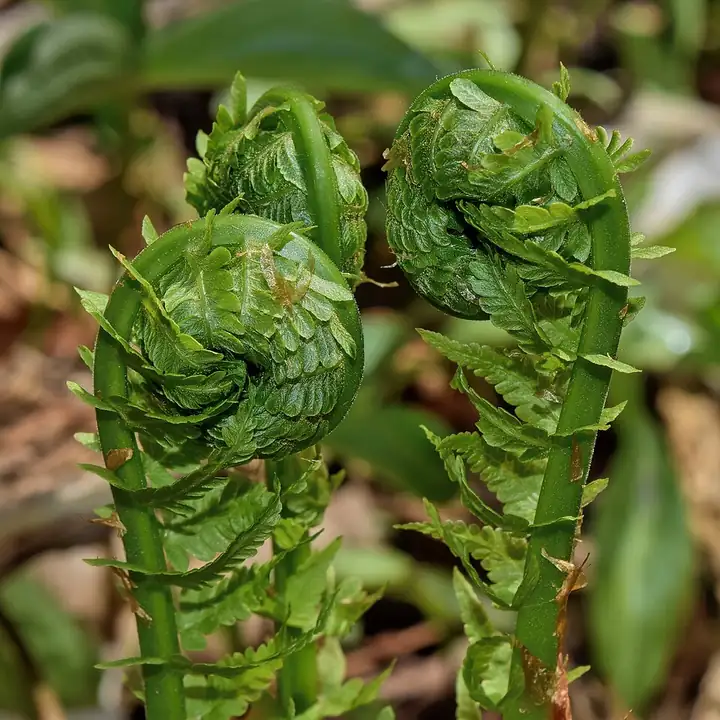
Ostrich fern (fiddleheads)
Matteuccia struthiopteris · Sensitive fern family (Onocleaceae)
| Hardiness zones | 3 to 8 |
|---|---|
| Sun | part shade |
| Water | high |
| Life cycle | perennial |
| Frost | Hardy: takes frost |
| Soil pH | 5.5–6.5 |
| Spacing | 20 inches |
About Ostrich fern (fiddleheads)
Ostrich fern is a tall native fern of cool, moist woods and stream banks, grown here for its tightly coiled spring shoots, called fiddleheads, which taste a bit like asparagus. Once settled, a patch spreads by underground runners and comes back every spring for years. The same plant is covered as a landscape fern in the Garden ferns record; this record is about growing and eating the fiddleheads.
NC State lists zones 3-8 and Penn State 3-7; it does best where summers are cool, and needs deep shade in warmer areas. It spreads fast by runners and can crowd out other plants in a small bed.
When to plant
Timing is counted from your average last spring frost (and first fall frost). Sow & Tell works out the actual dates for your ZIP code.
Plant dormant crowns or divisions in early spring before the fiddleheads come up, or in fall after the first frost, with soil just covering the top of the crown, about 20 inches apart (Newfoundland and Labrador guide). Harvest is counted in years: don't pick the first two springs, then pick lightly from the original crowns in the third.
Soil
Rich soil high in organic matter that stays evenly moist; it grows wild in heavy floodplain soil, but crowns can fail in soil that stays waterlogged.
Follow a soil test; aim for pH 5.5 to 6.5, and work in compost or peat moss (and sand in heavy clay) so the bed holds moisture but drains.
Feeding
- each spring before the fiddleheads come up: balanced fertilizer such as 10-10-10. The Newfoundland and Labrador guide uses about 1 to 1.4 lb per 100 sq ft, spread over the bed.
- each fall for the first 4 years, then every 2 to 3 years: compost or leaf mulch. Spread about 3/4 inch of organic mulch over the bed.
Don't let the bed dry out in summer or stay waterlogged, keep weeds down until the ferns fill in, and don't harvest the first two springs.
Harvest
Pick fiddleheads in spring (late April to early June, depending on where you live) when they are 2 to 6 inches tall and still tightly curled. Take no more than half the fiddleheads on a crown, only from crowns with at least four, and don't go back for later ones that same spring.
Each crown sends up one flush of fiddleheads in spring, picked over a short few weeks. Take no more than half from a crown and don't go back for a second picking that year; crowns picked bare every year dwindle and die within a few years.
Varieties (1)
Extension sources name only 1 ostrich fern selection; fiddleheads come from the plain species.
| Variety | Type | Days | Notes |
|---|---|---|---|
| Barbara Alexander | A named ornamental selection of ostrich fern listed by NC State. |
In the kitchen
Fiddleheads are boiled or steamed until tender, then served with butter, vinegar or olive oil, chilled in a salad, or added to other dishes after that first full cooking.
Keeping it: Rub off the brown scales, wash in several changes of cold water and keep them in the refrigerator; cook or preserve within about a week.
Safety: Never eat fiddleheads raw or undercooked: in 1994 the CDC reported food poisoning in New York and western Canada from fiddleheads that were only sauteed, blanched or microwaved briefly. Boil them 15 minutes in plenty of water or steam 10-12 minutes and throw out the water (UMaine, Health Canada). Eat only ostrich fern: it has a smooth stalk with a deep U-shaped groove on the inside and thin, brown, papery scales; bracken fiddleheads are fuzzy, have no groove and are linked to cancer, and other ferns aren't known to be safe.
Pets: Not listed as toxic by the ASPCA (ostrich fern is not on its toxic plant lists). The asparagus fern, a different plant, is listed as toxic.
Sources
- plants.ces.ncsu.edu
- extension.psu.edu
- extension.umaine.edu
- extension.umaine.edu
- umaine.edu
- gov.nl.ca
- holdenfg.org
- canada.ca
- cdc.gov
- aspca.org
- aspca.org
Photo: Photo: The Cosmonaut, CC BY-SA 2.5 ca, via Wikimedia Commons (CC BY-SA 2.5 ca). Photo resized for the web.

Planting dates and advice are general guidance; check with your local Cooperative Extension office for your area.