
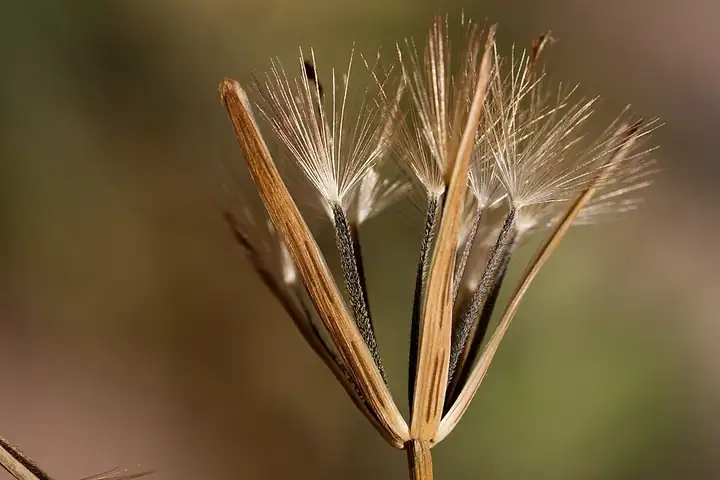
Pápalo
Porophyllum ruderale subsp. macrocephalum · Daisy family (Asteraceae)
| Hardiness zones | 3 to 11 |
|---|---|
| Sun | full sun |
| Water | low |
| Life cycle | annual |
| Frost | Tender: killed by frost |
About Pápalo
Pápalo is a tall, fast summer herb from Mexico with broad, oval leaves dotted with see-through oil glands that give it a sharp, spicy scent and flavor. It is often called summer cilantro: it can stand in for cilantro in salsas and salads, but it keeps growing through the heat instead of going to seed in early summer. It grows wild as far north as Texas, New Mexico and Arizona.
Grown as a summer annual in every zone; frost kills it. No source we opened gives a hardiness range. It can't take frost, so in the U.S. it is grown from seed each summer; where winters stay warm it can keep growing for years (U.S. Botanic Garden). It grows wild on dry slopes and roadsides in Arizona, New Mexico and Texas (UNM).
When to plant
Timing is counted from your average last spring frost (and first fall frost). Sow & Tell works out the actual dates for your ZIP code.
Start seeds indoors when you start tomatoes, or sow outdoors once the soil has warmed; keep young plants inside until there is no more chance of frost (University of Maryland Extension). A few plants are plenty for one household.
Soil
Any well-drained soil in a sunny spot; in the wild it grows on dry slopes, roadsides and even near-bare rock (U.S. Botanic Garden).
Pick a sunny spot with well-drained soil; no fertilizer rates are published for pápalo, so follow a soil test.
Feeding
Don't plant too many: a few plants give plenty of leaves, and uncut plants grow tall enough to shade nearby herbs.
Harvest
Pick leaves and snip the tops as soon as plants are big enough; young leaves are milder and older leaves are stronger. Keep cutting the tops or plants can reach about 5 feet and shade nearby herbs (University of Maryland Extension; U.S. Botanic Garden).
Keep snipping leaves and tops all summer; regular cutting keeps it bushy and kept one Maryland grower's plants from flowering. Uncut plants can reach 5 feet.
In the kitchen
Use the leaves raw in salsa, guacamole, salads, beans, soups, stews and grilled meats; add them at the very end because cooking destroys the flavor, and start with a small amount (U.S. Botanic Garden; University of Maryland Extension).
Keeping it: In Mexico, cut branches are kept in a glass of water on the table so people can tear off fresh leaves; do the same on your counter.
Safety: We found no NIH or MSKCC review of pápalo. A 2021 review of the Porophyllum genus says very few toxicity studies exist, so enjoy it in normal food amounts as a fresh herb. Its flavor is strong; use less than you would cilantro.
Pets: Not listed by the ASPCA
Sources
Photo: Photo: Patrick Alexander, CC0, via Wikimedia Commons (CC0). Photo resized for the web.

Planting dates and advice are general guidance; check with your local Cooperative Extension office for your area.