
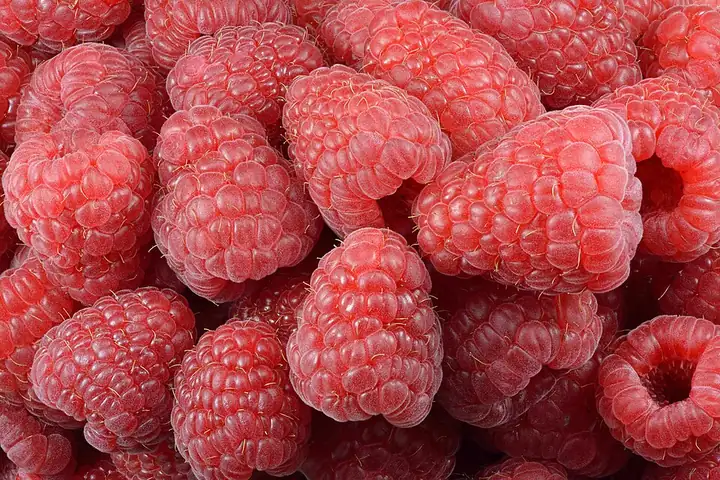
Raspberry
Rubus idaeus (red), Rubus occidentalis (black) · Rose family (Rosaceae)
| Hardiness zones | 3 to 8 |
|---|---|
| Sun | full sun |
| Water | moderate |
| Life cycle | perennial |
| Frost | Hardy: takes frost |
| Soil pH | 5.8–6.8 |
| Spacing | 24 to 36 inches |
About Raspberry
Raspberries grow as thorny canes from long-lived roots; each cane lives two years, so old canes are cut out after they fruit. They are self-fertile and start bearing about a year after planting.
NC State lists red raspberry for zones 4-8, and University of Minnesota rates the hardiest varieties as doing well in zone 3; in the hot Southeast only a few heat-tolerant varieties such as 'Dormanred' are recommended (NC State).
When to plant
Timing is counted from your average last spring frost (and first fall frost). Sow & Tell works out the actual dates for your ZIP code.
- Set out plants: from 4 weeks before to 2 weeks after the last frost
Early spring is best: plant dormant bare-root canes as soon as the soil can be worked, and potted plants after the threat of frost. Expect the first crop a year after planting; black and purple types need about 4 feet between plants.
Soil
Rich, well-drained soil; mix in compost before planting and water if rain is under 1 inch a week while fruit ripens.
Aim for a pH of about 5.6-6.5 and work in a few inches of compost before planting (about 3 1/2 cubic feet per 100 sq ft).
Feeding
- First year: 2 weeks after planting: balanced fertilizer such as 16-16-16, or feather meal. One third of the first-year total (Oregon: about 2-2.5 oz of actual nitrogen per 10 feet of row for red raspberries), spread along the row and watered in.
- First year: 1 month after the first feeding: balanced fertilizer such as 16-16-16, or feather meal. Another third of the first-year total, spread along the row.
- First year: 1 month after the second feeding: balanced fertilizer such as 16-16-16, or feather meal. The last third of the first-year total, spread along the row.
- Established plantings: early spring (late March-early April) and again in late May-early June: balanced fertilizer such as 16-16-16, or compost. About 2-3 oz of actual nitrogen per 10 feet of row per year for summer-bearing types (3 oz for fall-bearing), split between the two feedings; follow a soil test.
Do not use fresh manure after planting.
Harvest
Pick when fully colored, plump and tender, rolling the berry off rather than pulling; it should come away easily. Pick in the cool of the morning.
Summer-bearing raspberries give one crop in early to midsummer on second-year canes. Fall-bearing (primocane) types fruit on new canes from late summer until a hard frost, and if you keep those canes over winter they fruit again lower down the next summer; cut all canes to the ground before spring growth if you only want the fall crop.
Varieties (41)
| Variety | Type | Days | Notes |
|---|---|---|---|
| Niwot | Black, primocane-fruiting | Large, fairly seedy berries. Berries can come apart when picked in hot weather. | |
| Blackhawk | Black, summer-bearing | Good flavor. Vigorous, fairly hardy and productive, with medium-large glossy berries. | |
| Bristol | Black, summer-bearing | Excellent flavor. Medium-large, firm berries in big clusters on upright canes. Very susceptible to anthracnose. | |
| Jewel | Black, summer-bearing | Very flavorful. Large, firm, glossy berries and less seedy than other blacks. Better disease resistance than other black raspberries. | |
| Mac Black | Black, summer-bearing | Large, somewhat soft berries with bigger seeds, on vigorous, stocky canes. | |
| Double Gold | Gold, fall-bearing (primocane) | Very flavorful. Medium golden berries with a peach-colored blush; can bear two crops. Resistant to Phytophthora root rot. | |
| Kiwigold | Gold, fall-bearing (primocane) | Good flavor. Vigorous, thorny, fairly tall and productive; yellow berries with a dark orange to pink blush. | |
| Brandywine | Purple, summer-bearing | Tart; best for jams and jellies. Large, firm, round reddish-purple berries on vigorous, thorny canes. Susceptible to crown gall. | |
| Glencoe | Purple, summer-bearing | Intense flavor. Medium, firm purple berries. | |
| Royalty | Purple, summer-bearing | Pick red for a bright raspberry taste, or purple for a sweet, rich one. Very large, soft, cone-shaped reddish-purple berries. Resists raspberry aphids (which spread mosaic virus); susceptible to crown gall and Phytophthora root rot. | |
| Autumn Bliss | Red, fall-bearing (primocane) | Mildly sweet, flavorful. Large berries in big clusters; few spines. Berries darken after picking. | |
| Autumn Britten | Red, fall-bearing (primocane) | Flavorful. Very large, firm berries and high yields; canes spread less than most. | |
| Caroline | Red, fall-bearing (primocane) | Rich, sweet, excellent flavor. Large, firm berries over a long harvest. Less prone to Phytophthora root rot than many reds. | |
| Crimson Knight | Red, fall-bearing (primocane) | Good flavor. Medium to large berries on compact plants that could double as ornamentals. | |
| Crimson Treasure | Red, fall-bearing (primocane) | Very large berries and high yields where the season is long enough. | |
| Fall Red | Red, fall-bearing (primocane) | Good flavor. Vigorous, moderately spiny plants with medium, soft berries. | |
| Heritage | Red, fall-bearing (primocane) | Sweet, good to excellent quality. Medium, firm berries on sturdy, upright, thorny canes. Resists most diseases. | |
| Himbo Top | Red, fall-bearing (primocane) | Good flavor. Large berries on tall canes that need a sturdy trellis; strong disease resistance but not heat tolerant. | |
| Joan J | Red, fall-bearing (primocane) | Good to fair flavor. Medium to large, firm, dark red berries on thornless canes. | |
| Nantahala | Red, fall-bearing (primocane) | Excellent, intense flavor. Light red, medium to large berries that keep well after picking. | |
| Polana | Red, fall-bearing (primocane) | Mild to good flavor. Medium to large, bright red, conical to round berries. Susceptible to Phytophthora root rot, so it needs well-drained soil. | |
| Polka | Red, fall-bearing (primocane) | Good, full flavor. Large, firm, conical, bright to dark red berries on upright, nearly thornless canes. | |
| Ruby | Red, fall-bearing (primocane) | Very large, bright red berries, similar to Heritage; can get root rot on heavy soils. | |
| AC Eden | Red, summer-bearing | Very sweet. Tall, spineless canes with large, firm, light red berries. | |
| Boyne | Red, summer-bearing | Sweet, tender berries. Small to medium, dark red, soft berries on short plants. Susceptible to anthracnose. | |
| Canby | Red, summer-bearing | Excellent flavor. Tall, nearly thornless canes with medium to large, firm, bright red berries; moderately productive. Buds may winter-kill in cold climates. | |
| Cascade Delight | Red, summer-bearing | ||
| Dormanred | Red, summer-bearing | Only sweet when very ripe; better cooked than fresh. Firm red berries; widely adapted across the Southeast. | |
| Encore | Red, summer-bearing | Sweet, good flavor. Large, firm, conical berries on sturdy, nearly thornless canes. | |
| K-81-6 | Red, summer-bearing | Very good flavor. Large berries on very tall, winter-hardy canes that need a trellis. | |
| Killarney | Red, summer-bearing | Sweet, good flavor. Medium, firm, bright red berries and very heavy crops on upright canes. Can get anthracnose and powdery mildew. | |
| Latham | Red, summer-bearing | Sweet but only fair to acceptable quality. Firm, bright red berries of small to large size on vigorous plants. Tolerates viruses fairly well but gets powdery mildew. | |
| Meeker | Red, summer-bearing | ||
| Newburgh | Red, summer-bearing | Good flavor. Medium, light red berries on tall canes with few spines; partly resistant to common cane diseases and root rot. | |
| Nova | Red, summer-bearing | Good, slightly tart flavor. Medium, firm, bright red berries on nearly thornless canes. Resists cane diseases and late leaf rust. | |
| Prelude | Red, summer-bearing | Mild, good flavor. Medium, round, bright red berries on dense canes. Resists Phytophthora root rot; attracts Japanese beetles. | |
| Reveille | Red, summer-bearing | Good flavor. Very hardy, vigorous plants with many suckers; medium to large berries that are very soft and do not ship or freeze well. | |
| Taylor | Red, summer-bearing | Excellent flavor. Tall, spiny canes with medium to large, firm berries; very prone to mosaic virus, leaf spot and fungal diseases. | |
| Titan | Red, summer-bearing | Mild. Large berries; highly resistant to aphids but susceptible to Phytophthora root rot. | |
| Anne | Yellow, fall-bearing (primocane) | Very sweet and mild, with a tropical or banana-like note. Large, firm, pale yellow berries, sometimes pink-blushed. Makes few canes, so plant closer (16-18 in). Very soft once ripe. | |
| Fall Gold | Yellow, fall-bearing (primocane) | Sweet, excellent flavor. Medium to large, golden, soft berries, sometimes with a reddish blush. Makes many suckers. |
Pests to watch for
Spotted wing drosophila, Japanese beetle, Sawflies (garden sawflies), Opossum, Striped skunk, Raspberry cane borer, Strawberry sap beetle, Strawberry clipper (strawberry bud weevil), Rose chafer, Green June beetle (fig-eater), Rabbits
Diseases and problems
Gray mold, Cane blight, Phytophthora root rot, Viruses, Fire blight, Orange rust, Crown gall, Herbicide injury, Verticillium wilt, Tomato and tobacco ringspot
In the kitchen
Eaten fresh or cooked in pies, preserves and wine; the dried leaves are made into tea.
Keeping it: Chill raspberries as soon as you pick them and don't wash them until you eat them; they keep only 1 to 2 days in the fridge, so freeze extras fast.
Safety: LactMed notes raspberry leaf tea is generally without side effects, but there are no safety data for nursing mothers or their babies.
Pets: Not listed as toxic by the ASPCA
Sources
Photo: Photo: Ivar Leidus, CC BY-SA 4.0, via Wikimedia Commons (CC BY-SA 4.0). Photo resized for the web.

Planting dates and advice are general guidance; check with your local Cooperative Extension office for your area.