
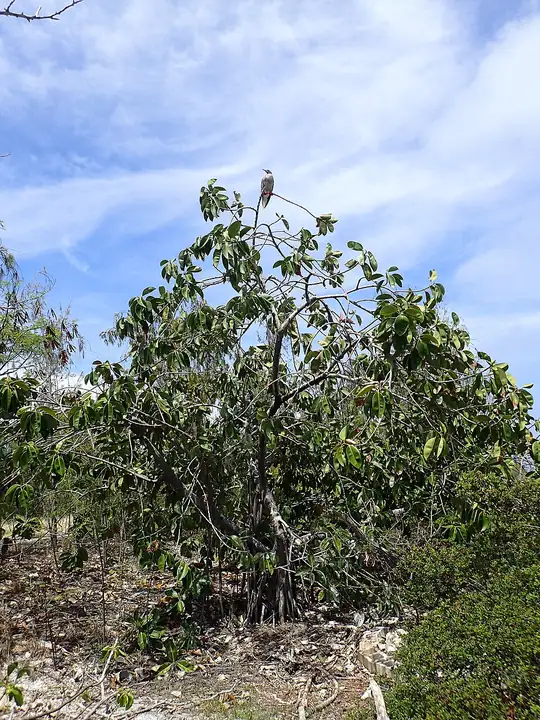
Rubber plant
Ficus elastica · Mulberry family (Moraceae)
| Hardiness zones | 9 to 12 |
|---|---|
| Sun | part shade |
| Water | moderate |
| Life cycle | perennial |
| Frost | Tender: killed by frost |
About Rubber plant
The rubber plant is a fast-growing tropical fig from Nepal, India and Southeast Asia with big, glossy, leathery leaves up to 17 in long, often flushed burgundy or splashed with cream and pink in the named cultivars (NC State). In the wild it is a 50-100 ft tree, but in a pot it is kept to 2-10 ft and makes a bold, easy floor plant that tolerates lower light and some dryness better than its cousin the fiddle-leaf fig. Its milky sap was once tapped for rubber and will drip from any cut leaf, so keep gloves handy.
Hardy outdoors only in zones 9-12 (NC State); it is grown indoors everywhere and can summer outdoors in shade once nights stay above about 55 F.
When to plant
Timing is counted from your average last spring frost (and first fall frost). Sow & Tell works out the actual dates for your ZIP code.
Usually bought as a nursery plant or started from a stem or tip cutting or by air layering (Clemson).
Growing it indoors
- Light: Prefers bright light but tolerates low light; morning sun from an east window is ideal, and hot afternoon sun should be kept off the leaves (Clemson, NC State). Variegated cultivars need more light to keep their color.
- Water: Water thoroughly, then let the mix dry slightly before watering again; make sure the pot drains and empty the saucer (Clemson). MU Extension's table says keep ficus evenly moist, but soil that stays wet yellows the leaves and rots the roots, and NC State says cut back on water in its fall-to-late-winter rest.
- Humidity: It likes humid air but puts up with the dry air of most homes; dry air plus drafts can make it drop leaves, and washing dusty leaves with water helps (Clemson).
- Temperature: Ideal is 60-65 F at night and 75-80 F by day; avoid anything below 55 F, sudden drops and cold drafts, which cause leaf drop (Clemson, NC State).
- Feeding: Feed a water-soluble houseplant fertilizer every two weeks during spring and summer growth, less often for a plant in low light, and none in winter (Clemson, MU Extension).
- Repotting: Repot in late winter or early spring when the roots fill the pot, one size up; figs tolerate being a little root-bound, so it is not a yearly job (Clemson, Cornell Cooperative Extension).
Soil
A soil-based potting mix with good drainage in a pot with a drainage hole; it tolerates drying out now and then (NC State, Clemson).
Pot in a well-draining soil-based potting mix in a container with a drainage hole (NC State, Clemson).
Feeding
- Spring and summer, while new leaves are coming: water-soluble houseplant fertilizer. Clemson feeds every two weeks at label strength, less often for a plant in low light; water first and never feed a wilted plant (MU Extension).
- Fall and winter rest: none. Skip feeding and water less while growth has stopped (NC State, MU Extension).
Don't feed a plant that is dropping leaves in a dim or drafty spot; fix the light and drafts first (Clemson, MU Extension).
Varieties (13)
NC State and Clemson Extension name 13 cultivars.
| Variety | Type | Days | Notes |
|---|---|---|---|
| Abidjan | Dark-leaved | Dark green leaves with deep red hints; to about 6 ft. | |
| Burgundy | Dark-leaved | Dark green leaves flushed burgundy; to about 6 ft. | |
| Melany | Dark-leaved | Smaller green and bronze leaves on a compact plant to about 6 ft. | |
| Rubra | Dark-leaved | Leaves reddish when young, deep green with red edges when mature. | |
| Decora | Green | Very thick dark green leaves with a creamy white midrib. | |
| Robusta | Green | The most common kind: very large deep green leaves up to 18 in long on a plant to about 8 ft; good in low light. | |
| Belize | Variegated | Cream, pink and red highlights on green leaves; 4-10 ft. | |
| Doescheri | Variegated | Gray and cream splotches with a pink midrib; can reach 13 ft. | |
| Ruby | Variegated | Leaves splashed purple, red and white on reddish-pink stems; to about 6 ft. | |
| Tineke | Variegated | Green leaves variegated with cream or pale yellow; can reach 13 ft. | |
| Tricolor | Variegated | Green leaves patched with cream and pink; to about 6 ft. | |
| Variegata | Variegated | Light green leaves edged in white or yellow; Clemson lists a similar gold-edged 'Foliis Aureo-marginata'. | |
| Yellow Gem | Variegated | Golden-green leaves; to about 6 ft. |
Pests to watch for
Mealybugs, Scale insects, Twospotted spider mite, Thrips
Diseases and problems
Root and crown rot
In the kitchen
Safety: The sticky white sap can irritate skin and upsets the stomach if eaten, so wear gloves when pruning and keep the plant away from young children who put leaves in their mouths (Clemson, NC State).
Pets: Toxic to dogs, cats and horses (ASPCA): the ASPCA's fig entry for Ficus gives the toxic principles as the enzyme ficin and the psoralen ficusin, causing stomach and skin irritation; NC State also lists the rubber plant as a problem for cats, dogs and horses.
Sources
Photo: Photo: Martin Purdy, CC BY 4.0, via Wikimedia Commons (CC BY 4.0). Photo resized for the web.

Planting dates and advice are general guidance; check with your local Cooperative Extension office for your area.