
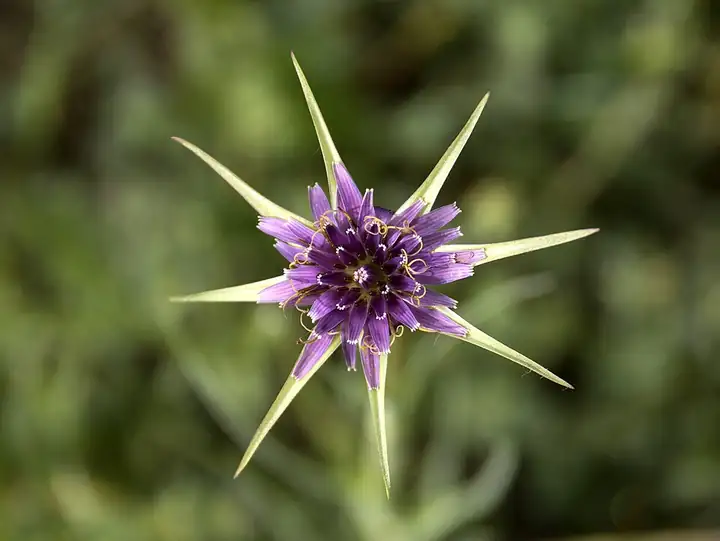
Salsify (oyster plant)
Tragopogon porrifolius · Daisy family (Asteraceae)
| Hardiness zones | 2 to 11 |
|---|---|
| Sun | full sun |
| Water | moderate |
| Life cycle | biennial |
| Frost | Hardy: takes frost |
| Soil pH | 5.8–7.5 |
| Spacing | 2 to 4 inches |
| Days to harvest | 120 to 150 days |
About Salsify (oyster plant)
Salsify is a slow-growing root crop with grassy leaves and long, slender, cream-colored roots that taste a little like oysters when cooked, which is why it is also called oyster plant or vegetable oyster. Left in the ground a second year, it sends up purple, daisy-like flowers and fluffy, wind-blown seed heads. The wild form has escaped gardens and grows along roadsides, in fields and in vacant lots in much of the U.S.; USDA lists no state noxious-weed status for it.
Grown as a root crop wherever there are about 120 to 150 days of growing season; the roots take hard freezes and can stay in the ground over winter. NC State lists the plant for zones 5-9.
When to plant
Timing is counted from your average last spring frost (and first fall frost). Sow & Tell works out the actual dates for your ZIP code.
Days count from seeding. Sow seed 1/2 to 3/4 inch deep in early spring once the soil can be worked and starts to warm. It sprouts slowly and unevenly over 2 to 3 weeks, and seed loses vigor quickly, so buy fresh seed each year.
Soil
Deep, loose, stone-free soil; stones and freshly manured ground make the roots fork.
Loosen the soil deeply and pick out stones; follow a soil test, keep pH about 5.8 to 7.5, and add organic matter, ideally for the crop before, since fresh manure makes roots fork.
Feeding
- about 6 weeks after seeding: nitrogen fertilizer. Side-dress lightly beside the row and water it in (Oregon State gives only farm rates).
Fresh manure and stony soil give forked roots; keep weeds down while the slow seedlings are small.
Harvest
Dig roots in late fall after a few hard frosts, when they are 8 to 10 inches long; ease them out with a fork, since they snap easily. Roots can stay in the ground under straw and be dug through winter into early spring.
Dig the roots once, from late fall through early spring, as you need them. Roots left in the ground send up shoots in spring that can be blanched and eaten like asparagus before they flower.
Varieties (2)
Extension sources name only 2 salsify varieties; most seed is sold simply as salsify.
| Variety | Type | Days | Notes |
|---|---|---|---|
| French Blue Flowered | Suggested by Oregon State for trial; not evaluated there. | ||
| Mammoth Sandwich Island | 120 days | Mild, oyster-like flavor that sweetens after frost. Easy to grow and an excellent keeper. |
Pests to watch for
Slugs, Brown garden snail, Voles, Mice (house mice and deer mice)
Diseases and problems
White rust, Powdery mildew
In the kitchen
Roots are cooked in stews and soups or served cold in salads, and young roots can be grated raw. Blanched spring shoots are cooked like asparagus, and the flower buds can be steamed or sauteed.
Keeping it: Cut off the tops and keep roots at about 32-35F with high humidity; they keep 2 to 4 months. Or leave them in the ground under straw and dig as needed.
Safety: Cut stems and raw roots ooze a sticky, milky latex that can stain hands; cooking the roots before peeling them avoids it (RHS).
Pets: Not listed by the ASPCA
Sources
- plants.ces.ncsu.edu
- uaex.uada.edu
- horticulture.oregonstate.edu
- aggie-horticulture.tamu.edu
- rhs.org.uk
- yavapaiplants.extension.arizona.edu
- gobotany.nativeplanttrust.org
- plantsservices.sc.egov.usda.gov
- aspca.org
- aspca.org
- extensionpubs.unl.edu
Photo: Photo: Roger Culos, CC BY-SA 4.0, via Wikimedia Commons (CC BY-SA 4.0). Photo resized for the web.

Planting dates and advice are general guidance; check with your local Cooperative Extension office for your area.