
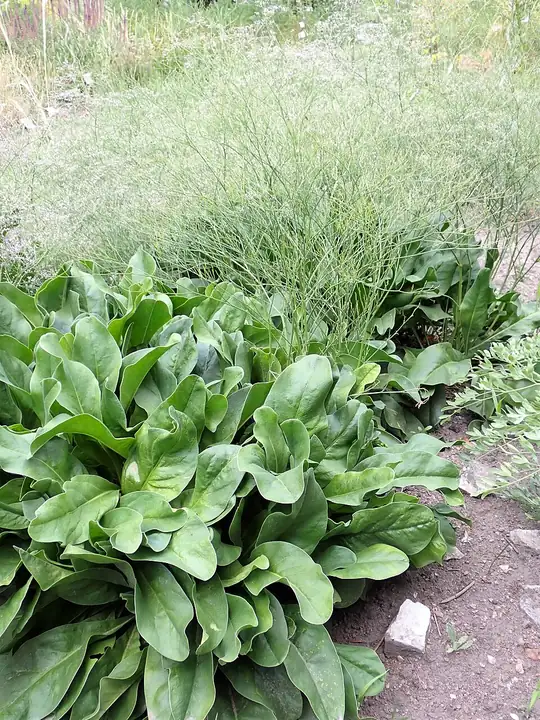
Sea lavender
Limonium latifolium (also listed as L. platyphyllum; old name Statice latifolia), the perennial statice · Leadwort family (Plumbaginaceae)
| Hardiness zones | 3 to 9 |
|---|---|
| Sun | full sun |
| Water | low |
| Life cycle | perennial |
| Frost | Hardy: takes frost |
About Sea lavender
Sea lavender is the perennial cousin of annual statice. A low rosette of broad, leathery leaves sends up wiry stems in mid to late summer, topped by a big, airy cloud of tiny lavender-blue flowers that dry beautifully (Cornell, Colorado State). It comes from Europe, not North America; our native Carolina sea lavender (L. carolinianum) grows in salt marshes along the East Coast (Cornell, NC State). It handles drought and salt, so it suits dry, sunny beds and seaside gardens.
Hardy in zones 3-9, though only marginally hardy in zone 3 (Cornell, Michigan State). German statice (Goniolimon tataricum), sometimes sold under the old name Limonium, is a different, related plant.
When to plant
Timing is counted from your average last spring frost (and first fall frost). Sow & Tell works out the actual dates for your ZIP code.
Most people start with nursery plants and leave them in place, since the long, brittle taproot hates being moved or divided (Cornell, NC State). Seed can be sown in spring, barely covered, but seedlings take 3-4 years to fill out (Cornell). Root cuttings taken in early spring are another way to get more plants. Leave room around each plant for air flow; we found no sourced spacing or day count to first bloom.
Soil
Needs very well-drained soil, sandy or rocky is fine; it tolerates dry and salty soil but rots in wet ground (Cornell, Michigan State).
Make sure the bed drains well; sandy or gravelly soil is fine, and heavy, wet clay invites crown and root rot (Cornell, NC State).
Feeding
- Early spring, just before new growth starts (from the second spring on): complete slow-release fertilizer such as 12-6-6. Without a soil test, Clemson suggests 1-2 lb per 100 sq ft of bed for perennials; keep it off the leaves and water it in. Follow a soil test.
Wet winter soil and crowding rot the crown; leave space for air flow and don't try to divide the deep taproot (Cornell, NC State).
Harvest
Blooms from midsummer into late summer (Cornell; Colorado State lists July-September). Deadhead to stretch the bloom, or cut stems for drying when the flowers are fully open and hang them in a warm, dry place (Cornell). Kansas State lists perennial statice among the top flowers for drying.
Varieties (4)
Cornell documents these 4 sea lavender cultivars; we found no other trustworthy cultivar list.
| Variety | Type | Days | Notes |
|---|---|---|---|
| Blue Cloud | Sea lavender (L. latifolium) | Pale blue flower clouds. | |
| Collier's Pink | Sea lavender (L. latifolium) | Pink flowers. | |
| Robert Butler | Sea lavender (L. latifolium) | Blue-purple flowers. | |
| Violetta | Sea lavender (L. latifolium) | Deep purple-pink flowers on a shorter plant, 1-1.5 ft tall. |
Diseases and problems
Crown rot, Root rot, Leaf spot, Gray mold
In the kitchen
Safety: We found no extension source that lists sea lavender as poisonous, and NC State lists no toxicity for its relatives. It isn't a food plant, so don't eat it, and keep dried arrangements away from small children who might chew them.
Pets: Not listed by the ASPCA (no sea lavender, statice or Limonium entry on its plant lists), so we can't call it pet-safe; discourage pets from chewing it.
Sources
- gardening.cornell.edu
- plants.ces.ncsu.edu
- plants.ces.ncsu.edu
- archive.lib.msu.edu
- extension.colostate.edu
- extension.okstate.edu
- extension.psu.edu
- bookstore.ksre.ksu.edu
- aspca.org
- aspca.org
- aspca.org
- aspca.org
- hgic.clemson.edu
Photo: Photo: Krzysztof Ziarnek, Kenraiz, CC BY-SA 4.0, via Wikimedia Commons (CC BY-SA 4.0). Photo resized for the web.

Planting dates and advice are general guidance; check with your local Cooperative Extension office for your area.