
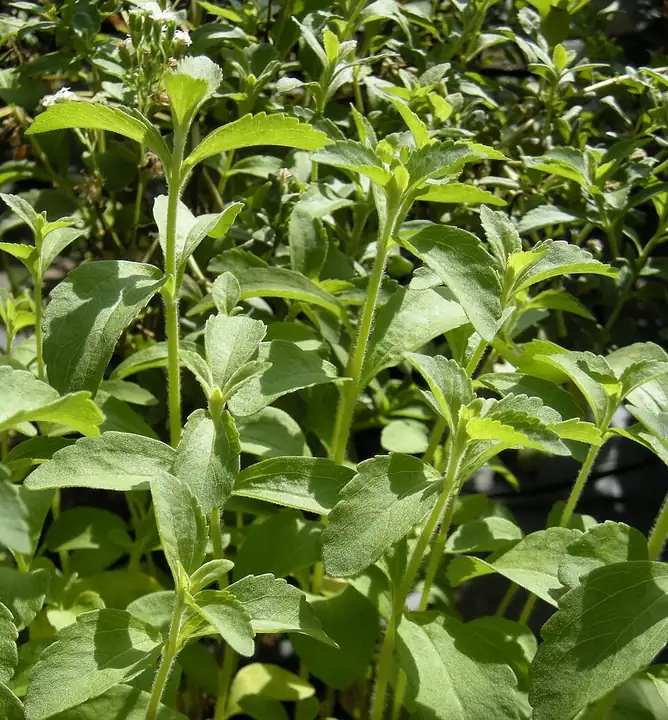
Stevia
Stevia rebaudiana · Daisy family (Asteraceae)
| Hardiness zones | 10 to 11 |
|---|---|
| Sun | full sun to part shade |
| Water | moderate |
| Life cycle | tender perennial (grown as an annual) |
| Frost | Tender: killed by frost |
| Spacing | 12 to 36 inches |
About Stevia
Stevia is a small herb whose leaves taste intensely sweet, thanks to compounds called steviol glycosides. It is easy to grow in a pot or garden bed and can be dried and crumbled into drinks.
Survives winter only in zones 10-11 (NC State; UF/IFAS); elsewhere grow it as an annual or bring it indoors before the first frost.
When to plant
Timing is counted from your average last spring frost (and first fall frost). Sow & Tell works out the actual dates for your ZIP code.
Grow from stem cuttings or seed (NC State). It does well in containers that can come indoors for winter (UF/IFAS). Fertilize every 4-6 weeks during the growing season (NC State).
Soil
Sandy, well-drained soil kept evenly moist; overwatering causes root rot.
Plant in moist, well-drained, sandy or loamy soil rich in organic matter; slightly acidic soil suits it.
Feeding
- every 4-6 weeks during the growing season: general garden fertilizer. Feed about every 4-6 weeks while the plant is growing, following the label rate, and water it in.
Do not overwater, which can cause root rot.
Harvest
Pinch off flower buds to keep the leaves at their best (UF/IFAS). Harvest just as plants begin to flower, at about 90 days, cutting stems about 6 inches above the ground; dried leaves taste sweeter (NC State; UF/IFAS).
The main harvest comes about 90 days after planting, just as plants begin to flower (fall is best): cut stems about 6 inches above the ground and dry them. Pinch off flower buds before then to keep leaves sweet.
Varieties (1)
No named stevia cultivars with descriptions were found in extension or government sources. NC State notes improved commercial lines exist but does not describe them for home gardeners.
| Variety | Type | Days | Notes |
|---|---|---|---|
| Stevia | Stevia (Stevia rebaudiana) | Very sweet leaves, also called sweetleaf. |
Pests to watch for
Aphids, Twospotted spider mite
Diseases and problems
Root and crown rot
In the kitchen
Fresh or dried leaves sweeten tea, lemonade and other drinks, sauces and baked goods.
Keeping it: Use fresh leaves soon after picking. Dry the rest and keep them in a sealed jar in a cool, dry place; dried leaves are sweeter than fresh.
Safety: FDA has not objected to highly purified steviol glycosides (at least 95 percent pure) as sweeteners, but whole stevia leaf and crude extracts are not considered GRAS (generally recognized as safe) and may not be imported as sweeteners (FDA). Stevia may add to the effects of blood pressure and diabetes medicines, MSKCC advises against it in pregnancy, and people allergic to sunflowers or related plants should avoid it.
Pets: Not listed as toxic by the ASPCA
Sources
Photo: Photo: Ethel Aardvark, CC BY 3.0, via Wikimedia Commons (CC BY 3.0). Photo resized for the web.

Planting dates and advice are general guidance; check with your local Cooperative Extension office for your area.