
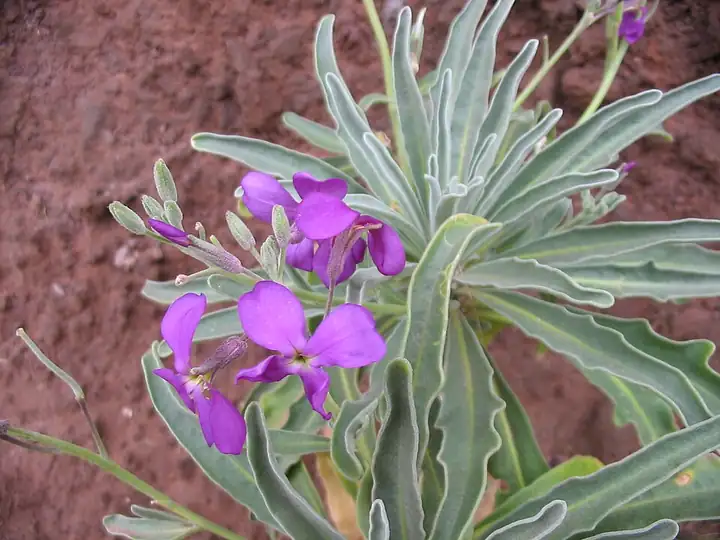
Stock
Matthiola incana and hybrids · Mustard family (Brassicaceae)
| Hardiness zones | 6 to 10 |
|---|---|
| Sun | full sun to part shade |
| Water | moderate |
| Life cycle | tender perennial (grown as an annual) |
| Frost | Hardy: takes frost |
| Soil pH | 6.0–8.0 |
| Spacing | 10 to 18 inches |
About Stock
Stock (gillyflower, ten-week stock) is a cool-season cottage flower with thick spikes of single or double blooms and a strong, spicy clove scent. It's a classic cut flower and a sweet-smelling bedding plant for spring in the North and for fall-to-spring planting in the South. Plants fade once days pass about 80 F.
NC State lists zones 6-10 but notes it's best treated as an annual in the South; Mississippi State plants it in fall statewide, and in severe cold it holds on and blooms in early spring.
When to plant
Timing is counted from your average last spring frost (and first fall frost). Sow & Tell works out the actual dates for your ZIP code.
- Start seeds indoors: 6 to 8 weeks before the last frost
Sow outdoors or start indoors 6-8 weeks before the last frost, and sow again every two weeks for a longer show (NC State); seed sprouts in about 10 days (Mississippi State). Plants are frost-hardy, so set them out early: they need a few weeks of cool 50-55 F weather to flower, and late varieties planted in late spring may never bloom (Cornell). In the South, plant in fall for late-winter and spring flowers (Mississippi State); UF lists November-December and late-winter planting for zones 9-11.
Soil
Average to humus-rich, evenly moist soil with very good drainage; it does poorly in acid soil (NC State, Mississippi State).
Use a sunny bed rich in organic matter with excellent drainage; stock dislikes acid soil, so test and lime if needed (Mississippi State, NC State).
Feeding
- Every 4-6 weeks while growing: slow-release fertilizer in a 2-1-1 ratio. Side-dress beside the plants and water it in, or instead give a dilute water-soluble fertilizer every other week (Mississippi State).
Plants decline once it gets above about 80 F, and late varieties set out in late spring may not bloom at all, so plant early (NC State, Cornell).
Harvest
Blooms in cool weather: about May to July in most gardens, longer where summers stay cool, and shorter in hot climates (NC State). In a cool high tunnel, plants set out in early April flowered about a month later (Cornell). Cut spikes for the vase; they last about 7-10 days (Cornell).
Varieties (13)
Extension sources document 13 named series, nearly all from cut-flower trials; few garden bedding stocks are covered by extension sources.
| Variety | Type | Days | Notes |
|---|---|---|---|
| Harmony | Bedding stock | Series including Harmony Cherry Blossom and Harmony Purple; UF calls it well suited to Florida. | |
| Quartet | Bedding/cut stock | Ruffled flowers in a mix of colors; uniform and easy to transplant but bolted early in heat. | |
| Katz | Cut-flower column stock | Early, about half single flowers (doubles can be sorted as seedlings); Katz White was the tallest of the series, about 17-in stems, with about 9 days of vase life. | |
| Aida | Cut-flower stock | Fragrant, easy to grow; about 16-in stems in trials, with Aida Blueberry favored over Aida Plum Light. | |
| Cheerful | Cut-flower stock | All-double flowers with a low cold requirement for flowering; Cheerful White Improved averaged about 15-in stems in NC State trials. | |
| Extra Early All Double White | Cut-flower stock | All doubles with no sorting needed; very early, clear white and fragrant, but stunted in hot summers. | |
| Goldcut | Cut-flower stock | Sweetly scented doubles with solid color; many singles mixed in unless sorted. | |
| Joy | Cut-flower stock | Mostly double with excellent color; bloomed earlier than Goldcut in trials. | |
| Lucinda | Cut-flower stock | Midseason, about half single (sortable); flowers less when planted in late spring. | |
| Noble | Cut-flower stock | Tall, early and fragrant with a high share of doubles; handled spring temperature swings better than Cheerful in trials. | |
| Prouesse | Cut-flower stock | Midseason, branching, in white, yellow, lavender, dusty pink and red; long bloom period but short stems best for small bouquets. | |
| Vivas | Cut-flower stock | Early, fragrant, single-stemmed spikes about 23 in long in a range of colors; about 11 days of vase life in trials. | |
| White Wonder Improved | Cut-flower stock | White with a green center on sturdy, tall stems; fragrant, did poorly once summer heat arrived. |
Pests to watch for
Aphids
Diseases and problems
White mold, Gray mold, Downy mildew, Fusarium wilt, Bacterial blight, Root rot, Mosaic virus
In the kitchen
Pets: Non-toxic: the ASPCA names stock (Matthiola incana) among non-toxic bouquet flowers; it has no separate entry in the ASPCA plant database.
Sources
- plants.ces.ncsu.edu
- blogs.cornell.edu
- extension.msstate.edu
- journals.flvc.org
- ipm.ucanr.edu
- cutflowers.ces.ncsu.edu
- aspca.org
- aspca.org
Photo: Photo: Ixitixel / Wikimedia Commons, CC BY-SA 3.0 (CC BY-SA 3.0). Photo resized for the web.

Planting dates and advice are general guidance; check with your local Cooperative Extension office for your area.