
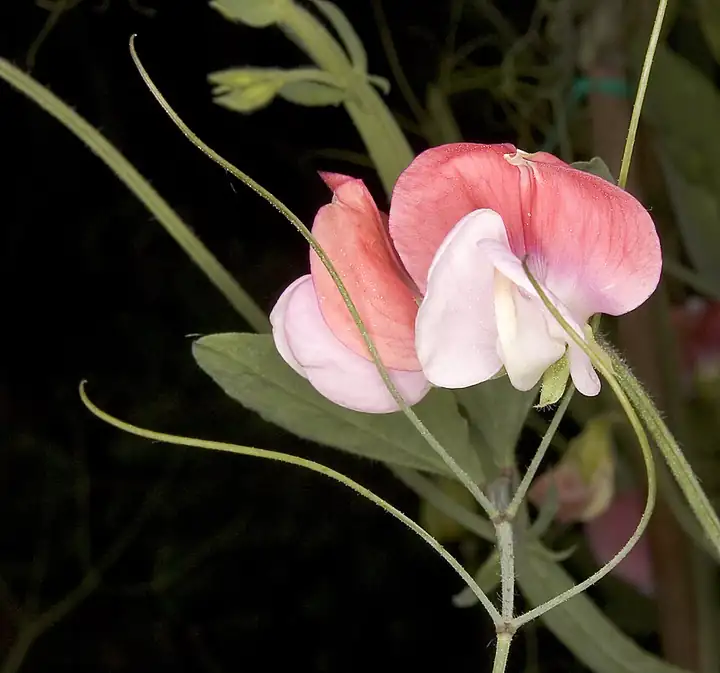
Sweet pea
Lathyrus odoratus · Pea family (Fabaceae)
| Hardiness zones | 2 to 11 |
|---|---|
| Sun | full sun |
| Water | moderate |
| Life cycle | annual |
| Frost | Half-hardy: takes a light frost |
| Soil pH | 7.0–7.5 |
About Sweet pea
Sweet peas are old-fashioned climbing annuals grown for their very fragrant flowers, loved in cutting gardens. They are cool-weather vines that need a trellis and fade in hot, humid summers. Sweet peas are not garden peas: the seeds are poisonous, so never eat the pods or seeds.
Grown as a cool-season annual in every zone (NC State). In the Deep South and Texas, sow in fall for spring bloom (Texas A&M); elsewhere sow in early spring.
When to plant
Timing is counted from your average last spring frost (and first fall frost). Sow & Tell works out the actual dates for your ZIP code.
Nick or scratch the hard seed coat, then sow outdoors in very early spring as soon as the soil can be worked, or start indoors at 60-75 F and keep seedlings cool (Missouri). In mild-winter areas such as Texas, sow in fall (Texas A&M). Put up a trellis at planting and pinch the growing tip when seedlings have two pairs of leaves (NYBG, Missouri). Plants take light frost but not a hard freeze (Smithsonian Gardens).
Soil
Rich, moist, well-drained soil with plenty of organic matter; work compost or aged manure in ahead of time, and amend clay (Missouri, NYBG).
Work in compost or well-aged manure (ideally the fall before) and aim for neutral to slightly alkaline soil, about pH 7.0-7.5 (Missouri, NYBG).
Feeding
- Monthly once vines are growing: compost tea or a mild organic fertilizer. NYBG feeds monthly; don't overfeed young seedlings (Missouri).
Overfeeding seedlings, hot afternoon sun and dry soil; mulch to keep roots cool and water in the morning to limit powdery mildew (Missouri, Texas A&M).
Harvest
Cut flowers every few days and pick off faded ones to keep new blooms coming (NYBG, NC State). Shade from hot afternoon sun and mulch to stretch the season (Texas A&M).
Varieties (13)
Extension and botanical-garden sources document 13 sweet pea varieties.
| Variety | Type | Days | Notes |
|---|---|---|---|
| Cupid | Dwarf (container) type | Compact plants for window boxes and hanging baskets. | |
| Old Spice | Heat-tolerant | Heat-tolerant. | |
| Cupani (Cupani's Original) | Heirloom (old-fashioned) | Bicolor flowers of purple and deep blue. | |
| Painted Lady | Heirloom (old-fashioned) | Pale red and white flowers. | |
| Elegance series | Short-day (winter-flowering) type | Long stems (17 in or more) with 5-7 flowers each; blooms under the short days of fall and winter. | |
| Streamers Mix | Striped mix | A mix of striped flowers. | |
| Explorer Mix | Tendril-less bush type | Bushy plants without tendrils. | |
| Winter Sunshine Rose | Winter-flowering type | Fragrant pink flowers, averaging about 15 stems per plant and 11.5-in stems in an NC State cut-flower trial. | |
| Jewels of Albion | A blend of blue shades. | ||
| Mars | Crimson-streaked, very fragrant flowers. | ||
| Memories | Lavender-white flowers edged in plum. | ||
| Oban Bay | Silvery-blue flowers on long stems. | ||
| Ocean Foam | Blue shades. |
Pests to watch for
Slugs, Brown garden snail, Aphids
Diseases and problems
Powdery mildew, Lettuce mosaic
In the kitchen
Safety: Not edible. The seeds are poisonous and can cause lathyrism (paralysis, weak pulse, shallow breathing, convulsions) (NC State); Texas A&M also warns against the flowers. Don't confuse sweet peas with garden peas (Pisum sativum), whose flowers are edible (UMN). Keep seeds away from children and pets (NYBG).
Pets: The ASPCA's 'sweet pea' entry is the perennial sweet pea (Lathyrus latifolius): toxic to dogs, cats and horses (weakness, tremors, seizures, possibly death). The annual sweet pea's seeds are poisonous (NC State), so keep pets away from pods and seeds.
Sources
- plants.ces.ncsu.edu
- aggie-hort.tamu.edu
- extension.missouri.edu
- libguides.nybg.org
- gardens.si.edu
- extension.umn.edu
- aspca.org
Photo: Photo: vinceconnare, CC BY 2.0, via Wikimedia Commons (CC BY 2.0). Photo resized for the web.

Planting dates and advice are general guidance; check with your local Cooperative Extension office for your area.