
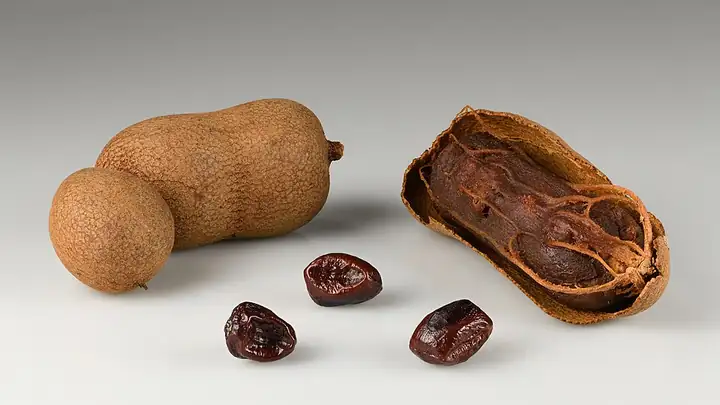
Tamarind
Tamarindus indica · Pea family (Fabaceae)
| Hardiness zones | 10 to 11 |
|---|---|
| Sun | full sun |
| Water | low |
| Life cycle | perennial |
| Frost | Tender: killed by frost |
About Tamarind
Tamarind is a big, wind-firm evergreen tree from tropical Africa with feathery leaves and brown pods full of sticky, sweet-sour pulp. That pulp flavors drinks (agua de tamarindo), candy, chutneys, curries and Worcestershire sauce. Sour types are for cooking and drinks; sweet types from Thailand are eaten fresh.
UF/IFAS lists zones 10A-11 and says to plant it only where frost is rare, though one Florida tree lived through several hours at 26 F; older trees are hardier than young ones. UF/IFAS does not consider it invasive in Florida, and the University of Hawaii gives it a low-risk weed score; we found no U.S. invasive or noxious listing.
When to plant
Timing is counted from your average last spring frost (and first fall frost). Sow & Tell works out the actual dates for your ZIP code.
It grows easily from seed, but seedlings take 4-5 years to bear and their fruit quality is unknown, so buy a grafted or air-layered tree of a named sweet or sour type (Fairchild Tropical Botanic Garden; UF/IFAS). Give it plenty of room: it can reach 40-65 ft, though 30 ft is more usual in Florida, and the pods litter hard surfaces. No source ties planting to a frost date.
Soil
Tolerates clay, sand, loam and both acid and alkaline soils if they drain well, but not waterlogged ground; it is very drought tolerant once established and only modestly salt tolerant, so keep it away from the beach (UF/IFAS; Fairchild Tropical Botanic Garden).
Choose a sunny spot that doesn't stay wet; in low, wet sites raise the planting area (Fairchild Tropical Botanic Garden).
Feeding
- Three times a year: March, July and September: Fruit tree fertilizer such as 8-3-9. Spread it under the canopy and water in; follow the label rate for the tree's size (Fairchild Tropical Botanic Garden).
Keep it away from salt spray and salty water, and train young trees to 3-5 well-spaced main branches on one trunk for a strong frame (Fairchild Tropical Botanic Garden; UF/IFAS).
Harvest
In Florida pods ripen from about February to June, before the spring rains. Ripe pods are brown, feel light, sound hollow when tapped and crack under gentle pressure; clip or hand-pick them rather than knocking them down with poles (Fairchild Tropical Botanic Garden; Morton, Fruits of Warm Climates).
One crop a year, ripening about February to June in Florida before the summer rains; dry pods can hang on the tree for months.
Varieties (2)
Extension and botanical-garden sources describe only sweet and sour types sold by south Florida nurseries, not named U.S. cultivars.
| Variety | Type | Days | Notes |
|---|---|---|---|
| Sour (tart) type | Sour tamarind | Tangy, sweet-sour pulp. The classic tamarind for cooking, sauces and drinks; flavor varies from tree to tree. | |
| Sweet (Thai) type | Sweet tamarind | Very low in acid and sweet enough to eat fresh; picked half-ripe it tastes a bit like a Granny Smith apple. Grafted or air-layered trees sold in south Florida nurseries; not good for drinks. |
Pests to watch for
Scale insects, Mealybugs, Aphids, Whiteflies, Thrips, Root-knot nematodes
Diseases and problems
Sooty mold, Bacterial leaf spot, Wood rot
In the kitchen
The pulp goes into drinks, candy, sauces, salsas, chutneys and curries; sweet types are eaten fresh from the pod. Young pods, leaves and flowers are also cooked or eaten in some countries (Fairchild Tropical Botanic Garden; UF/IFAS; USDA Forest Service Agriculture Handbook 679).
Keeping it: Sun-dried pods keep a year or more in a cool, dry place and get sweeter with age; shelled pulp keeps well but can mold in the refrigerator.
Safety: The pulp is a common food. The very hard seeds are not eaten raw. A UF/IFAS Extension (Charlotte County) column says tamarind is toxic to dogs, so keep pods away from them. We found no research-based guidance on pregnancy, drug interactions or allergies in the sources we checked.
Pets: Not listed by the ASPCA. A UF/IFAS Extension column warns that tamarind is toxic to dogs.
Sources
- ask.ifas.ufl.edu
- blogs.ifas.ufl.edu
- fairchildgarden.org
- growables.com
- cms.ctahr.hawaii.edu
- growables.org
- aspca.org
Photo: Photo: Ivar Leidus, CC BY-SA 4.0, via Wikimedia Commons (CC BY-SA 4.0). Photo resized for the web.

Planting dates and advice are general guidance; check with your local Cooperative Extension office for your area.