
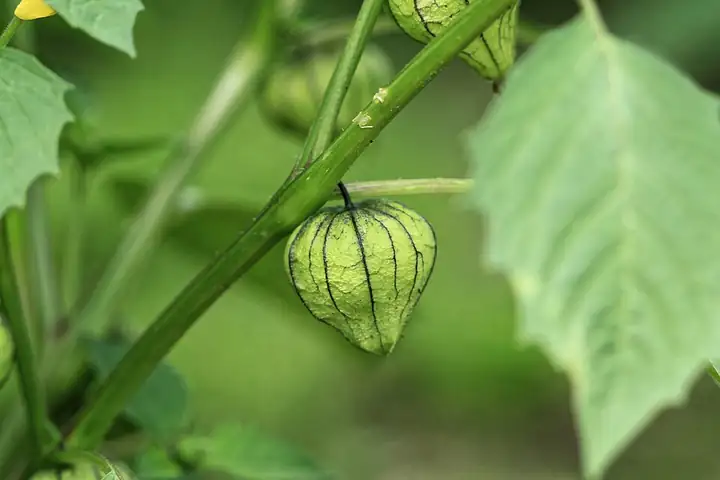
Tomatillo
Physalis philadelphica (syn. Physalis ixocarpa) · Nightshade family (Solanaceae)
| Hardiness zones | 3 to 11 |
|---|---|
| Sun | full sun |
| Water | moderate |
| Life cycle | annual |
| Frost | Tender: killed by frost |
| Spacing | 24 to 36 inches |
| Days to harvest | 60 to 75 days |
| Soil temperature to plant | at least 60°F |
About Tomatillo
Tomatillos are tomato relatives whose tart green fruit grows inside a papery husk. They are the key ingredient in salsa verde, and the big, sprawling plants are productive and fairly drought tolerant.
Grown as a warm-season annual in every zone; it is killed by frost, so plant it after the danger of frost has passed.
When to plant
Timing is counted from your average last spring frost (and first fall frost). Sow & Tell works out the actual dates for your ZIP code.
- Start seeds indoors: 4 to 8 weeks before the last frost
- Set out plants: up to 2 weeks after the last frost
Days count from transplanting. Plant at least two plants, ideally of two varieties, because tomatillos do not set fruit well on their own. Cage or stake them like tomatoes.
Soil
Well-drained soil; avoid heavy, soggy ground, where raised beds help with drainage and warmth.
Have the soil tested and add phosphorus and potassium only as it says; work in no more than about 1 inch of compost per 100 sq ft.
Feeding
- 4 weeks after setting out transplants: nitrogen fertilizer such as 21-0-0. Sprinkle about 1 Tbsp around each plant and water it in.
- 8 weeks after setting out transplants: nitrogen fertilizer such as 21-0-0. Repeat with about 1 Tbsp per plant and water it in.
Too much fertilizer gives bushy, leafy plants that set fruit late; never use weed-and-feed products.
Harvest
Pick when the fruit fills the husk but is still firm and green; fully ripe fruit drops easily and turns yellowish and less tart.
Plants keep flowering and fruiting until frost; pick fruit when it fills the husk and gather fallen fruit too. Before frost, pull whole plants and hang them in an unheated garage, where fruit on the vines stores for months.
Varieties (11)
There are few named tomatillo varieties, and none had been formally tested in Minnesota (Minnesota Extension). Most mature about 60 to 75 days from transplanting (Utah State).
| Variety | Type | Days | Notes |
|---|---|---|---|
| Cisineros | Green | 75 days | Good flavor. Very large, bright green fruit. It gave the largest yield in a Rutgers trial. |
| Gigante | Green | A sprawling green tomatillo. | |
| Rendidora | Green | Upright plants with high yields. | |
| Tamayo | Green | Large fruit, about 3 inches, on a sprawling plant. | |
| Toma Verde | Green | 75 days | An early tomatillo on a sprawling plant. WSU describes large, greenish-yellow fruit, and it was one of the top yielders in a Rutgers trial. |
| Verde Puebla | Green | 75 days | Medium green fruit with high yields in a Rutgers trial. |
| De Milpa | Green blushed with purple | 70 days | Tangier than other types. Small fruit, about 1 inch, green or yellow-green blushed with purple. Also sold as Purple de Milpa. |
| Gulliver Hybrid | Green, hybrid | A sprawling green hybrid. | |
| Purple | Purple | 75 to 85 days | Sweeter than green types, with excellent flavor. Small, deep purple fruit, about 1.5 inches across. Yields were moderate in a Rutgers trial. |
| Purple Coban | Purple | A purple tomatillo listed by Utah State. | |
| Pineapple | Yellow-green | 75 days | Fruity and nutty. Very small, yellowish-green fruit and low yields. |
Pests to watch for
Cutworms, Tomato hornworm, Colorado potato beetle, Flea beetles, Aphids, Eriophyid mites (rust, bud, blister and gall mites), Potato psyllid (tomato psyllid), Pepper weevil
Diseases and problems
Early blight, Late blight, Anthracnose, Mosaic viruses, Verticillium wilt, Powdery mildew, Root and crown rot
In the kitchen
Husked and rinsed, then roasted or boiled for salsa verde and green sauces, or chopped raw into salsas.
Keeping it: Leave tomatillos in their husks; they keep about 2 weeks in a paper bag in the fridge, or for months spread in one layer somewhere cool (50 to 60F) and airy. Husk and rinse off the sticky coating just before using.
Safety: Only the ripe fruit is eaten. The leaves, stems, flowers and unripe fruit contain solanine-type alkaloids that can cause headache, stomach pain, vomiting and diarrhea if eaten (NC State).
Pets: Not listed as toxic by the ASPCA
Sources
Photo: Photo: Frank Vincentz, CC BY-SA 3.0, via Wikimedia Commons (CC BY-SA 3.0). Photo resized for the web.

Planting dates and advice are general guidance; check with your local Cooperative Extension office for your area.