
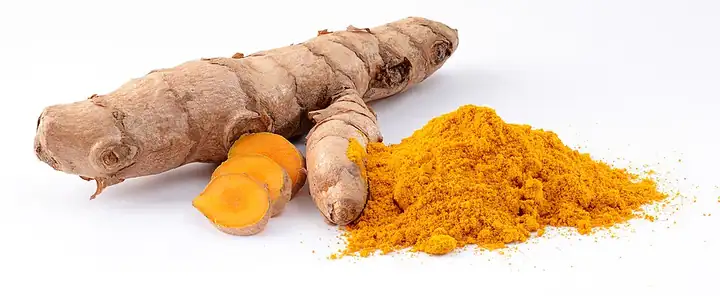
Turmeric
Curcuma longa · Ginger family (Zingiberaceae)
| Hardiness zones | 8 to 11 |
|---|---|
| Sun | part shade |
| Water | moderate |
| Life cycle | tender perennial (grown as an annual) |
| Frost | Tender: killed by frost |
| Soil temperature to plant | at least 55°F |
About Turmeric
Turmeric is a tropical cousin of ginger grown for its bright orange rhizomes, the source of the yellow spice. It is planted from rhizome pieces in spring, likes shade, humidity and rich soil, and is slow: shoots take one to two months to appear and the roots are dug 8 to 9 months or more after planting. It grows well in a large pot.
NC State lists zones 8-11 but says turmeric isn't reliably winter hardy, so in colder spots dig the rhizomes in fall when the leaves wilt and store them cool and dry. It grows in the ground or in pots in Florida (UF/IFAS), and Kentucky growers raise it as a one-season crop in high tunnels; elsewhere grow it in a large pot.
When to plant
Timing is counted from your average last spring frost (and first fall frost). Sow & Tell works out the actual dates for your ZIP code.
Plant rhizome pieces in spring to early summer, set on the soil and lightly covered; green shoots take about one to two months to show (UF/IFAS). Kentucky high-tunnel growers plant ginger and turmeric in mid-April to early May, once soil is above 40 F and ideally near 55 F. Baby turmeric is ready about 8 to 9 months after planting, and turmeric matures more slowly than ginger (Kentucky). Unlike ginger, it does not need hilling and can be planted closer.
Soil
Good loamy soil with plenty of compost, kept moist; turmeric is a heavy feeder that needs a lot of nitrogen (UF/IFAS; Kentucky).
Work in plenty of compost; turmeric is a heavy feeder with a high need for nitrogen, so follow a soil test for fertilizer (Kentucky).
Feeding
Turmeric needs no hilling; don't let the soil dry out, and don't dig early just because leaves yellow in fall, since dieback is normal before harvest.
Harvest
Wait until all the leaves have turned completely brown in fall; the dieback is a normal response to shorter days (UF/IFAS). Lift the clump with a digging fork, trim the tops and wash the roots, and wear gloves because cut turmeric stains skin and counters (Kentucky; UF/IFAS).
Dig the clump once, after all the leaves have turned brown in fall, about 8 to 9 months or more after planting; save a few healthy pieces to replant.
Pests to watch for
Root-knot nematodes
Diseases and problems
Root and crown rot, Soft rot
In the kitchen
Grate the fresh root into curries, rice, soups and drinks such as golden milk with ginger and black pepper, or dry and grind it; the leafy tops are used for tea (UF/IFAS; Kentucky).
Keeping it: Fresh turmeric is highly perishable; keep it cool and dry and use it within about two weeks, or freeze it for longer.
Safety: Turmeric in food is generally fine, but supplements can upset the stomach, and highly absorbable curcumin products have been linked to liver injury (NCCIH). Turmeric supplements may be unsafe in pregnancy (NCCIH), may raise bleeding risk with warfarin and other blood thinners, and may raise the risk of kidney stones (MSKCC). Cut roots stain skin and surfaces (UF/IFAS).
Pets: Not listed by the ASPCA
Sources
Photo: Photo: Simon A. Eugster / Wikimedia Commons, CC BY-SA 3.0 (CC BY-SA 3.0). Photo resized for the web.

Planting dates and advice are general guidance; check with your local Cooperative Extension office for your area.