
Jimsonweed
Datura stramonium
| Type | Broadleaf |
|---|---|
| Life cycle | Summer annual |
| Family | Nightshade family (Solanaceae) |
| Origin | Introduced from elsewhere |
| Most common in | Southeast, South Central, Midwest |
About
A rank-smelling summer annual of gardens, fields and waste ground, and poisonous in every part. Its name comes from Jamestown, where English soldiers who ate it in the 1600s became delirious.
Also called jimson weed, thorn-apple, Jamestown weed, datura, devil's trumpet
How to identify it
Look for
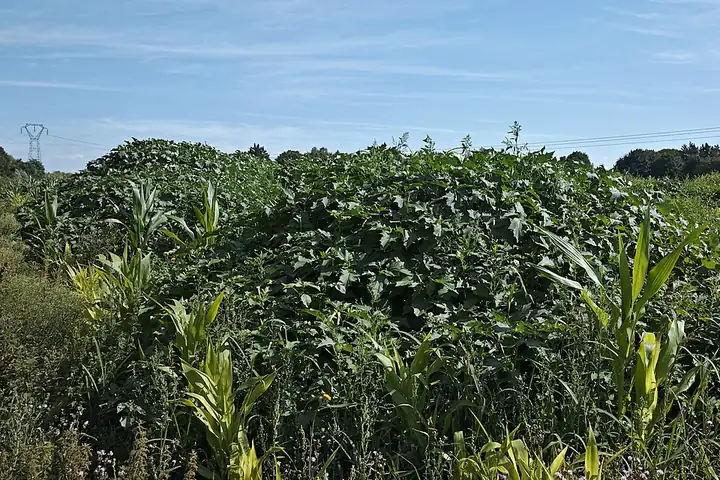
A bushy plant 1 to 5 feet tall with smooth, often purplish stems and large, coarsely toothed leaves that smell foul when bruised. White to purple-tinged trumpet flowers, 2 to 4 inches long, open in the evening. Egg-shaped, spiny seed pods split into four parts full of small black seeds.
Look-alikes
Other daturas, such as sacred datura (Datura wrightii), look similar and are just as poisonous. The spiny pod and trumpet flower set it apart from most garden weeds.
Where it grows
Vegetable gardens, cultivated fields, overgrazed pastures, barnyards, roadsides and waste lots in sun.
When
A summer annual that flowers from about June to September; the spiny pods ripen and split to drop seed in late summer and fall.
How it spreads
Spreads only by seed; the hard seeds can stay alive in the soil for 40 years or more.
Most common in
| Northeast | Common here |
|---|---|
| Southeast | Very common here |
| South Central | Very common here |
| Midwest | Very common here |
| Great Plains | Common here |
| Mountain West | Common here |
| Southwest | Common here |
| Pacific Northwest | Occasional here |
| California | Common here |
| Alaska | Not found here |
| Hawaii | Occasional here |
What to do, gentlest first
Protect yourself first. Weed killers are a last step; always read and follow the label.
Gloves and no seed Prevent
Wear gloves whenever you handle it, and never let plants make pods, since seeds last for decades.
Keep children and pets away from flowers and pods.
Pull or hoe young plants By hand
Young plants have shallow roots and pull or hoe out easily. Remove them before the spiny pods form.
Wear gloves. Bag plants with pods for the trash; don't compost them.
Mulch garden beds Barrier
A thick mulch blocks the light seeds need to sprout.
2,4-D-based broadleaf herbicide in lawns and pastures Conventional spray
Selective broadleaf products with 2,4-D, alone or mixed with dicamba or triclopyr, control young plants outside the vegetable garden.
Read and follow the label. Many lawn and brush herbicides also kill garden plants, so keep spray and drift off anything you want to keep. Never use them in or near vegetable beds.
Uses, wildlife and pets
Pets
Toxic to dogs, cats and horses (ASPCA); NC State Extension notes it poisons dogs, cats, horses and cattle.
Sources
Photo: Photo: Velvet / Wikimedia Commons, CC BY-SA 4.0 (CC BY-SA 4.0). Photo resized for the web.

Planting dates and advice are general guidance; check with your local Cooperative Extension office for your area.