
Bitter rot
Fungi (Colletotrichum species, mainly C. gloeosporioides and C. acutatum)
| Type | Fungus |
|---|---|
| Cause | Fungi (Colletotrichum species, mainly C. gloeosporioides and C. acutatum) |
| When | Usually July and August, through harvest. |
About
A summer fruit rot of apples that can spread fast in hot, wet weather. Rotten fruit shrivels into mummies on the tree that start next year's infections.
Also called bitter rot, bitter rot of apple, apple bitter rot
How to recognize it
Symptoms
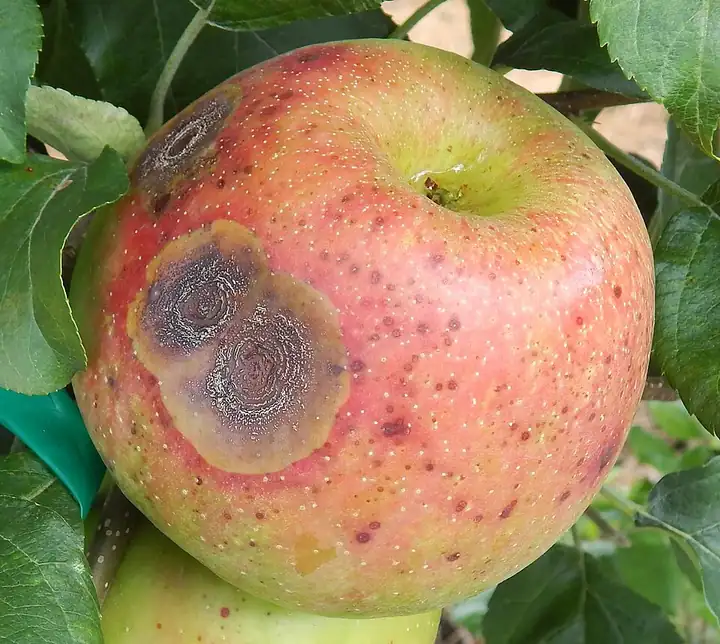
Small, slightly sunken brown spots appear, usually on the sunny side of the fruit. They grow into larger brown circles with rings of pink, orange or tan spores, like a target. Cut through a spot and the rot underneath is shaped like a V or cone, and badly rotted fruit shrivels into mummies that hang on.
Often confused with
The cone-shaped (V-shaped) rot under the spot and the pinkish rings of spores are the telltale signs of bitter rot.
Worse when
Long warm, rainy spells after fruit set (spores sprout best near 80°F and can infect in 5 hours), especially as fruit ripens.
How it spreads
The fungi survive winter in dead wood, cankers and mummies, and rain splashes spores through the tree in summer.
When
Usually July and August, through harvest.
Where
Common in the warm, humid Southeast; sporadic farther north, though it can flare up in long hot, wet summers.
What to do, gentlest first
Prevention works best; most sprays only protect healthy leaves and can't cure infected ones. Always read and follow the product label.
Know which apples are at risk Prevent
Light-colored and bicolored apples get it more often, such as Empire, Honeycrisp, McIntosh, Paulared and Jonagold.
Reduce tree stress Prevent
Water in drought and keep broadleaf weeds down under the tree.
These steps may help but aren't proven.
Remove mummies and dead wood By hand
Pick off mummies, cut out dead and cankered branches (including shoots killed by fire blight), and clean up fallen fruit and twigs.
Captan, ziram or pyraclostrobin plus boscalid Conventional spray
Where bitter rot has been a problem, orchards spray protectant fungicides from fruit set through summer when warm, wet weather is forecast. Captan and ziram work; mancozeb works well but must stop 77 days before harvest.
Thiophanate-methyl does not control bitter rot. Follow the label, including days to harvest.
Plants it affects
Sources
Photo: Photo: Jesusistmeinhimmelunderde / Wikimedia Commons, CC BY-SA 4.0 (CC BY-SA 4.0). Photo resized for the web.

Planting dates and advice are general guidance; check with your local Cooperative Extension office for your area.