
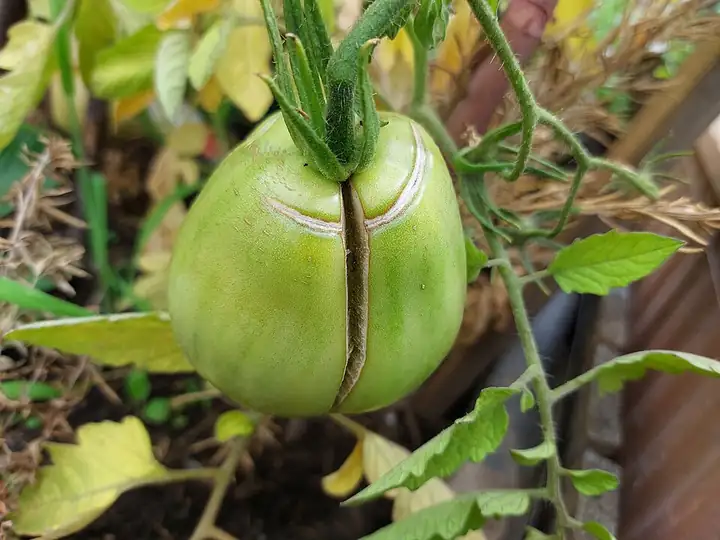
Fruit cracking
Not an infection: fruit swell faster than their skin can stretch after heavy rain or watering
| Type | Not an infection |
|---|---|
| Cause | Not an infection: fruit swell faster than their skin can stretch after heavy rain or watering |
| When | Midsummer for tomatoes; the weeks just before harvest for cherries. |
About
Splits in the skin of tomatoes, sweet cherries and other fruit that happen when a flood of water follows a dry spell. The cracks are harmless at first but let rot organisms in.
Also called fruit cracking, growth cracks
How to recognize it
Symptoms
On tomatoes, cracks radiate out from the stem or circle it in rings, usually at the top of the fruit, and large beefsteak types crack most. On sweet cherries, skins split as the fruit ripen, especially after rain.
Worse when
A heavy rain or deep watering after a long dry spell; for cherries, rain on ripening fruit, which pulls water in through the skin.
How it spreads
It does not spread, but cracks are often invaded by molds and rot.
When
Midsummer for tomatoes; the weeks just before harvest for cherries.
What to do, gentlest first
This is not an infection, so sprays for diseases won't help. Fix the cause below.
Keep soil moisture even Prevent
Water deeply on a steady schedule; in dry spells, a thorough soaking about once a week is enough for most tomatoes. Mulch with straw, shredded leaves or dried grass clippings.
Do not use grass clippings from lawns treated with weed killers.
Pick crack-resistant varieties Prevent
Tomatoes with good crack resistance include Jetstar, Mountain Spring and Mountain Fresh. Among sweet cherries, Big Star, Black Pearl, Black Star, Blaze Star, Burgundy Pearl and Suite Note crack less, while Bing, Rainier and Van crack readily.
Use cracked fruit quickly By hand
Pick and use cracked fruit soon, and throw out any that are moldy or rotting.
Rain covers for cherries Barrier
Covers or tunnels that keep rain off ripening cherries reduce cracking.
This is mostly a commercial practice and is costly; for a home tree the realistic options are choosing a less-prone variety and picking promptly.
Plants it affects
Sources
Photo: Photo: Josef Schlaghecken, CC BY-SA 4.0, via Wikimedia Commons (CC BY-SA 4.0). Photo resized for the web.

Planting dates and advice are general guidance; check with your local Cooperative Extension office for your area.