
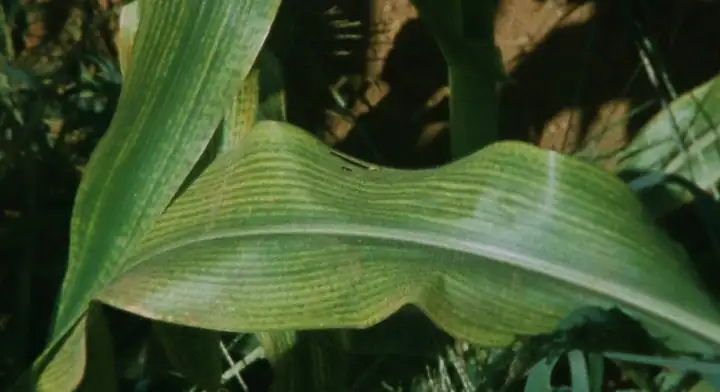
Magnesium deficiency
Not an infection: the plant is short of magnesium, usually in acidic sandy soil or where heavy potassium feeding crowds magnesium out
| Type | Not an infection |
|---|---|
| Cause | Not an infection: the plant is short of magnesium, usually in acidic sandy soil or where heavy potassium feeding crowds magnesium out |
| When | Any time during the growing season, starting on lower leaves. |
About
Magnesium is part of chlorophyll, the green pigment in leaves, so a shortage yellows leaves. Most garden soils have enough; shortages turn up mainly in acidic, sandy soil and after heavy potassium or ammonium feeding.
Also called magnesium shortage, lack of magnesium, low magnesium, Mg deficiency
How to recognize it
Symptoms
Older, lower leaves yellow between the veins while the veins stay green, and the yellowing climbs the plant as the shortage gets worse. In bad cases the yellow areas turn reddish purple or brown.
Often confused with
Iron chlorosis also yellows leaves between green veins, but on the newest leaves at the shoot tips, not the oldest ones; most other micronutrient shortages start on new growth too. Nitrogen shortage yellows the whole older leaf, veins and all, and potassium shortage browns older leaf edges. Manganese problems can look much the same, so confirm with a soil test or leaf tissue test.
Worse when
Acidic sandy soil, soil limed with low-magnesium (calcitic) limestone, and heavy use of potassium or ammonium fertilizers.
How it spreads
It does not spread from plant to plant.
When
Any time during the growing season, starting on lower leaves.
What to do, gentlest first
This is not an infection, so sprays for diseases won't help. Fix the cause below.
Soil test before adding anything Prevent
Most soils have enough magnesium. A soil test tells you whether it is really low before you add any product.
Use dolomitic lime on acidic soil Prevent
When a test says your soil needs lime, dolomitic limestone raises pH and adds magnesium at the same time.
Go easy on potassium Prevent
Don't overdo potassium or ammonium fertilizers in sandy soil; they block magnesium uptake.
Epsom salt for a confirmed shortage only Prevent
Epsom salt (magnesium sulfate) can correct a real magnesium shortage, especially one caused by too much potassium. Use it at soil-test or label rates.
Epsom salt is not a cure-all for tomatoes, peppers or roses. Adding it without a need can cause salt injury and make potassium, iron and boron harder for plants to get.
Plants it affects
Bougainvillea, Eggplant, Peace lily, Pepper (sweet and chili), Potato, Sweet corn, Tomato
Sources
Photo: Photo: Alandmanson / Wikimedia Commons, CC BY 4.0 (CC BY 4.0). Photo resized for the web.

Planting dates and advice are general guidance; check with your local Cooperative Extension office for your area.