
Tobacco mosaic and tomato mosaic
Virus (tobacco mosaic virus and tomato mosaic virus, two close relatives in the genus Tobamovirus) spread by touch, tools and seed
| Type | Virus |
|---|---|
| Cause | Virus (tobacco mosaic virus and tomato mosaic virus, two close relatives in the genus Tobamovirus) spread by touch, tools and seed |
About
Two closely related viruses that cause light and dark green mottling on tomatoes, peppers and many other plants. Insects don't spread them, but they move very easily on hands, tools and tobacco products and can survive for years in dried plant debris. There is no cure, so resistant varieties and clean habits are the main defenses.
Also called tobacco mosaic virus, tomato mosaic virus, TMV, ToMV, tobacco mosaic, tomato mosaic, common mosaic
How to recognize it
Symptoms
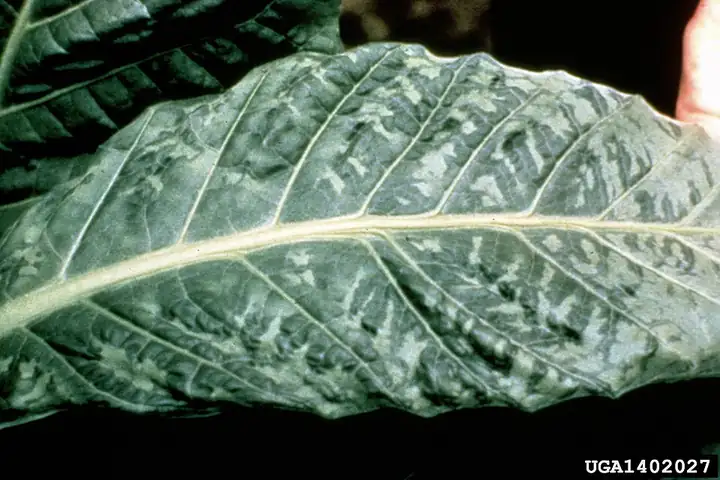
Tomato leaves show a light and dark green or yellow mosaic, sometimes with raised dark green blisters, and may be narrow and fern-like, fan-shaped or curled. Plants may be stunted and yellowish, and stems can show dark streaks. Tomato fruit often looks normal but can ripen unevenly, show yellow rings or turn brown inside. Peppers get mottled leaves, oak-leaf patterns on jalapeños, and small, misshapen, blotchy fruit.
Often confused with
Cucumber mosaic causes the same mottling, and its thin shoestring leaves look much like fernleaf. Fruit spots can be mistaken for tomato spotted wilt, and tomato brown rugose fruit virus is a close relative. A lab test is needed to tell them apart, and even to separate TMV from ToMV.
Worse when
Pruning suckers and staking with bare hands, using tobacco near plants, reused pots, stakes and string, and saved seed. The virus does best around 75°F; mottling is strongest in cool, dim conditions and fades in hot weather.
How it spreads
Sap moves on hands, tools, clothing and tobacco products into tiny wounds, and the virus also travels in seed and transplants. It can last weeks to months on stakes and trellises, up to 2 years in leaf debris in dry soil (about a month in moist soil), and for decades in dried plant debris. Insects do not normally spread it.
When
Any time plants are handled. Symptoms are clearer in cool, cloudy weather and may fade during hot spells.
What to do, gentlest first
Prevention works best; most sprays only protect healthy leaves and can't cure infected ones. Always read and follow the product label.
Resistant varieties and clean seed Prevent
Look for TMV or ToMV on seed packets and plant tags (tomato resistance genes Tm-1, Tm-2 or Tm-2²). WSU lists tomatoes such as 'Celebrity', 'Carnival' and 'First Lady', and peppers such as 'Bell Boy', 'California Wonder 300' and 'Yolo Wonder'. Use certified seed and don't save seed from sick plants.
Most heirloom tomatoes are not resistant, and some varieties resist only one of the two viruses.
No tobacco, and wash hands Prevent
Don't smoke or chew tobacco while working with tomatoes and peppers, and wash your hands with soap and water before handling plants. NC State suggests dipping hands in milk and spraying transplants with milk before planting to cut infection.
Disinfect tools, pots and stakes Prevent
Soak tools for at least a minute in 1 part bleach to 9 parts water or in a 20% powdered milk solution. Use fresh potting mix, pots and string for each batch of transplants, and keep the hose and watering can from brushing plants.
Alcohol-based sanitizers do not kill these viruses (University of Kentucky).
Pull and trash infected plants By hand
There is no cure. Pull infected plants, roots and all, bag them and throw them out rather than composting. Rotate tomatoes and their relatives out of that spot for 2 years.
Wash hands and clean tools before touching healthy plants again.
Plants it affects
Eggplant, Pepper (sweet and chili), Petunia, Potato, Snapdragon, Tomato, Verbena (garden verbena), Zinnia
Sources
- extension.usu.edu
- content.ces.ncsu.edu
- hortsense.cahnrs.wsu.edu
- ipm.cahnr.uconn.edu
- plantpathology.mgcafe.uky.edu
Photo: Photo: R.J. Reynolds Tobacco Company Slide Set, CC BY 3.0 us, via Wikimedia Commons (CC BY 3.0 us). Photo resized for the web.

Planting dates and advice are general guidance; check with your local Cooperative Extension office for your area.