
Onion maggot
Delia antiqua
| Type | Insect |
|---|---|
| When | Spring through fall, worst in late spring. |
| Pressure by region | High pressure: Northeast, Midwest |
About
The larva of a small gray fly that feeds only on the onion family. In the northern U.S. it is the worst early-season insect pest of onions.
Spotting it
Damage
Seedlings wilt, turn yellow and die. Maggots tunnel into bulbs, letting in soft rot, and late-season damage causes rot in storage.
How to find it early
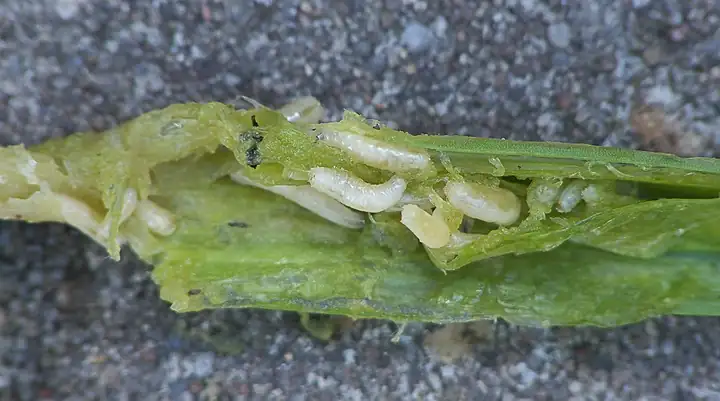
Pull up any wilted, yellowing onion seedling and look for small white maggots in the base.
When
Spring through fall, worst in late spring.
Life cycle
Pupae overwinter in the soil and in discarded onions, and adults emerge around mid-May. There are three generations a year, and the first is usually the largest and most damaging.
What to do, gentlest first
Start at the top. Sprays are a last step; always read and follow the product label.
Rotate and remove culls Prevent
Plant onions well away from last year's spot, and remove volunteer onions, discarded bulbs and debris where pupae overwinter.
Plant sets or transplants early Prevent
Plant onion sets about a week before flies emerge; transplants hold up better than direct-seeded onions.
Floating row cover Barrier
Cover beds at planting to keep egg-laying flies off.
Beneficial nematodes and fungi Natural enemies
Insect-killing nematodes and fungi are sold for root maggots.
Results are less predictable than chemical seed treatments.
No effective home spray Conventional spray
Foliar sprays do not work because the flies move in and out of the planting (Cornell, UW). Commercial growers use insecticide-treated seed or at-planting soil treatments where damage last year was over 5 to 10 percent; home gardeners should rely on rotation, cleanup and row covers.
UAF Extension says no pesticides are approved for root maggots in Alaska home vegetable gardens. Follow the label of any product you use.
Garden friends that go after it
Rove beetles
Protect these helpers: skip broad sprays when they're around.
Plants it goes after
Pressure by region
NC State says it occurs in North Carolina but is a severe problem only in northern states. Northern regions without their own source (Great Plains, Mountain, Pacific Northwest) are rated moderate, not high. UAF says certain root maggot species are a problem for onions and other alliums in Alaska, though it does not name the species, so Alaska is rated moderate. Southern, southwestern, California and Hawaii low ratings are estimates.
| Northeast | High pressure |
|---|---|
| Southeast | Low |
| South Central | Low |
| Midwest | High pressure |
| Great Plains | Moderate |
| Mountain West | Moderate |
| Southwest | Low |
| Pacific Northwest | Moderate |
| California | Low |
| Alaska | Moderate |
| Hawaii | Low |
Ratings come from extension sources where available; some are estimates, as noted above.
Sources
Photo: Photo: Rasbak, CC BY-SA 3.0, via Wikimedia Commons (CC BY-SA 3.0). Photo resized for the web.

Planting dates and advice are general guidance; check with your local Cooperative Extension office for your area.