
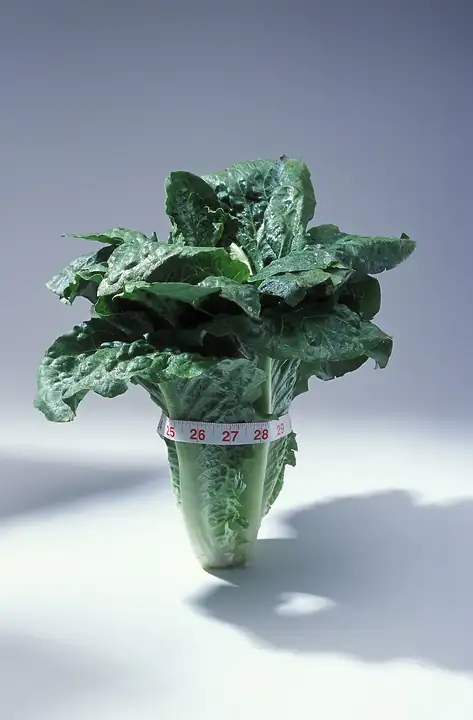
Lettuce
Lactuca sativa · Aster family (Asteraceae)
| Hardiness zones | 2 to 11 |
|---|---|
| Sun | full sun to part shade |
| Water | moderate |
| Life cycle | annual |
| Frost | Hardy: takes frost |
| Soil pH | 6.0–6.8 |
| Spacing | 8 to 12 inches |
| Days to harvest | 50 to 70 days |
| Soil temperature to plant | at least 35°F |
About Lettuce
Lettuce is a quick, cool-season salad green that comes in leaf, butterhead, romaine and crisphead types. It is happiest around 50F at night and 68F by day, and it turns bitter and bolts once summer heat arrives, so spring and fall are its seasons.
Grown as a cool-season annual in every zone; time it for the cool weather of spring or fall.
When to plant
Timing is counted from your average last spring frost (and first fall frost). Sow & Tell works out the actual dates for your ZIP code.
- Start seeds indoors: 7 to 9 weeks before the last frost
- Set out plants: 3 to 4 weeks before the last frost
- Sow seeds outdoors: 2 to 4 weeks before the last frost
- Fall planting: 4 to 12 weeks before the first fall frost
Days count from seeding: about 50 to 60 for leaf types and 60 to 70 for butterhead and romaine. Sow a short row every 10 to 14 days; seed germinates poorly above 80F, so shade late-summer sowings.
Soil
Fertile, well-drained soil rich in organic matter that stays evenly moist; the roots are shallow.
Work in compost or well-rotted manure, keep pH 6.0 to 6.8, and follow a soil test; without one, about 2 lb of balanced fertilizer such as 10-10-10 per 100 sq ft.
Feeding
- 4 weeks after transplanting, or at thinning for seeded lettuce (plants about 4 inches tall): nitrogen fertilizer such as 21-0-0, or balanced fertilizer such as 10-10-10. Use about 1/4 cup of 21-0-0 per 10 ft of row (or 1 lb of 10-10-10 per 25 ft), beside the row, and water it in.
Do not use fresh manure or weed-and-feed products.
Harvest
Cut leaf types any time the leaves are usable, before a seed stalk forms; butterheads when the leaves cup inward; crispheads when the head is firm. A center that starts to stretch upward means bolting and bitterness are coming.
Leaf lettuce: pick single leaves while small, leaving most of the plant, for several harvests until heat makes it bolt and turn bitter. Head types are cut once at the soil line; replant in midsummer for a fall crop.
Varieties (52)
| Variety | Type | Days | Notes |
|---|---|---|---|
| Muir | Batavian (summer crisp) | A heat-tolerant Batavian; Kansas State notes very strong heat tolerance. | |
| Nevada | Batavian (summer crisp) | 45 days | Broad, shiny, medium green leaves with a crunchy texture. Heat tolerant, with resistance to lettuce mosaic virus. |
| Magenta | Batavian (summer crisp), red | Red summer crisp lettuce. In North Dakota trials its leaves were more colorful and its heads fuller than a comparison variety. | |
| Sierra | Batavian (summer crisp), red | Large, upright, red-tinged Batavian for spring, summer and fall crops. Resists bolting and tipburn, and Maryland Extension says it can be grown all summer. | |
| Adriana | Butterhead | 48 days | Heat-tolerant butterhead with good tipburn resistance. Cornell lists resistance to downy mildew and lettuce mosaic virus. |
| Esmeralda | Butterhead | Lime-green, buttery heads with good yields. Slow to bolt and resists tipburn. | |
| Merveille des Quatre Saisons | Butterhead | French heirloom butterhead with green leaves tinged red. | |
| Nancy | Butterhead | 52 to 65 days | Compact butterhead with a medium head of smooth, rounded, medium green leaves. |
| Bibb | Butterhead (Bibb) | 60 days | Mild and buttery, with a tender texture. Small, loose heads of tender green leaves. |
| Buttercrunch | Butterhead (Bibb) | 64 to 75 days | Mild, with tender leaves. Bred at Cornell University; like Bibb but much larger. Slow to bolt and resists tipburn; an All-America Selections winner. |
| Summer Bibb | Butterhead (Bibb) | A Cornell Bibb type that is slower to bolt than standard Bibb, so it holds better into warm weather. | |
| Tom Thumb | Butterhead, miniature | 45 to 70 days | A miniature butterhead with small heads that is easy to grow. |
| Red Cross | Butterhead, red | Large, bright red butterhead heads with very good heat tolerance. | |
| Skyphos | Butterhead, red | 47 days | Dark red heads with green centers. Easy to grow, with large heads. |
| Yugoslavian Red | Butterhead, red-tinged | Mild flavor and smooth texture. Butterhead that does well in winter plantings in Arizona. | |
| Crispino | Crisphead (iceberg) | Iceberg-type head lettuce recommended for home gardens in Kansas and Wisconsin. | |
| Great Lakes | Crisphead (iceberg) | Medium, round iceberg heads with large, glossy green wrapper leaves, from Michigan State and the USDA. Resists tipburn. | |
| Ithaca | Crisphead (iceberg) | 72 days | Large, solid, tightly wrapped iceberg heads from Cornell University. Tolerates summer heat, is slow to bolt, and resists tipburn and brown rib. |
| Mission | Crisphead (iceberg) | 75 days | Open-pollinated iceberg with solid heads, a short core and frilly leaf edges. |
| Pennlake | Crisphead (iceberg) | Uniform, solid, early heads from the Pennsylvania Agricultural Experiment Station. Some tipburn resistance; an All-America Selections winner. | |
| Salinas | Crisphead (iceberg) | 70 days | Firm, round USDA iceberg with dull green outer leaves and a creamy interior. Resists tipburn but can get downy mildew. |
| Summertime | Crisphead (iceberg) | Slow to turn bitter in summer. Bred by Oregon State University for summer growing. Resists bolting, tipburn and brown rib. | |
| Black Seeded Simpson | Loose-leaf | 45 days | Light green, loose leaves. An heirloom that does well in early spring sowings. |
| Deer Tongue (Amish Deer Tongue) | Loose-leaf | 50 days | Rugged heirloom from the 1840s with pointed, triangular, straight-edged leaves. Resisted bolting well in North Dakota trials. |
| Grand Rapids | Loose-leaf | 43 days | Green leaf lettuce from the Ohio Agricultural Experiment Station. Kentucky Extension rates it resistant to tipburn and slow to bolt. |
| Green Ice | Loose-leaf | 45 days | Dark green, heavily savoyed leaves with a very crisp texture. Slow to bolt and resists tipburn. |
| Simpson Elite | Loose-leaf | 45 days | Bright yellow-green, broad, crumpled leaves on uniform plants. Slower to bolt than older Simpson types. |
| Slobolt | Loose-leaf | A slow-bolting Grand Rapids type released by the USDA in 1945. Resists heat and tipburn. | |
| Starfighter | Loose-leaf | 52 days | Heat-tolerant green leaf lettuce with dark green leaves and very good bolting resistance. |
| Tango | Loose-leaf | Very dark green leaf lettuce that grows in tight, upright rosettes of deeply cut, very curly, pointed leaves. | |
| Tropicana | Loose-leaf | Mild-tasting leaves. Dark green, heavy leaves form a full head. Tolerates heat and has done well in North Dakota. | |
| Waldmann's Green | Loose-leaf | Upright, fast-growing leaf lettuce that is darker green than most. Resists tipburn and is similar to Grand Rapids. | |
| Oakleaf | Loose-leaf (oakleaf type) | 45 to 50 days | Green leaves with deep lobes shaped like oak leaves. |
| Royal Oak Leaf | Loose-leaf (oakleaf type) | 48 to 50 days | A larger rosette with darker green leaves than the older Oak Leaf. Resists heat, tipburn and early bolting. |
| Salad Bowl | Loose-leaf (oakleaf type) | 48 to 49 days | Deeply lobed green leaves from a USDA Beltsville release. Very slow to bolt and holds up to heat and tipburn. |
| Red Salad Bowl | Loose-leaf (oakleaf type), red | 45 days | Red-leaved version of Salad Bowl with the same lobed, oak-like leaves. |
| Lollo Rossa | Loose-leaf, red | 53 days | Deeply ruffled, curled leaves with magenta edges and a pale green center. |
| Merlot | Loose-leaf, red | Deep red lettuce with waxy, upright, wavy-edged leaves. Maryland Extension lists it among heat-tolerant lettuces. | |
| New Red Fire | Loose-leaf, red | 48 days | Medium to large heads of dark red, ruffled leaves. Resists heat and bolting. |
| Red Sails | Loose-leaf, red | 45 to 52 days | Fast-growing, ruffled red leaves in open heads up to about a foot across. Tolerates heat and is slow to bolt; an All-America Selections winner. |
| Ruby | Loose-leaf, red | Red leaf lettuce whose deep red color holds up in conditions where other red lettuces fade. Widely adapted. | |
| Prizehead | Loose-leaf, red-tinged | 64 days | Green leaves with a bright red tinge at the edges. Resists bolting. |
| Coastal Star | Romaine | 56 days | Romaine that formed large, full heads quickly in North Dakota trials. |
| Forellenschluss (Freckles) | Romaine | Austrian heirloom romaine with medium green leaves splashed with wine-red speckles. | |
| Green Forest | Romaine | 56 days | Early, dark green romaine with smooth ribs that handle without much damage. Slow to bolt and a good choice for hearts. |
| Green Towers | Romaine | 60 days | Early, uniform romaine that grows taller than Parris Island Cos; top leaves do not curl in at maturity. Tolerates corky root. |
| Jericho | Romaine | Green romaine that forms a tall head. Noted by NC State and Maryland Extension as one of the more heat-tolerant lettuces. | |
| Parris Island Cos | Romaine | Tall, dark green romaine released in 1951 by the Clemson College Truck Experiment Station in South Carolina. Has resistance to lettuce mosaic. | |
| Valmaine | Romaine | Large, uniform, dark green romaine with slightly savoyed leaves, from the Texas Agricultural Experiment Station and USDA. Resists downy mildew. | |
| Winter Density | Romaine | A cold-tolerant romaine suited to cool spring and fall sowings. | |
| Little Gem | Romaine (mini) | 65 days | Crisp and well-flavored. An old French variety with small, upright heads of bright green leaves about 6 inches long. Fast-growing, with crisp midribs. |
| Rouge d'Hiver | Romaine, red | 60 days | French heirloom romaine with sturdy heads of reddish-bronze leaves with green veins. |
Good neighbors
Tomato, Pepper (sweet and chili), Cabbage, Sweet corn
Extension sources suggest tucking lettuce beside tomatoes, peppers, cabbage or on the shady side of corn to use space; it is not a pest-control pairing.
Pests to watch for
Aphids, Slugs, Flea beetles, Cutworms, Corn earworm (tomato fruitworm), Cabbage looper, Whiteflies, Leafminers, Grasshoppers, Tarnished plant bug, Pillbugs and sowbugs, Leafhoppers, Mole crickets, Beet armyworm, Fungus gnats, Deer, Rabbits, Voles
Diseases and problems
Aster yellows, Tipburn, Leaf spots, Hail and wind damage, Too little light (leggy plants), Bolting (going to seed), Nitrogen deficiency, Herbicide injury, Mosaic viruses, Powdery mildew, Downy mildew, Gray mold (Botrytis), Damping-off, White mold, Sooty mold, Cucumber mosaic, Impatiens necrotic spot, Lettuce mosaic, Turnip mosaic, Tomato and tobacco ringspot
In the kitchen
Eaten raw in salads, sandwiches and wraps.
Keeping it: Wash, drip or spin dry, and refrigerate in a plastic bag in the coldest part of the fridge; most lettuce keeps about 5 to 7 days. Keep it away from apples, pears and bananas, which make it brown.
Safety: If you take the blood thinner warfarin, keep the amount of leafy greens like lettuce about the same from day to day, because they are rich in vitamin K (NIH Office of Dietary Supplements).
Pets: Not listed as toxic by the ASPCA
Sources
- extension.umn.edu
- extension.usu.edu
- extension.umd.edu
- extension.unh.edu
- monroe.cce.cornell.edu
- extension.colostate.edu
- warren.cce.cornell.edu
- extension.umn.edu
- extension.umd.edu
- ods.od.nih.gov
Photo: Photo: Stephen Ausmus, USDA ARS, Public domain (USDA ARS), via Wikimedia Commons. Photo resized for the web.

Planting dates and advice are general guidance; check with your local Cooperative Extension office for your area.