
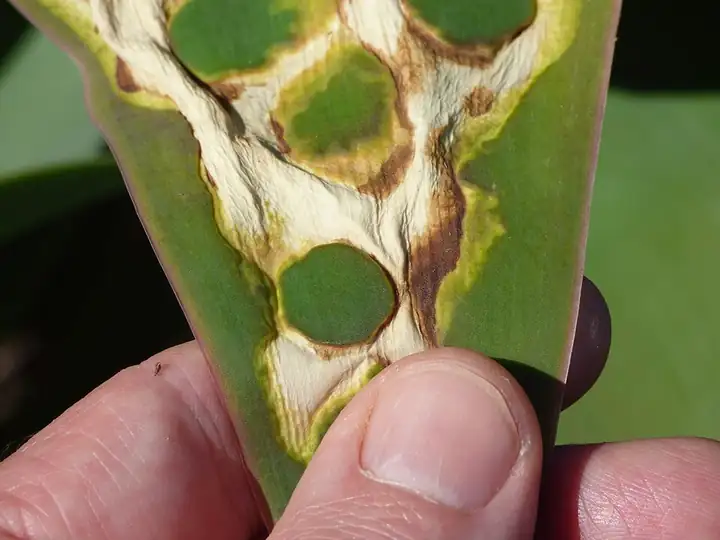
Edema (oedema)
Not an infection: roots take up water faster than the leaves can give it off, so leaf cells swell and burst
| Type | Not an infection |
|---|---|
| Cause | Not an infection: roots take up water faster than the leaves can give it off, so leaf cells swell and burst |
| When | Cool, cloudy, humid spells, outdoors or in greenhouses and sunrooms. |
About
Small blisters on the undersides of leaves that turn into tan, corky bumps. It is unsightly but does little real harm, and plants grow out of it when conditions improve.
Also called edema, oedema, intumescence, intumescences, corky bumps on leaves
How to recognize it
Symptoms
Tiny raised blisters, about 1 to 2 millimeters across, form mostly on the undersides of leaves, sometimes on upper surfaces and stems. They burst and turn tan to rusty brown and corky, and can merge into larger patches. Badly affected leaves may yellow and drop; on thin leaves the dead spots can fall out, leaving holes.
Often confused with
The corky bumps are often mistaken for an infectious leaf spot or insect damage, but edema is caused by neither and the spots don't spread. Ivy geraniums are the classic host.
Worse when
Warm, very moist soil with cool, humid, cloudy air; swings from dry to soggy soil; overwatering in overcast weather; and, in ivy geraniums, high light.
How it spreads
It does not spread from plant to plant.
When
Cool, cloudy, humid spells, outdoors or in greenhouses and sunrooms.
What to do, gentlest first
This is not an infection, so sprays for diseases won't help. Fix the cause below.
Even out the watering Prevent
Check soil with your finger and water only when it needs it, especially in cloudy, humid weather. Mulch outdoor plants to keep moisture steady, and adjust automatic sprinklers that keep beds soggy.
Lower humidity indoors Prevent
In a greenhouse or sunroom, bring the humidity down, and don't overwater during humid, overcast weather.
Leave it or pick off the worst leaves By hand
Damaged spots won't heal, but new leaves come in clean once conditions improve. Remove badly spotted leaves if they bother you.
Plants it affects
Broccoli, Cabbage, Cauliflower, Cleome (spider flower), Geranium (annual, Pelargonium), Pansy and viola, Tomato, Yew
Sources
Photo: Photo: Forest and Kim Starr / Wikimedia Commons, CC BY 2.0 (CC BY 2.0). Photo resized for the web.

Planting dates and advice are general guidance; check with your local Cooperative Extension office for your area.