
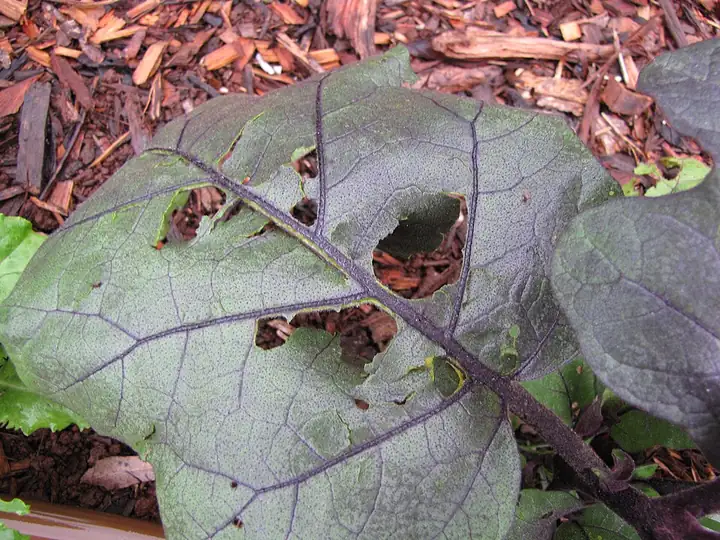
Hail and wind damage
Not an infection: hailstones and strong winds tear, bruise, break or dry out plants
| Type | Not an infection |
|---|---|
| Cause | Not an infection: hailstones and strong winds tear, bruise, break or dry out plants |
| When | Late spring and summer storms. |
About
A summer storm can shred leaves, snap stems, flatten corn and wound tree bark in minutes. Many plants grow back if some leaves survive.
Also called hail damage, hail injury, wind damage, wind injury, storm damage, windburn, lodging, sandblasting
How to recognize it
Symptoms
Hail leaves holes and tears in leaves, bruised or split stems, and wounded bark on trees; in a bad storm plants are stripped or flattened. Wind snaps stems, tips corn over at the roots or breaks the stalk, and dries leaf edges into a bleached or brown leaf burn, especially on new transplants.
Often confused with
Wind-dried leaf edges look like leaf scorch; storm damage shows up all at once, right after the storm.
Worse when
Summer thunderstorms; new transplants that haven't rooted in, young corn grown from transplants, and dry, light soils in high winds.
How it spreads
It does not spread, but wounds can let rot and canker organisms in.
When
Late spring and summer storms.
What to do, gentlest first
This is not an infection, so sprays for diseases won't help. Fix the cause below.
Harden off and plant on calm days Prevent
Harden transplants off before planting, and plant on a calm, cloudy day; new transplants that haven't rooted in are hurt worst by wind.
Transplanted corn tips over in wind more easily than direct-seeded corn.
Clean up, but leave torn leaves for now By hand
Remove broken stems and debris. Leave tattered leaves on until new growth shows, since they still feed the plant. If leafy vegetables show no new growth in about a week, replant; root crops stripped bare early won't recover.
Prune broken tree branches cleanly By hand
Cut broken branches back with proper pruning cuts, trim ragged bark edges, and water about 1 inch a week through summer with 2 to 3 inches of mulch.
Don't use paint or wound dressings. Colorado State notes severe bark wounds can lead to canker diseases; watch them through the season.
Cover before the storm Barrier
When hail is forecast, cover beds with hail netting, shade cloth, an old blanket, tarp or a bucket, held up on sturdy cages or stakes. Low tunnels or rows of rye can break the wind for young plants.
Storms often bring strong wind, so anchor covers well.
Plants it affects
Beet, Carrot, Lettuce, Petunia, Sweet corn, Zucchini and summer squash
Sources
- extension.sdstate.edu
- planttalk.colostate.edu
- planttalk.colostate.edu
- veggiescout.mgcafe.uky.edu
- sites.udel.edu
Photo: Photo: Forest and Kim Starr / Wikimedia Commons, CC BY 3.0 US (CC BY 3.0 US). Photo resized for the web.

Planting dates and advice are general guidance; check with your local Cooperative Extension office for your area.