
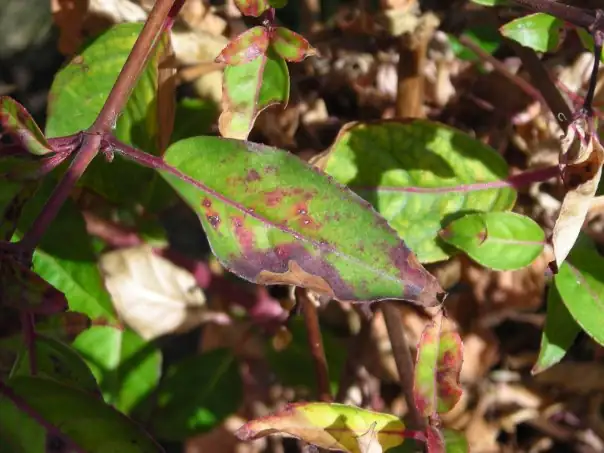
Impatiens necrotic spot
Virus (impatiens necrotic spot virus, a tospovirus) spread by thrips
| Type | Virus |
|---|---|
| Cause | Virus (impatiens necrotic spot virus, a tospovirus) spread by thrips |
| When | Year-round in greenhouses; in gardens, whenever thrips are active. |
About
A close relative of tomato spotted wilt that infects more than 600 kinds of plants, especially greenhouse flowers like impatiens and begonias, and also lettuce, tomatoes and peppers. Western flower thrips spread it, and it often comes home on new plants. Infected plants can't be cured.
Also called impatiens necrotic spot virus, INSV, impatiens necrotic spot, tomato spotted wilt virus impatiens strain
How to recognize it
Symptoms
Leaves and stems get brown, black or purple spots, rings and line patterns, and veins may turn brown. Plants are stunted, tips die back, and whole plants can wilt or collapse. Peppers may show distorted leaves and sunken rings on fruit, tomato leaflets get dark spots, and lettuce gets dead brown patches on older leaves. Some plants carry the virus for weeks before showing anything.
Often confused with
Tomato spotted wilt looks nearly the same and spreads the same way. Many other problems cause similar spots, so a lab test is needed. On mint, early signs can look like powdery mildew.
Worse when
Lots of western flower thrips, weeds that carry the virus (such as mallow, sowthistle, lambsquarters and fleabane), and new plants brought home from a greenhouse.
How it spreads
Young thrips pick up the virus while feeding on a sick plant and carry it for life, passing it on as adults, which live 30 to 45 days. It also moves in cuttings and divisions from infected plants. It is not passed from thrips to their eggs, and weeds keep it alive between crops.
When
Year-round in greenhouses; in gardens, whenever thrips are active.
What to do, gentlest first
Prevention works best; most sprays only protect healthy leaves and can't cure infected ones. Always read and follow the product label.
Inspect and isolate new plants Prevent
Check new plants for ring spots, dark vein lines and thrips before you buy. Keep new plants apart from the rest until you're sure they're healthy.
Infected plants can look healthy for a while; cyclamen can hide it for up to 2 months.
Control weeds that harbor it Prevent
Weeds such as mallow, sowthistle, lambsquarters and fleabane can carry the virus through winter. Keep them down in and around the garden, and don't raise vegetable transplants next to potted flowers.
Remove and destroy infected plants By hand
There is no cure. Throw out plants with symptoms, and don't take cuttings or divisions from them.
Sticky cards to watch for thrips Trap
Hang yellow or blue sticky cards at plant height to see when thrips are around.
Cards show when thrips are present but won't control them.
Plants it affects
Begonia, Cyclamen (florist's), Impatiens, Lettuce, Mint, Pepper (sweet and chili), Tomato
Sources
Photo: Photo: Million Moments at English Wikipedia, CC BY-SA 3.0, via Wikimedia Commons (CC BY-SA 3.0). Photo resized for the web.

Planting dates and advice are general guidance; check with your local Cooperative Extension office for your area.