
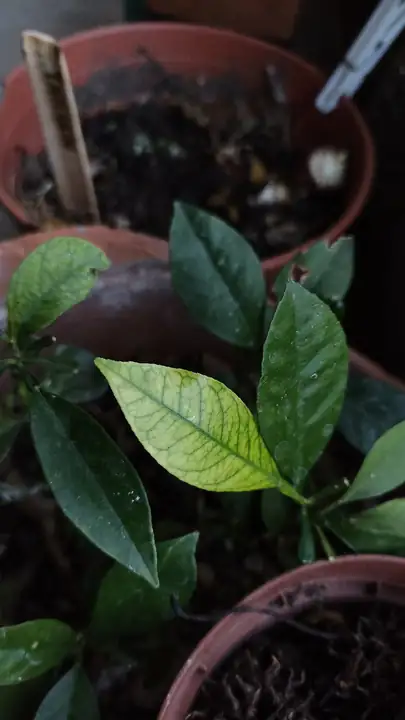
Iron chlorosis
Not an infection: plants cannot take up iron, usually because the soil pH is too high
| Type | Not an infection |
|---|---|
| Cause | Not an infection: plants cannot take up iron, usually because the soil pH is too high |
| When | Most visible in spring and summer on new growth. |
About
Yellow leaves with green veins on acid-loving plants like blueberries growing in soil that is not acidic enough. The soil usually has iron, but at high pH it is locked in a form plants cannot use.
Also called iron chlorosis, iron deficiency
How to recognize it
Symptoms
The newest leaves at the shoot tips turn yellow while their veins stay dark green. In bad cases leaves turn nearly white and then brown at the edges, and plants are stunted with poor yields.
Often confused with
Nitrogen shortage also yellows leaves, but it starts on older, lower leaves rather than the newest ones.
Worse when
Soil pH above about 5.5 for blueberries, alkaline or limey soils (common in the West), and alkaline irrigation water.
How it spreads
It does not spread from plant to plant.
When
Most visible in spring and summer on new growth.
Where
Common in alkaline soils of the West, such as much of Colorado.
What to do, gentlest first
This is not an infection, so sprays for diseases won't help. Fix the cause below.
Test pH before planting blueberries Prevent
Blueberries need a soil pH of about 4.5 to 5.5 (4.8 to 5.2 is ideal). Test the soil first, and retest yearly.
Lower pH with elemental sulfur Prevent
To drop pH by one unit, K-State suggests about 2/3 pound of sulfur per 100 square feet on sandy soil, 1 1/8 pounds on silt loam and 1 3/4 pounds on clay, worked into the top 6 inches, ideally in fall. Around established plants, apply no more than 1/2 pound per 100 square feet at a time, in March and September, until the total is reached.
It works slowly and can take up to a year to show results. In many alkaline Western soils, especially with alkaline irrigation water, sulfur often is not effective. Retest before adding more.
Feed with ammonium sulfate Prevent
When pH runs on the high side, use ammonium sulfate as the nitrogen source for blueberries.
Chelated iron (quick fix) Conventional spray
Chelated iron products applied to the soil, or iron sprays on the leaves in the cool of evening, can green plants up while pH is being corrected. Above pH 7.2, use an EDDHA-type chelate.
This treats the symptom, not the cause, and may need repeating. Iron sprays can stain concrete red. Follow the label.
Plants it affects
Apricot, Bayberry and wax myrtle, Blueberry, Edamame, Plum, Strawberry
Sources
Photo: Photo: Eiku en exil, CC BY-SA 4.0, via Wikimedia Commons (CC BY-SA 4.0). Photo resized for the web.

Planting dates and advice are general guidance; check with your local Cooperative Extension office for your area.