
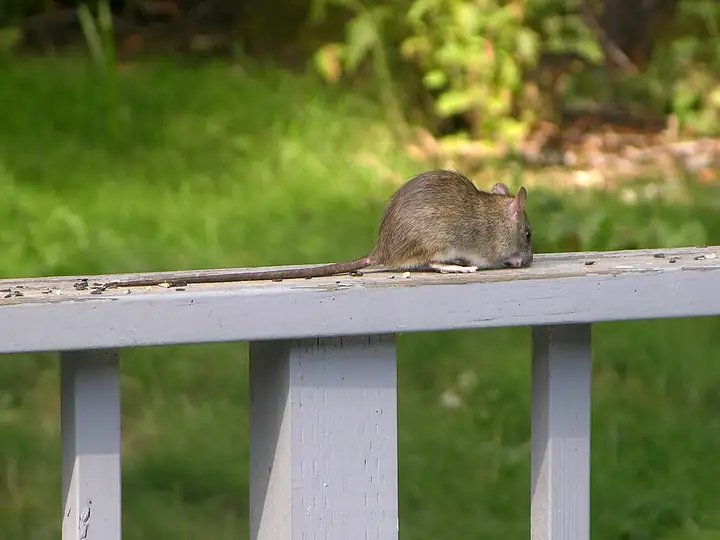
Roof rats and Norway rats
Roof rat (Rattus rattus) and Norway rat (Rattus norvegicus); the small Polynesian rat (Rattus exulans) also lives in Hawaii
| Type | Animal |
|---|---|
| When | Year-round. |
| Pressure by region | High pressure: California, Hawaii |
About
Roof rats are slim, agile climbers with tails longer than their bodies that nest in trees, shrubs, vines and attics; Norway rats are heavier and burrow along foundations and under woodpiles. Both eat ripening fruit, vegetables and stored food, and roof rats are notorious for hollowing out citrus and eating avocados right on the tree.
Spotting it
Damage
Roof rats chew a small hole in oranges and other citrus and scoop out the inside, leaving empty rinds hanging on the tree or lying on the ground. Rats also eat avocados, ripening vegetables and fruit, stored produce, pet food and birdseed, and gnaw roots, stems and wiring.
How to find it early
Look for black, banana-shaped droppings about 1/4 to 1/2 inch long, gnaw marks on fruit and nuts, hollowed citrus, and rats running along fences or utility lines at dusk.
When
Year-round.
Life cycle
A roof rat female has 5 to 8 pups per litter and up to 5 litters a year, breeding all year in warm areas. Norway rats have 4 to 6 litters a year and can raise 20 or more young.
What to do, gentlest first
Start at the top. Sprays are a last step; always read and follow the product label.
Take away food Prevent
Pick citrus and other fruit when ripe and pick up fallen fruit and nuts promptly. Store pet food and produce in rodent-proof containers, keep compost in closed rigid bins, and take down bird feeders.
Rats can gnaw through plastic bins, so check them often.
Trim and thin plants Prevent
Cut back limbs within 3 feet of the roof, leave about 2 feet between shrubs, keep ground cover under a foot tall, pull vines off fences and walls, and remove dead palm fronds where roof rats nest.
Seal openings and band trees Barrier
Seal gaps into buildings larger than 1/4 inch with steel wool, wire screen or sheet metal, and cover vents with 1/4-inch mesh. Bands of sheet metal 18 to 24 inches wide around tree trunks, set 4 feet above the soil and above nearby shrubs, keep roof rats from climbing in.
Snap traps Trap
Snap traps are the safest and most effective way to trap rats. For roof rats, set them both on the ground and up high on branches, fences and ledges; for Norway rats, set them along walls and in dark corners. Bait them unset with peanut butter, nuts or dried fruit for a while first. Set traps on trees or fences only from dusk to dawn.
Put traps inside boxes or stations where children, pets or birds could reach them, and never use glue boards outdoors. Rats can spread leptospirosis, typhus, rat-bite fever and other diseases: never touch rats with bare hands, wear disposable gloves, seal dead rats in bags, and wash well after handling traps. This guide does not recommend poison baits, which put pets, children and other wildlife at risk. In California, most uses of anticoagulant rat poisons are now prohibited (UC IPM). Check local rules before you trap.
Plants it goes after
Avocado, Banana (dwarf), Orange and blood orange, Sweet potato
Pressure by region
Roof rats are established in most coastal and southern states, in Hawaii, and in small numbers in Alaska, and their range is expanding; they reached Phoenix by 2001 and have spread to Tucson and Yuma. Norway rats live throughout the lower 48 states. California is rated high for roof rat damage to citrus and avocado, and Hawaii high because rats cause serious damage to citrus, banana and avocado there; other ratings are estimates.
| Northeast | Moderate |
|---|---|
| Southeast | Moderate |
| South Central | Moderate |
| Midwest | Moderate |
| Great Plains | Low |
| Mountain West | Low |
| Southwest | Moderate |
| Pacific Northwest | Moderate |
| California | High pressure |
| Alaska | Low |
| Hawaii | High pressure |
Ratings come from extension sources where available; some are estimates, as noted above.
Sources
Photo: Photo: Alex O'Neal, CC BY-SA 2.0, via Wikimedia Commons (CC BY-SA 2.0). Photo resized for the web.

Planting dates and advice are general guidance; check with your local Cooperative Extension office for your area.