
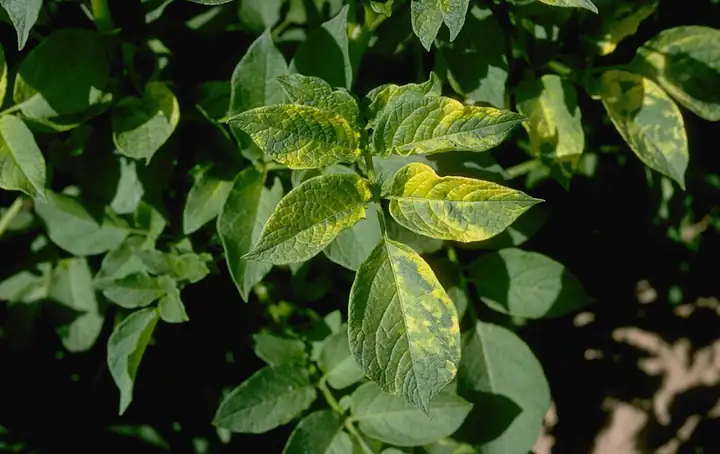
Alfalfa mosaic
Virus (alfalfa mosaic virus, an alfamovirus), spread by aphids, often from nearby alfalfa
| Type | Virus |
|---|---|
| Cause | Virus (alfalfa mosaic virus, an alfamovirus), spread by aphids, often from nearby alfalfa |
About
Alfalfa mosaic virus infects alfalfa and many other plants, including peppers, tomatoes, potatoes and beans. Aphids carry it from alfalfa fields and weeds to garden plants, so gardens next to alfalfa see it most. There is no cure, and no pepper varieties resist it.
Also called alfalfa mosaic virus, AMV, calico, potato calico
How to recognize it
Symptoms
Leaves get bright yellow to white or cream blotches in a patchy mosaic (calico), sometimes in rings or curving lines, and may curl or turn bronze. Peppers infected while young stay stunted and make small, misshapen fruit; older plants keep fruit already set but set little afterward. Tomatoes can get dead streaks in the stems and dead spots or blotches on the fruit. Potatoes show large yellow to cream leaf blotches and sometimes brown or corky areas inside the tubers. Some plants carry the virus with no symptoms.
Often confused with
Other mosaic viruses also cause yellow mottling. Bright yellow-white calico blotches are a strong clue, but a lab test confirms it.
Worse when
Planting next to alfalfa fields or having volunteer alfalfa in the garden, busy aphids, and weeds that carry the virus.
How it spreads
At least 14 kinds of aphids carry it. They pick it up after a few minutes of feeding on an infected plant and can pass it on right away, but only for a short time. It can also move through grafting, some seed, plant sap on hands and tools, and potato seed tubers.
When
Spring through fall while aphids are active; watch for odd leaf color starting in late spring.
What to do, gentlest first
Prevention works best; most sprays only protect healthy leaves and can't cure infected ones. Always read and follow the product label.
Plant away from alfalfa Prevent
Don't plant peppers or potatoes right next to alfalfa fields, and pull any volunteer alfalfa that comes up in the garden.
Start with clean seed and transplants Prevent
Use good-quality, disease-free seed and transplants, and plant certified seed potatoes.
Keep weeds down Prevent
Many weeds carry the virus, so keep them out of and around the garden.
Remove infected plants By hand
Pull plants that show strong calico blotches or that test positive. They will not recover, and removing them takes away a source for aphids.
Aphid sprays don't stop it Organic spray
Insecticides help little against this virus, because aphids pass it on within minutes, before a spray can work.
No spray cures an infected plant.
Plants it affects
Green beans (snap beans), Lavender (English), Peanut, Pepper (sweet and chili), Potato, Southern peas, Tomato
Sources
Photo: Photo: Howard F. Schwartz, CC BY 3.0 us, via Wikimedia Commons (CC BY 3.0 us). Photo resized for the web.

Planting dates and advice are general guidance; check with your local Cooperative Extension office for your area.