
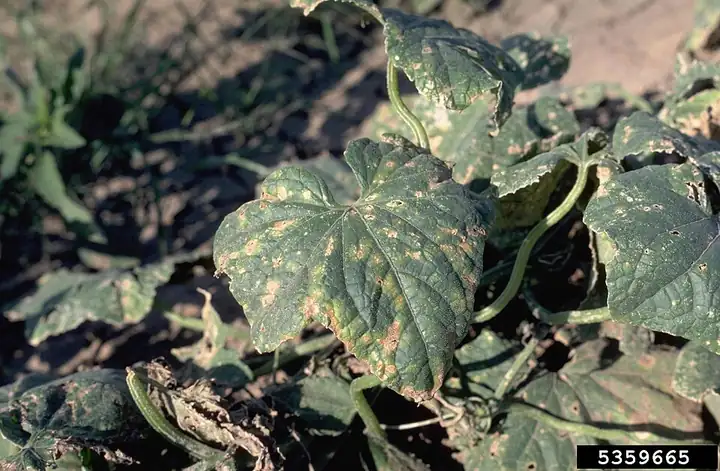
Angular leaf spot
Bacterium (Pseudomonas syringae pv. lachrymans)
| Type | Bacteria |
|---|---|
| Cause | Bacterium (Pseudomonas syringae pv. lachrymans) |
| When | Summer, during warm, rainy spells. |
About
A bacterial leaf spot of cucumbers, squash and melons that leaves ragged holes in leaves and can rot fruit. It is less common on cucumbers now because many cucumber varieties resist it.
Also called angular leaf spot, angular leaf spot of cucurbits
How to recognize it
Symptoms
Small water-soaked spots grow until leaf veins box them in, so they look angular, then turn tan to brown, often with a yellow halo. In damp weather, milky drops ooze from the spots on the leaf underside and dry to a white crust. Dead spots fall out, leaving ragged holes; fruit gets small round water-soaked spots that turn chalky white and may crack and rot.
Worse when
Warm (about 75 to 82°F), rainy, humid weather and wet leaves; two weeks of dry weather stops it.
How it spreads
Comes in on seed and survives winter in crop debris; it then spreads by splashing rain and sprinklers, insects, and hands and tools moving through wet plants.
When
Summer, during warm, rainy spells.
What to do, gentlest first
Prevention works best; most sprays only protect healthy leaves and can't cure infected ones. Always read and follow the product label.
Resistant cucumbers and clean seed Prevent
Grow cucumber varieties listed as resistant, buy clean seed, and don't save seed from spotted plants.
Rotate and water at the base Prevent
Keep squash-family crops out of that spot for at least 2 years (3 to 4 is better). Use drip or water at the base, and stay out of the patch when leaves are wet.
Clear out vines at season's end By hand
Remove and destroy infected vines and fruit after harvest.
Copper, early Organic spray
Fixed copper sprayed early, before or just as spots appear, can slow the spread.
Copper doesn't help once the disease is severe, and you can stop if it stays dry for more than two weeks. Follow the label, including days to harvest.
Plants it affects
Cantaloupe (muskmelon), Cucumber, Watermelon, Winter squash and pumpkin, Zucchini and summer squash
Sources
Photo: Photo: Howard F. Schwartz, Colorado State University, Bugwood.org / Wikimedia Commons, CC BY 3.0 US (CC BY 3.0 US). Photo resized for the web.

Planting dates and advice are general guidance; check with your local Cooperative Extension office for your area.