
Bean common mosaic
Virus (bean common mosaic virus, a potyvirus), spread by aphids and seed
| Type | Virus |
|---|---|
| Cause | Virus (bean common mosaic virus, a potyvirus), spread by aphids and seed |
| When | From seedling stage through summer. |
About
A bean virus found wherever beans grow, carried in seed and by aphids. Resistant varieties and clean seed are the main defenses, since infected plants can't be cured.
Also called bean common mosaic, bean common mosaic virus, BCMV, black root of beans
How to recognize it
Symptoms
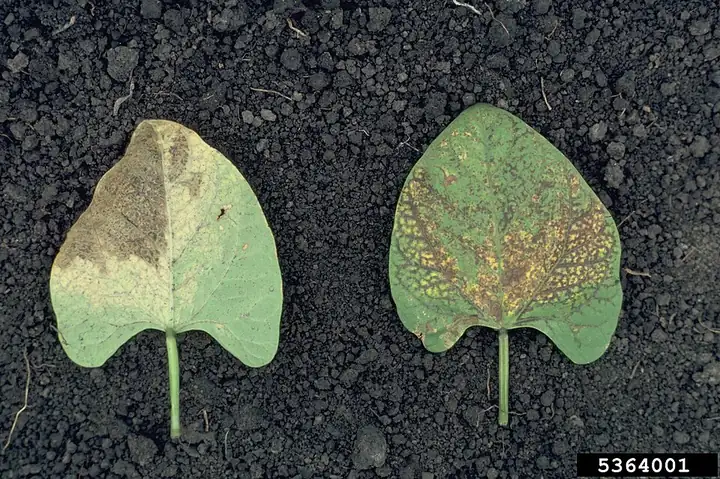
Leaves show a light- and dark-green mottle, often with darker bands along the veins, and they pucker, cup downward or turn long and narrow. Plants that start from infected seed stay small and spindly and yield poorly, and pods can be misshapen or brown-streaked. Some varieties with the I resistance gene react to certain strains by blackening inside the stems and pods and dying (black root).
Often confused with
Bean yellow mosaic and other bean viruses look much the same; a lab test is needed to name the virus.
Worse when
Infected seed and lots of aphids early in the season.
How it spreads
Carried inside seed, then moved plant to plant by aphids as they feed.
When
From seedling stage through summer.
What to do, gentlest first
Prevention works best; most sprays only protect healthy leaves and can't cure infected ones. Always read and follow the product label.
Resistant varieties and virus-tested seed Prevent
Plant virus-tested seed and resistant varieties; WSU lists BB 110, Goldrush, Oregon 54, Oregon 91G and Roma II.
No variety resists every strain.
Don't save seed from mottled plants Prevent
Because the virus rides in seed, only save seed from healthy-looking plants, or buy fresh seed.
Pull infected plants By hand
Pull mottled, stunted plants early so aphids have less virus to spread.
Aphid control (limited help) Organic spray
Keeping aphids down may slow spread a little; see the aphid page for soap and other options.
No spray cures the virus, and aphids can pass it on before a spray kills them. Follow the label.
Plants it affects
Dry beans (pinto, black, kidney, navy), Green beans (snap beans), Jicama, Tepary bean
Sources
Photo: Photo: Howard F. Schwartz, Colorado State University, Bugwood.org / Wikimedia Commons, CC BY 3.0 (CC BY 3.0). Photo resized for the web.

Planting dates and advice are general guidance; check with your local Cooperative Extension office for your area.