
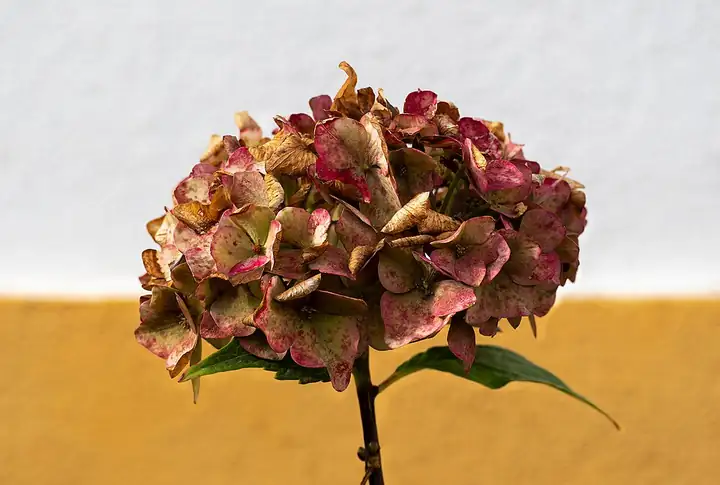
Drought stress
Not an infection: the soil is too dry, so roots cannot supply the water leaves are losing
| Type | Not an infection |
|---|---|
| Cause | Not an infection: the soil is too dry, so roots cannot supply the water leaves are losing |
| When | Summer and early fall dry spells; also dry falls and winters for evergreens. |
About
When soil dries out, plants wilt, leaf edges brown and growth stalls. Trees and shrubs can keep showing the damage for a year or more, because dry soil kills roots they must regrow.
Also called drought stress, water deficiency, drought, drought injury, underwatering, water stress, wilting
How to recognize it
Symptoms
Leaves fade, wilt and curl, then brown at the tips and edges; some turn yellow, take on early fall color or drop early. Long dry spells bring smaller leaves, fewer flowers and fruit, and branch dieback on trees and shrubs. Evergreens often wilt at the new growth, and their needles can stay green for weeks even after the plant has died.
Often confused with
Overwatering, root rot, wilt diseases, salt and herbicide injury can all look like drought. Feel the soil a few inches down: dry soil points to drought, soggy soil to overwatering.
Worse when
Long dry spells, heat over about 90°F, wind, sandy soil, new plantings with small root balls, and trees that lose lawn irrigation.
How it spreads
It does not spread, but stressed trees are more easily attacked by borers, bark beetles and canker fungi such as Cytospora.
When
Summer and early fall dry spells; also dry falls and winters for evergreens.
What to do, gentlest first
This is not an infection, so sprays for diseases won't help. Fix the cause below.
Water deeply, not often Prevent
Morton Arboretum suggests a deep soak every 10 to 14 days for established trees and shrubs in dry spells, and once a week for new plantings. Soaker hoses or drip work best; water in the morning at the base of the plant.
Frequent light sprinkles keep roots shallow. Set a can under a sprinkler: when it holds 1 inch, the soil got 1 inch.
Mulch Prevent
Spread 3 to 4 inches of coarse organic mulch out to the dripline of trees and shrubs. Keep fine mulches like grass clippings to 2 inches or less.
Keep mulch pulled back from trunks and stems.
Skip the extras during drought Prevent
Don't fertilize, transplant or prune (except dead or broken branches) while plants are drought stressed. Water evergreens well in fall before the ground freezes.
Revive wilted plants and check before removing By hand
Water wilted plants slowly and deeply right away. Before pulling a shrub that looks dead, scratch a twig: green under the bark means it is still alive and may leaf out again.
Plants it affects
Arborvitae, Flowering dogwood, Japanese maple, Red maple, River birch, Saucer magnolia, Southern magnolia, Sugar maple, Tulip tree, Yew
Sources
Photo: Photo: Jules Verne Times Two / Wikimedia Commons, CC BY-SA 4.0 (CC BY-SA 4.0). Photo resized for the web.

Planting dates and advice are general guidance; check with your local Cooperative Extension office for your area.