
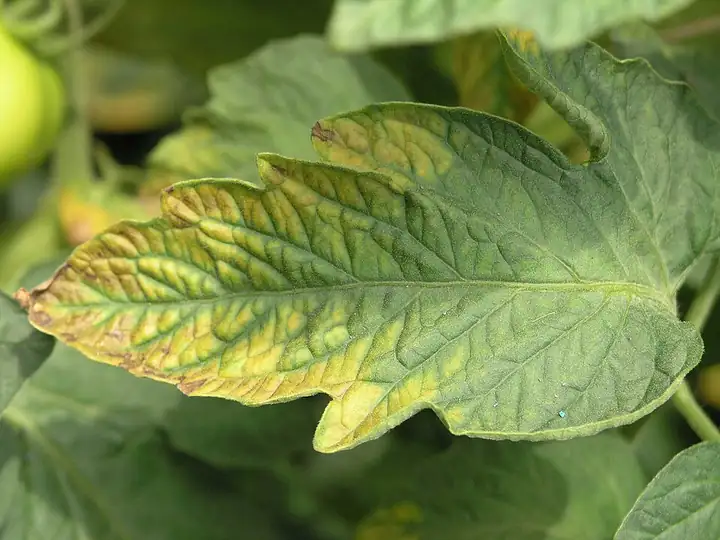
Nutrient deficiency
Not an infection: a shortage (or unavailability) of a plant nutrient in the soil
| Type | Not an infection |
|---|---|
| Cause | Not an infection: a shortage (or unavailability) of a plant nutrient in the soil |
| When | Any time of year, most noticeable during fast growth. |
About
Plants short on a nutrient show telltale yellowing, purpling or browning, often in a pattern that hints at which nutrient is missing. Many other problems look similar, so a soil test is the only reliable way to know.
Also called nutrient deficiency
How to recognize it
Symptoms
Nitrogen shortage yellows the lower, older leaves first and stunts growth. Phosphorus shortage purples leaves and stunts plants, and potassium shortage yellows and browns the edges of older leaves. Calcium, iron, sulfur and other less-mobile nutrients show first on the newest leaves, for example as curled, poorly formed young leaves or yellowing between green veins.
Often confused with
Disease, drought, waterlogging, insects, salt and herbicide injury can all mimic a nutrient problem.
Worse when
Soil that is low in a nutrient, or a soil pH that makes a nutrient unavailable (as with iron in alkaline soil).
How it spreads
It does not spread from plant to plant.
When
Any time of year, most noticeable during fast growth.
What to do, gentlest first
This is not an infection, so sprays for diseases won't help. Fix the cause below.
Soil test before you fertilize Prevent
Get a soil test through your state's Extension service and add only the nutrients and lime it calls for. Plant tissue tests can confirm a suspected shortage.
Adding fertilizer a plant does not need can cause other problems; for example, heavy nitrogen worsens blossom end rot and tipburn.
Read the pattern before treating By hand
Note whether symptoms start on old leaves (nitrogen, phosphorus, potassium, magnesium) or new leaves (calcium, iron, sulfur and others), and rule out pests, disease, watering problems and herbicide exposure.
Plants it affects
Broccoli, Cabbage, Celery, Kale, Pepper (sweet and chili), Tomato
Sources
Photo: Photo: Goldlocki, CC BY-SA 3.0, via Wikimedia Commons (CC BY-SA 3.0). Photo resized for the web.

Planting dates and advice are general guidance; check with your local Cooperative Extension office for your area.