
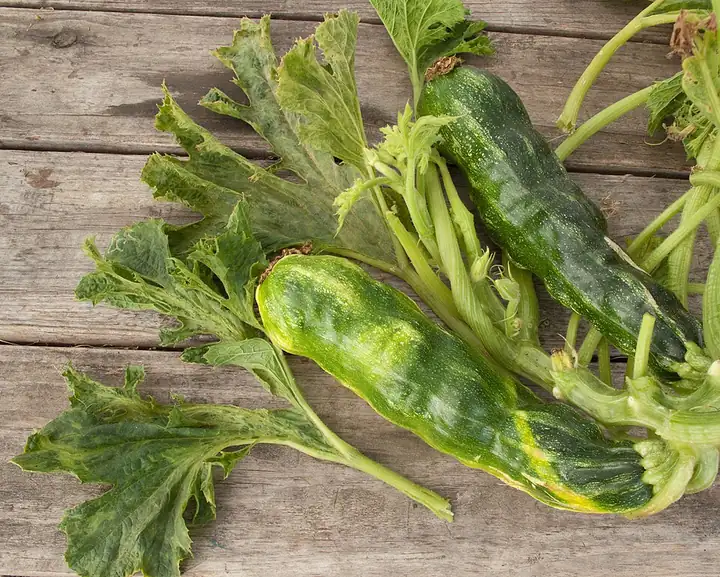
Zucchini yellow mosaic
Virus (zucchini yellow mosaic virus, a potyvirus) spread by aphids
| Type | Virus |
|---|---|
| Cause | Virus (zucchini yellow mosaic virus, a potyvirus) spread by aphids |
| When | Spring through fall, whenever aphids are active. |
About
Zucchini yellow mosaic is one of the most damaging viruses of squash, pumpkins, melons and cucumbers. Aphids pick it up and pass it on during brief feeding. Infected plants can't be cured, so resistant varieties and early removal of sick plants matter most.
Also called zucchini yellow mosaic virus, ZYMV
How to recognize it
Symptoms
New leaves show a bright yellow mosaic and grow small, puckered and badly misshapen, with dark green blisters and saw-toothed edges. Plants are stunted, with short stems between leaves. Fruit is small, lumpy and green-mottled; squash and pumpkins can grow knobs, and melons and watermelons may crack deeply.
Often confused with
Watermelon mosaic, papaya ringspot and cucumber mosaic cause very similar damage, and a plant can carry more than one. Only a lab test can name the virus; your county Extension office can help.
Worse when
Lots of aphids, weeds nearby that carry the virus, and seed or plants from infected sources.
How it spreads
Aphids such as the melon aphid and green peach aphid pick up the virus while feeding on a sick plant and can pass it on for only a short time afterward. It can also ride on seed and on tools, and it survives winter in weeds.
When
Spring through fall, whenever aphids are active.
What to do, gentlest first
Prevention works best; most sprays only protect healthy leaves and can't cure infected ones. Always read and follow the product label.
Resistant squash and zucchini Prevent
Choose yellow squash and zucchini sold as resistant to ZYMV. Some of these resistant varieties are genetically engineered.
Resistance to one virus does not protect against the others.
Clean seed and weed control Prevent
Buy certified disease-free seed and don't save seed from sick plants. Keep weeds down in and around the garden, since they can carry the virus over winter.
Pull infected plants early By hand
There's no treatment once a plant is infected. Pull and bag plants with symptoms, roots and all, and wash your hands and tools with soap and water afterward.
Reflective mulch and row cover Barrier
Silver reflective mulch can help keep aphids from landing on plants. Floating row cover keeps them off young plants.
Remove row cover when flowers open so bees can pollinate.
Oil sprays help only a little Organic spray
UConn notes that mineral oil sprays have been used to keep aphids from passing the virus while they feed. Ordinary insecticides for aphids do little, because aphids spread the virus before they die.
No spray cures an infected plant. Follow the label.
Plants it affects
Cantaloupe (muskmelon), Cucumber, Watermelon, Winter squash and pumpkin, Zucchini and summer squash
Sources
Photo: Photo: Downtowngal, CC BY-SA 4.0, via Wikimedia Commons (CC BY-SA 4.0). Photo resized for the web.

Planting dates and advice are general guidance; check with your local Cooperative Extension office for your area.