
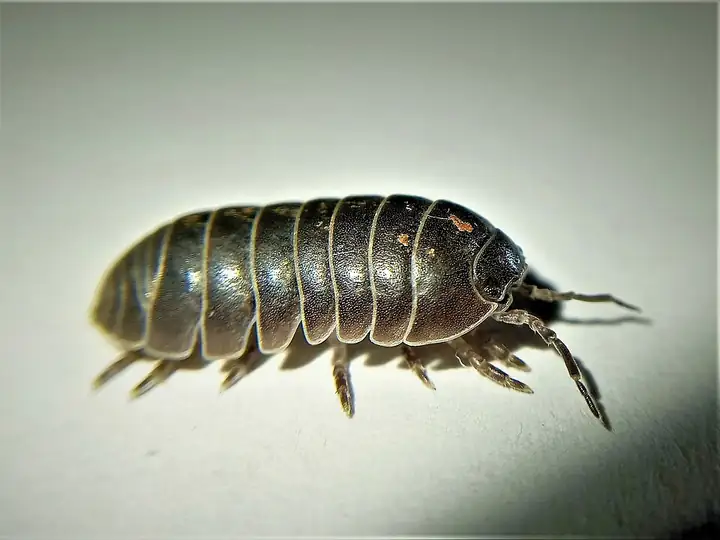
Pillbugs and sowbugs
Pillbug (Armadillidium vulgare) and several kinds of sowbugs
| Type | Crustacean (not an insect) |
|---|---|
| When | Spring through fall, especially after long wet spells. |
| Pressure by region | Low: all regions |
About
Not insects but land crustaceans with seven pairs of legs and gray, armored bodies. Pillbugs roll into a ball; sowbugs cannot. Both mostly eat decaying plant matter.
Spotting it
Damage
Now and then they chew seedlings, roots, low leaves and fruit resting on the soil, leaving ragged holes that look like slug damage.
How to find it early
Look under boards, mulch and fruit sitting on damp soil, and check seedlings at night.
When
Spring through fall, especially after long wet spells.
Life cycle
Adults overwinter and breed in spring; females carry eggs in a pouch for up to two months before the young emerge. Young take about a year to mature, there are one or two generations a year in Utah, and adults can live two to five years.
What to do, gentlest first
Start at the top. Sprays are a last step; always read and follow the product label.
Dry things out Prevent
Water less often and early in the day, switch to drip irrigation, and remove decaying debris. Keep mulch and compost back from seedlings.
Keep fruit off the soil Barrier
Use raised beds or plastic mulch, and trellis vines, so strawberries and melons do not rest on damp soil.
Usually unnecessary Conventional spray
Colorado State says controls used for millipedes, such as pyrethroids, also work, but that control is generally not needed.
Fix moisture first; sprays do little if the damp habitat stays. Follow the label.
Plants it goes after
Cantaloupe (muskmelon), Cucumber, Green beans (snap beans), Lettuce, Strawberry, Watermelon
Pressure by region
Rated low everywhere because they feed mainly on decaying matter; Colorado State says control is generally unnecessary. Hawaii's home-garden pest guide also lists sowbugs (CTAHR).
| Northeast | Low |
|---|---|
| Southeast | Low |
| South Central | Low |
| Midwest | Low |
| Great Plains | Low |
| Mountain West | Low |
| Southwest | Low |
| Pacific Northwest | Low |
| California | Low |
| Alaska | Low |
| Hawaii | Low |
Ratings come from extension sources where available; some are estimates, as noted above.
Sources
Photo: Photo: Xeroporcellio, CC BY 4.0, via Wikimedia Commons (CC BY 4.0). Photo resized for the web.

Planting dates and advice are general guidance; check with your local Cooperative Extension office for your area.