
Bacterial blights of beans
Bacteria: halo blight (Pseudomonas savastanoi pv. phaseolicola, also called P. syringae pv. phaseolicola), common blight (Xanthomonas axonopodis pv. phaseoli) and brown spot (P. syringae pv. syringae)
| Type | Bacteria |
|---|---|
| Cause | Bacteria: halo blight (Pseudomonas savastanoi pv. phaseolicola, also called P. syringae pv. phaseolicola), common blight (Xanthomonas axonopodis pv. phaseoli) and brown spot (P. syringae pv. syringae) |
| When | Late spring through summer, often after heavy rain. |
About
Three related bacterial diseases that spot bean leaves and pods. They nearly always start from infected seed, so clean, certified seed is the best defense.
Also called halo blight, common blight, common bacterial blight, bacterial brown spot, bacterial blight, bean bacterial blight
How to recognize it
Symptoms
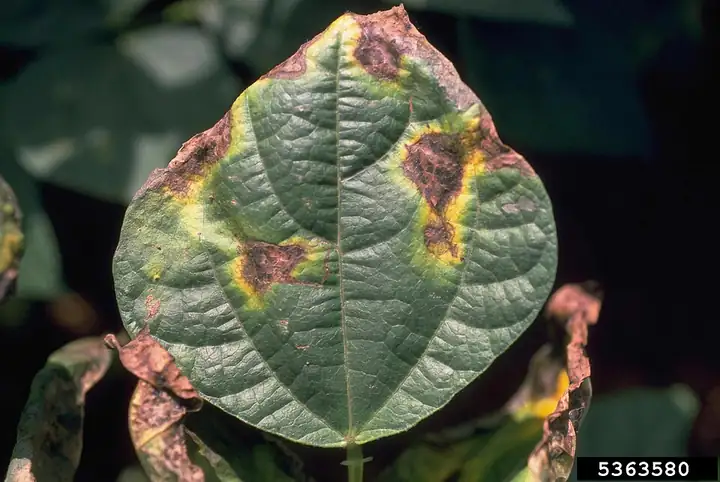
Leaves get small greasy, water-soaked spots. With halo blight the spots have a wide yellow-green halo and new growth may yellow; with common blight spots grow large and brown with bright yellow edges and dry out; with brown spot the centers fall out, leaving shot holes. Pods get water-soaked or reddish-brown spots that may ooze cream or yellow goo in damp weather.
Often confused with
The three blights look alike on pods and can be confused on leaves, since halo size changes with temperature (halos shrink or vanish above about 80°F).
Worse when
Rain, hail and overhead watering; halo blight likes cool to mild weather (60 to 80°F), while common blight likes heat and humidity.
How it spreads
Infected seed is the main source (halo blight bacteria can live in seed more than 4 years); bacteria also survive in bean debris and spread by splashing water, tools, and hands working in wet plants.
When
Late spring through summer, often after heavy rain.
What to do, gentlest first
Prevention works best; most sprays only protect healthy leaves and can't cure infected ones. Always read and follow the product label.
Certified, western-grown seed Prevent
Buy certified disease-free seed (most is grown in the dry West) and don't save seed from spotted plants.
Resistant varieties and rotation Prevent
Choose blight-resistant varieties and keep beans out of that spot for 2 to 4 years. Pull volunteer beans and weeds.
Keep out of wet plants Prevent
Water at the base instead of overhead, and don't pick, weed or handle beans while leaves are wet.
Pull infected plants By hand
Pull and destroy plants with spots and clear bean debris after harvest. Don't compost them.
Fixed copper (such as copper octanoate) Organic spray
Spray copper at the first sign of spots to lower bacteria on the leaves.
Copper protects new growth but can't cure infections, and it works less well on common blight. Bacteria can become copper resistant. Follow the label, including days to harvest.
Plants it affects
Chickpea, Dry beans (pinto, black, kidney, navy), Green beans (snap beans), Lima beans, Scarlet runner bean
Sources
Photo: Photo: Howard F. Schwartz, Colorado State University, Bugwood.org / Wikimedia Commons, CC BY 3.0 (CC BY 3.0). Photo resized for the web.

Planting dates and advice are general guidance; check with your local Cooperative Extension office for your area.