
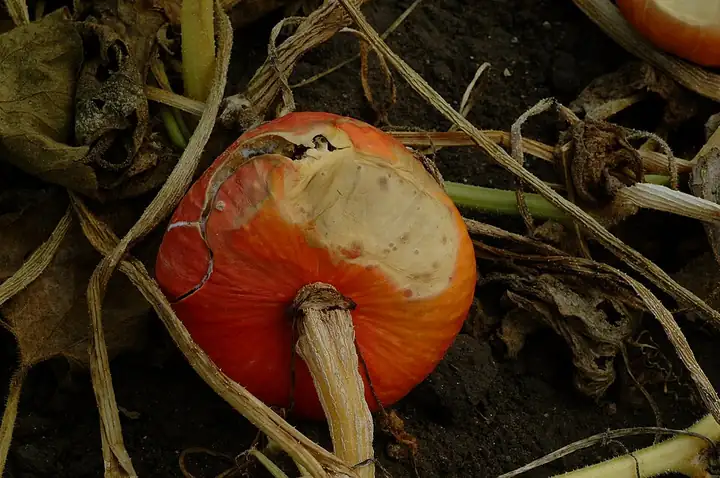
Sunscald
Not an infection: heat and strong sun injure exposed fruit, or winter sun followed by freezing nights injures tree bark
| Type | Not an infection |
|---|---|
| Cause | Not an infection: heat and strong sun injure exposed fruit, or winter sun followed by freezing nights injures tree bark |
| When | Midsummer for fruit; winter and early spring for tree bark. |
About
Sun damage that shows up in two ways: pale, papery patches on the sun-facing side of fruit such as tomatoes and peppers, and cracked, dead bark on the south or west side of young fruit tree trunks in winter. Both come from too much direct sun on unprotected tissue.
Also called sunscald, sun scald, southwest injury
How to recognize it
Symptoms
On fruit, a pale yellow to white patch forms on the side facing the sun, then flattens, turns grayish-white and dries to a papery texture; molds and rots often move in. On trees, bark on the south or west side of the trunk discolors, cracks, sinks or peels off to show dead wood underneath.
Worse when
Hot, sunny weather on fruit that lost leaf cover to disease, insects or heavy pruning; for bark, sunny winter days followed by freezing nights on young, thin-barked trees.
How it spreads
It does not spread, though damaged fruit and bark can let rot organisms in.
When
Midsummer for fruit; winter and early spring for tree bark.
What to do, gentlest first
This is not an infection, so sprays for diseases won't help. Fix the cause below.
Keep plants leafy Prevent
Grow strong plants with good leaf cover, control leaf diseases like early blight and leaf-eating insects before plants lose their leaves, and avoid pruning tomatoes too hard.
Remove damaged fruit By hand
Pick scalded fruit promptly; the damaged area is not good to eat and often rots.
Paint or wrap young tree trunks Barrier
Paint trunks of young fruit trees with white interior latex paint (diluted 1:1 with water is fine), or wrap them in late fall and remove the wrap in spring. Water trees well in fall before the ground freezes.
Use interior paint, since some exterior paints contain antimicrobial additives. Do not paint or seal wounds that have already happened.
Plants it affects
Apple (backyard tree), Cantaloupe (muskmelon), Cherry (sweet and tart), Chestnut, Peach, Pepper (sweet and chili), Plum, Tomato, Watermelon, Zucchini and summer squash
Sources
Photo: Photo: Josef Schlaghecken, CC BY-SA 4.0, via Wikimedia Commons (CC BY-SA 4.0). Photo resized for the web.

Planting dates and advice are general guidance; check with your local Cooperative Extension office for your area.