
Tomato spotted wilt
Virus (tomato spotted wilt virus, an orthotospovirus) spread by thrips
| Type | Virus |
|---|---|
| Cause | Virus (tomato spotted wilt virus, an orthotospovirus) spread by thrips |
| When | Spring through fall, whenever thrips are active. |
About
Tomato spotted wilt virus infects more than 1,000 kinds of plants and is carried from plant to plant by tiny thrips. There is no cure, so gardeners rely on resistant varieties and on removing infected plants and weedy virus reservoirs.
Also called tomato spotted wilt virus, TSWV
How to recognize it
Symptoms
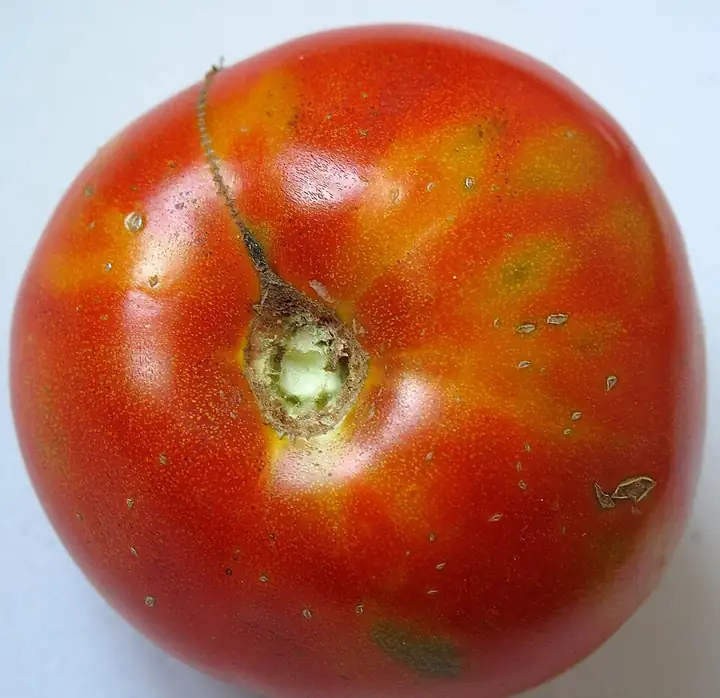
Young tomato leaves turn bronze and develop small dark spots, may cup downward, and plants stunt; ripe fruit shows yellow blotches and rings. Peppers get brown spots and pale rings on the leaves, and infected seedlings may droop at the tip.
Often confused with
Other viruses cause mottling, but bronzing of young leaves and ringed spots on fruit point to spotted wilt. A lab test confirms it.
Worse when
Large thrips populations and nearby weeds or ornamentals that carry the virus.
How it spreads
Young thrips pick up the virus while feeding on infected plants and pass it on as adults; the virus survives winter in weeds and other host plants.
When
Spring through fall, whenever thrips are active.
What to do, gentlest first
Prevention works best; most sprays only protect healthy leaves and can't cure infected ones. Always read and follow the product label.
Resistant varieties Prevent
Look for tomatoes and peppers labeled TSWV-resistant (the Sw-5 gene in tomato, Tsw in pepper).
Resistant plants are not totally immune (Clemson).
Control weeds and reflective mulch Prevent
Keep weeds down in and around the garden, mow nearby grass, and clear old crop debris. Clemson suggests silver reflective mulch to discourage thrips.
Remove infected plants right away By hand
Pull and destroy plants with symptoms so they do not feed virus to more thrips. Infected plants never recover.
Thrips sprays have limited value Organic spray
UC IPM mentions insecticidal soap for thrips and NC State mentions neem, but Clemson warns sprays may be of no use in home gardens because thrips pass the virus before they die.
Oil and soap sprays can harm bees they hit, so spray in the evening and follow the label.
Plants it affects
Begonia, Eggplant, Endive and escarole, Peanut, Pepper (sweet and chili), Potato, Ranunculus, Tomato, Vinca (annual vinca, Madagascar periwinkle)
Sources
Photo: Photo: Downtowngal, CC0, via Wikimedia Commons (CC0). Photo resized for the web.

Planting dates and advice are general guidance; check with your local Cooperative Extension office for your area.