
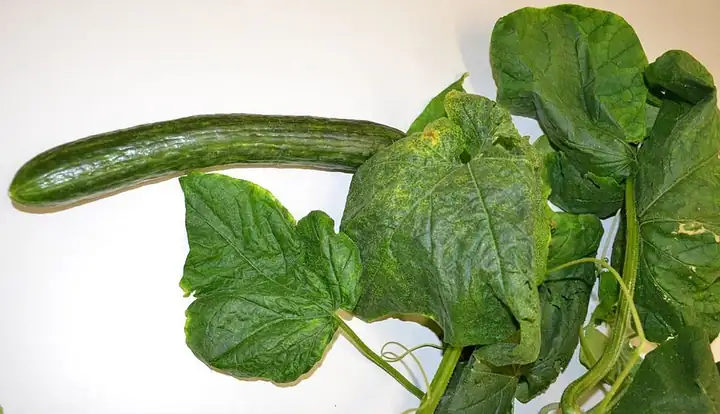
Watermelon mosaic
Virus (watermelon mosaic virus, a potyvirus) spread by aphids
| Type | Virus |
|---|---|
| Cause | Virus (watermelon mosaic virus, a potyvirus) spread by aphids |
About
Watermelon mosaic is a common aphid-spread virus of squash, pumpkins, melons and other cucurbits. It also lives in clover, alfalfa and other legumes, which keep it going from year to year. There's no cure, but resistant squash varieties and good weed control help.
Also called watermelon mosaic virus, WMV, watermelon mosaic virus 2, WMV-2
How to recognize it
Symptoms
Leaves show a green mosaic, often milder on squash than with other viruses, and may be blistered or misshapen. Yellow squash and zucchini fruit get green streaks or blotches and bumps, winter squash can grow knobby, and watermelons may be small, misshapen or spotted. Melon plants may set few fruit.
Often confused with
Zucchini yellow mosaic, papaya ringspot and cucumber mosaic look much alike, and plants often carry two viruses by late summer. Only a lab test can tell which one is present.
Worse when
Lots of aphids, and alfalfa, clover or perennial weeds nearby that carry the virus.
How it spreads
Aphids pick it up from infected weeds, clover or alfalfa and carry it into the garden during short feeding probes. It is not carried in seed. It survives winter in perennial weeds and legumes.
When
Symptoms often appear by early summer, first on plants near the edges, and become more common as summer goes on.
What to do, gentlest first
Prevention works best; most sprays only protect healthy leaves and can't cure infected ones. Always read and follow the product label.
Resistant summer squash varieties Prevent
Resistant yellow squash and zucchini are sold, and some are genetically engineered. Yellow squash with the precocious yellow gene hide green streaking, so the fruit stays usable.
Resistant winter squash and pumpkins are hard to find.
Plant away from alfalfa and clover Prevent
Keep cucurbits away from alfalfa and clover, and control perennial weeds in and around the garden.
Pull infected plants By hand
Infected plants never recover. Pull and bag plants with clear symptoms so they don't feed the virus to more aphids.
Reflective mulch and row cover Barrier
Silver reflective mulch can help keep aphids from landing on plants. Floating row cover keeps them off young plants.
Remove row cover when flowers open so bees can pollinate.
Aphid sprays help little Organic spray
Insecticides for aphids are of little use, because aphids pass the virus before a spray can kill them. UConn notes mineral oil sprays have been used to cut down on spread.
No spray cures an infected plant. Follow the label.
Plants it affects
Cantaloupe (muskmelon), Cucumber, Peas, Watermelon, Winter squash and pumpkin, Zucchini and summer squash
Sources
Photo: Photo: Dr. Jan Hinrichs-Berger, LTZ Augustenberg, CC BY 4.0, via Wikimedia Commons (CC BY 4.0). Photo resized for the web.

Planting dates and advice are general guidance; check with your local Cooperative Extension office for your area.