
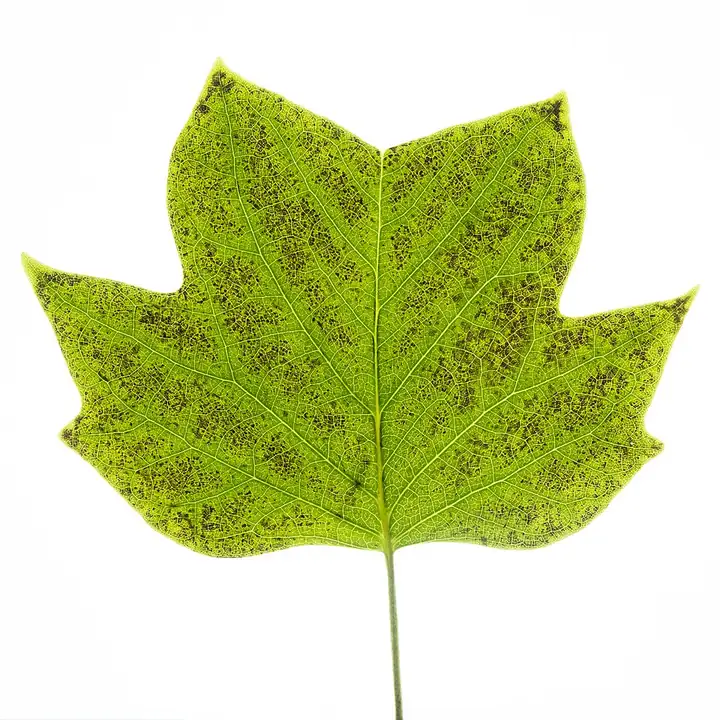
Ozone injury
Not an infection: ground-level ozone (smog) enters leaf pores and kills leaf cells
| Type | Not an infection |
|---|---|
| Cause | Not an infection: ground-level ozone (smog) enters leaf pores and kills leaf cells |
| When | Mid to late summer, after hot, sunny, still days. |
About
Ozone forms when sunlight acts on pollution such as car exhaust, and it is the air pollutant that harms plants most. Beans, tomatoes, peppers, watermelons and other squash-family crops are among the sensitive garden plants.
Also called ozone injury, ozone damage, air pollution injury, air pollution damage, ozone stipple, smog damage
How to recognize it
Symptoms
Tiny white, tan, purple or black flecks (stippling) appear on the upper side of leaves, older leaves first. Beans often show a purple-brown bronzing of the upper leaf surface, and bean pod set can suffer. Badly hit leaves bleach, die and drop; on white pine and other conifers, needles brown at the same point along each needle in a bundle and older needles drop early.
Often confused with
Spider mites, fungal leaf spots, and water, heat or nutrient stress can look similar, so ozone injury is hard to confirm. Ozone flecks sit mostly on the upper surface of older leaves and show up after hot, sunny, still days.
Worse when
Hot, sunny, still weather when smog builds, especially in valleys and basins; leaves in full sun and plants in moist, light, fertile soil are hurt more.
How it spreads
It does not spread from plant to plant. Ozone drifts in on the air, sometimes from far away.
When
Mid to late summer, after hot, sunny, still days.
Where
Worst in heavily polluted areas and in valleys and basins where smoggy air gets trapped; ozone is the most common air pollutant in the eastern US.
What to do, gentlest first
This is not an infection, so sprays for diseases won't help. Fix the cause below.
Grow tolerant varieties Prevent
Some bean varieties tolerate ozone better than others.
Keep plants healthy Prevent
Water during drought, keep nutrients balanced, and keep soil loose and well drained so plants cope better.
Garden away from heavy pollution Prevent
Where you can, grow sensitive crops away from heavily polluted spots.
There is no spray or cure for ozone injury.
Plants it affects
Cantaloupe (muskmelon), Cucumber, Eastern white pine, Green beans (snap beans), Pepper (sweet and chili), Tomato, Watermelon, Winter squash and pumpkin, Zucchini and summer squash
Sources
Photo: Photo: Michał Długosz / Wikimedia Commons, CC BY-SA 4.0 (CC BY-SA 4.0). Photo resized for the web.

Planting dates and advice are general guidance; check with your local Cooperative Extension office for your area.