
Armillaria root rot
Fungi (Armillaria species, especially Armillaria mellea)
| Type | Fungus |
|---|---|
| Cause | Fungi (Armillaria species, especially Armillaria mellea) |
About
Armillaria is a soil fungus that rots the roots and base of trees and shrubs, especially ones already stressed by drought, overwatering or leaf loss. It is common where oaks grew or woods were cleared, and there is no cure once a tree is badly infected.
Also called Armillaria root rot, armillaria root rot, Armillaria root disease, shoestring root rot, oak root fungus, honey fungus, honey mushroom
How to recognize it
Symptoms
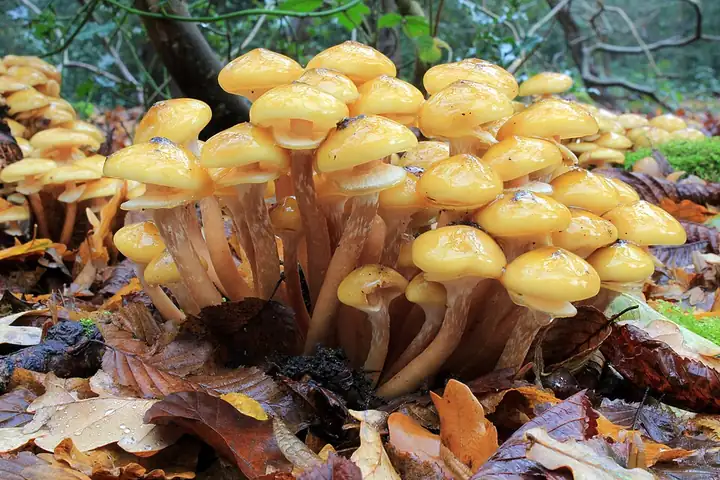
Trees slowly thin, with small yellow leaves, poor growth and branch dieback over years, or they wilt and brown suddenly. At the base, bark may crack and ooze sap; peeling bark at the root collar shows white, fan-shaped fungal mats, and black shoestring-like strands cling to roots. Clusters of honey-colored mushrooms often pop up at the trunk base in late summer or fall.
Often confused with
The black shoestring strands can be mistaken for roots, but they are darker and smoother and have no woody core.
Worse when
Stressed trees: drought, defoliation, and above all overwatering or water hitting the root collar in summer (deadly for native California oaks), plus deep planting, compaction and root damage.
How it spreads
Spreads underground from old infected roots and stumps through root contact and shoestring strands, and can survive for decades in buried dead roots; spores from the mushrooms rarely start new infections.
When
Decline shows any time in the growing season; mushrooms appear in late summer and fall.
Where
Common in California gardens; found here and there in Midwest soils, especially where oaks grew or forest was cleared.
What to do, gentlest first
Prevention works best; most sprays only protect healthy leaves and can't cure infected ones. Always read and follow the product label.
Keep trees vigorous and the root collar dry Prevent
Water deeply in droughts but do not overwater, keep sprinklers and lawn watering off the trunk base, plant at the right depth, and avoid compacting or wounding roots.
Remove old stumps and roots before replanting Prevent
Dig, grind or chip stumps and as many large roots as possible after a tree dies. Replant with less susceptible trees; Missouri Botanical Garden lists bald cypress, ginkgo, holly, maples, smoke tree and sweetgum among resistant choices.
Peach is highly susceptible; avoid it where trees have died of Armillaria.
Expose the root collar By hand
On an infected tree, UC IPM says carefully digging soil away from the base with hand tools or compressed air, so the root flare stays dry, can slow the disease. Remove dying trees and destroy infected wood.
Do not use machinery that wounds the roots. Disinfect tools with 1 part bleach to 9 parts water. No fungicide controls Armillaria.
Plants it affects
Apple (backyard tree), Apricot, Cherimoya, Cherry (sweet and tart), Chestnut, Oaks (white, red and pin oak), Peach, Plum, Surinam cherry
Sources
Photo: Photo: Stu's Images / Wikimedia Commons, CC BY-SA 3.0 (CC BY-SA 3.0). Photo resized for the web.

Planting dates and advice are general guidance; check with your local Cooperative Extension office for your area.