
Southern blight
Soil fungus (Agroathelia rolfsii, formerly Sclerotium rolfsii)
| Type | Fungus |
|---|---|
| Cause | Soil fungus (Agroathelia rolfsii, formerly Sclerotium rolfsii) |
| When | Hot, humid summer weather. |
About
Southern blight is a hot-weather soil fungus that rots plants at the soil line and attacks hundreds of crops, including tomatoes, peppers, beans, melons and sweet potatoes. Plants usually wilt suddenly and die.
Also called Southern blight, southern blight
How to recognize it
Symptoms
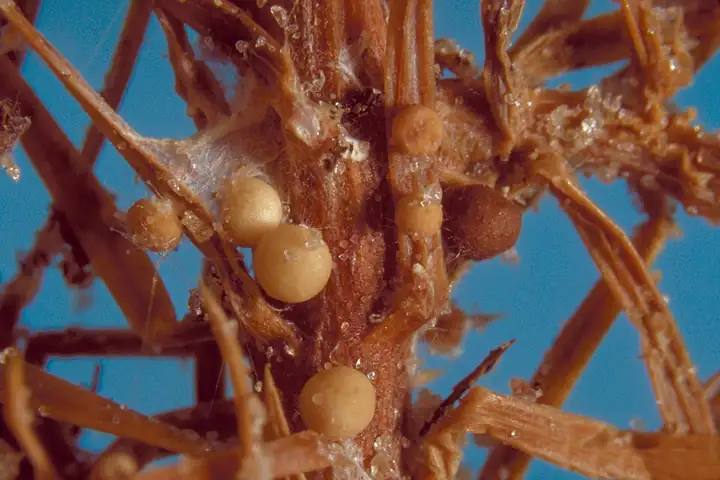
A brown to black rot forms on the stem at the soil line and can girdle it, so the plant wilts suddenly and permanently. A white, fan-like mat of fungus grows over the stem base and soil, dotted with round tan to reddish-brown sclerotia the size of mustard seeds. Fruit touching the soil can get sunken yellow spots that collapse.
Often confused with
White mold also makes white growth, but it prefers cool weather and forms larger, irregular black sclerotia.
Worse when
Hot, humid weather (77 to 95°F), moist but airy soil, and acidic soil.
How it spreads
Sclerotia survive for years in the top 2 to 3 inches of soil and in plant debris and move with soil and plant material.
When
Hot, humid summer weather.
What to do, gentlest first
Prevention works best; most sprays only protect healthy leaves and can't cure infected ones. Always read and follow the product label.
Rotate with grasses Prevent
Rotate with corn, wheat or other grass crops, and Clemson advises not planting tomatoes after beans, peppers or eggplant.
Bury debris and adjust soil Prevent
Turn infected debris deeply under to bury sclerotia, and raise acidic soil pH, since the fungus is held back above pH 7. Clemson suggests calcium nitrate at transplanting for tomatoes.
Have your soil tested before liming.
Resistant rootstocks Prevent
NC State lists tomato rootstocks with resistance for grafting.
Remove plants and nearby soil By hand
Remove infected plants along with the soil and sclerotia around the stem base, bag them, and clean up debris after harvest.
Few home options Conventional spray
Fungicides NC State lists are for commercial growers; home gardeners should rely on rotation and sanitation.
Follow the label, including which crops it may be used on and how many days to wait before harvest.
Plants it affects
Cantaloupe (muskmelon), Carrot, Eggplant, Gladiolus, Green beans (snap beans), Pepper (sweet and chili), Pineapple sage, Potato, Southern peas, Sweet potato, Tomato, Watermelon
Sources
Photo: Photo: Edward L. Barnard, Florida Department of Agriculture and Consumer Services, Bugwood.org, CC BY 3.0 US, via Wikimedia Commons (CC BY 3.0 US). Photo resized for the web.

Planting dates and advice are general guidance; check with your local Cooperative Extension office for your area.