
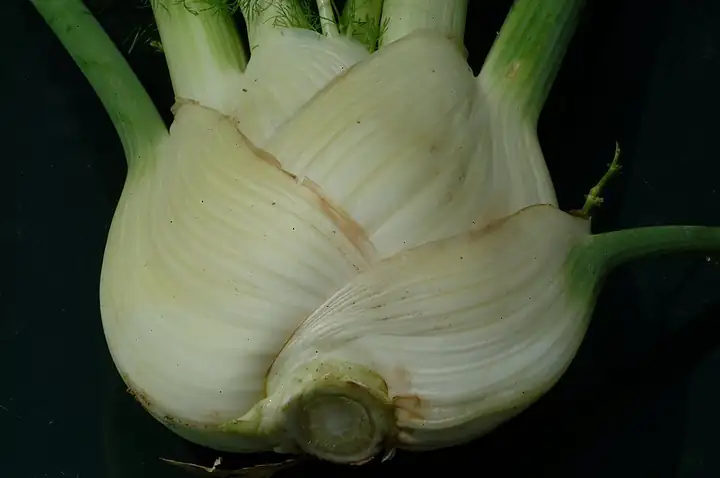
Tipburn
Not an infection: not enough calcium reaches fast-growing inner leaves
| Type | Not an infection |
|---|---|
| Cause | Not an infection: not enough calcium reaches fast-growing inner leaves |
| When | Late spring through summer as heads mature. |
About
Browning of leaf edges in lettuce, cabbage and related crops, often hidden inside the head. It happens when leaves grow faster than calcium can reach them, usually in hot weather near harvest.
Also called tipburn, tip burn
How to recognize it
Symptoms
Small dark brown spots form along the edges of inner or outer head leaves and join into dead brown margins that dry and turn papery. Damage is often inside the head where you cannot see it, and soft rot bacteria may move into the dead tissue.
Worse when
Hot weather (especially nights above 65°F) as heads form, very fast growth from heavy nitrogen, and uneven watering as the crop matures.
How it spreads
It does not spread from plant to plant.
When
Late spring through summer as heads mature.
What to do, gentlest first
This is not an infection, so sprays for diseases won't help. Fix the cause below.
Water evenly Prevent
Keep soil steadily moist as heads form, avoiding both dry spells and waterlogging.
Avoid excess nitrogen Prevent
Fertilize by soil test and do not push growth with extra nitrogen; nitrate forms are preferred over ammonium.
Adding calcium to the soil or spraying it on leaves has not reliably fixed tipburn in field tests.
Choose less-prone varieties Prevent
Varieties differ; Ithaca and Summertime lettuce are recommended in the Pacific Northwest.
Harvest on time By hand
Pick heads as soon as they are mature; tipburn is worse on overmature lettuce, and prompt harvest reduces it in cabbage family crops.
Plants it affects
Bok choy, Broccoli, Cabbage, Cauliflower, Endive and escarole, Lettuce, Napa cabbage
Sources
Photo: Photo: Josef Schlaghecken, CC BY-SA 4.0, via Wikimedia Commons (CC BY-SA 4.0). Photo resized for the web.

Planting dates and advice are general guidance; check with your local Cooperative Extension office for your area.