
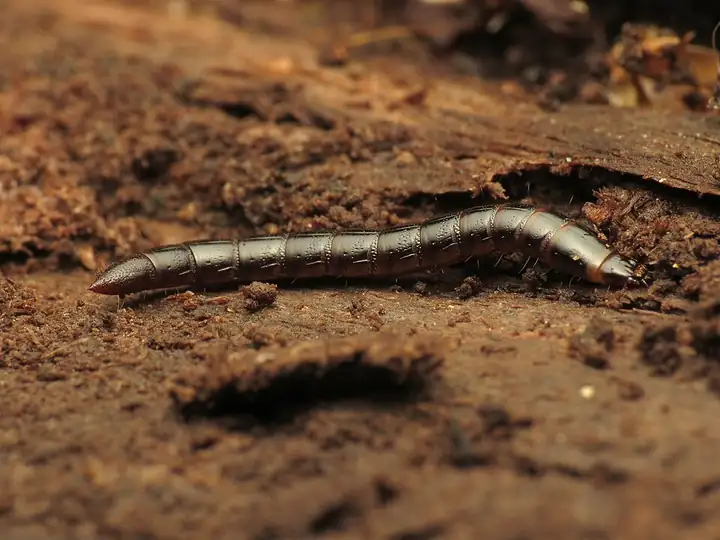
Wireworms
Larvae of click beetles (family Elateridae), such as Limonius and Ctenicera species
| Type | Insect |
|---|---|
| When | Spring through fall. |
| Pressure by region | Moderate: Midwest, Great Plains, Mountain West, Pacific Northwest |
About
Slender, jointed, yellow to brown larvae, half an inch to an inch and a half long, with three pairs of short legs. They live in the soil for years.
Spotting it
Damage
Early on they eat seeds and seedling roots, thinning stands. Later they drill small holes and tunnels into potatoes, carrots and beets.
How to find it early
Bury pieces of carrot or potato a few inches deep and check them every few days for larvae boring in.
When
Spring through fall.
Life cycle
Larvae spend two to five years in the soil before pupating from spring to midsummer. Adult click beetles lay eggs mainly in grassy areas, which is why gardens dug from lawn or sod get the worst damage.
What to do, gentlest first
Start at the top. Sprays are a last step; always read and follow the product label.
Avoid fresh sod Prevent
Do not plant potatoes or carrots in ground just converted from lawn or grass, and fix poor drainage, since wireworms like damp soil.
Rotate and till Prevent
Rotate with less-favored crops such as onions, squash and cabbage-family crops. Till in fall, or in July and August when pupae are near the surface.
Harvest potatoes early Prevent
Digging potatoes in late July or August means less damage than leaving them until September.
Carrot and potato bait traps By hand
Bury carrot or potato pieces, check every few days, and destroy the wireworms you catch.
Traps reduce numbers but do not clear a patch.
Not recommended Conventional spray
South Dakota State says insecticides are not an effective option for wireworms in gardens; rely on the steps above.
Garden friends that go after it
Ground beetles, Robber flies
Protect these helpers: skip broad sprays when they're around.
Plants it goes after
Beet, Carrot, Garlic, Lentil, Peanut, Potato, Radish, Rutabaga, Sweet potato
Pressure by region
Oregon State describes them as significant pests mainly in the Pacific Northwest and irrigated western areas, and South Dakota State reports them in gardens there. Regions without a source are rated low as an estimate, not because they are free of wireworms.
| Northeast | Low |
|---|---|
| Southeast | Low |
| South Central | Low |
| Midwest | Moderate |
| Great Plains | Moderate |
| Mountain West | Moderate |
| Southwest | Low |
| Pacific Northwest | Moderate |
| California | Low |
| Alaska | Low |
| Hawaii | Low |
Ratings come from extension sources where available; some are estimates, as noted above.
Sources
Photo: Photo: Katja Schulz, CC BY 2.0, via Wikimedia Commons (CC BY 2.0). Photo resized for the web.

Planting dates and advice are general guidance; check with your local Cooperative Extension office for your area.