
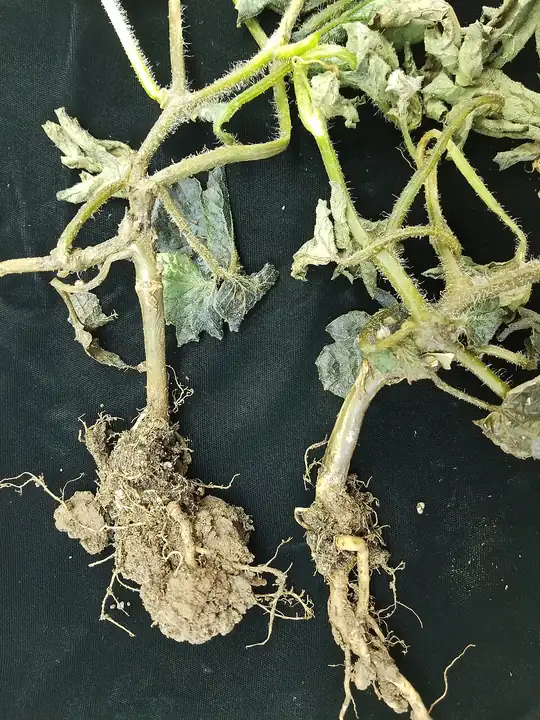
Bacterial wilt
Bacteria: Erwinia tracheiphila on cucumbers, melons and squash (spread by cucumber beetles); Ralstonia solanacearum on tomato, pepper, eggplant, potato and some flowers in warm southern soils
| Type | Bacteria |
|---|---|
| Cause | Bacteria: Erwinia tracheiphila on cucumbers, melons and squash (spread by cucumber beetles); Ralstonia solanacearum on tomato, pepper, eggplant, potato and some flowers in warm southern soils |
About
Two different bacteria share this name. In cucurbits, cucumber beetles carry the bacteria and plants wilt and die quickly; in the Southeast, a soilborne bacterium wilts tomatoes, eggplant, peppers and potatoes in hot, wet weather.
Also called bacterial wilt
How to recognize it
Symptoms
Leaves turn dull green and wilt in the heat of the day, recover at night at first, then wilt for good while often staying green; cucumbers and melons collapse fastest. In cucurbits, cut stems may show sticky threads of ooze when pulled apart; in tomatoes, a cut stem in a glass of water may stream white ooze, and the inner stem is brown.
Often confused with
Squash vine borer also wilts squash, but leaves a hole with sawdust-like frass at the base. Fusarium and Verticillium wilts start with yellowing lower leaves rather than sudden green wilting.
Worse when
Cucurbit type: many cucumber beetles feeding on young plants. Southern type: soil above 85°F, moist soil and root wounds from insects, nematodes or cultivation.
How it spreads
Cucurbit wilt bacteria overwinter in the guts of striped and spotted cucumber beetles, not in soil, and enter through feeding wounds; the southern type lives in soil and moves with water, soil and transplants.
When
Cucurbits: from the seedling stage through summer whenever beetles feed. Southern type: hot summer weather.
Where
The southern (Ralstonia) type occurs in tropical and subtropical regions, including the southeastern U.S. (NC State).
What to do, gentlest first
Prevention works best; most sprays only protect healthy leaves and can't cure infected ones. Always read and follow the product label.
Resistant plants Prevent
Watermelon resists the cucurbit type and some resistant cucurbit varieties exist. For the southern type, NC State lists resistant tomato rootstocks for grafting, and Clemson notes 'Kewalo' tomato has partial resistance.
Rotate for the southern type Prevent
Rotate tomatoes and relatives with corn, beans or cabbage for three years or more, and clean tools and tillers before moving to a new garden.
Control beetles and remove wilted plants By hand
Scout for cucumber beetles weekly and act early. Pull wilted plants right away (NC State suggests sealing them in a bag) so they do not feed more beetles or spread bacteria.
Row covers for cucurbits Barrier
Cover young cucumbers, melons and squash with floating row cover until flowering to keep cucumber beetles off.
Remove covers at bloom so bees can pollinate.
No spray cures it Conventional spray
UMN, NC State and Clemson all say no pesticide cures bacterial wilt. For cucurbits, insecticides are aimed at the beetles, not the disease; see the cucumber beetle entry.
Many beetle insecticides are highly toxic to bees. Keep them off open flowers and follow the label.
Plants it affects
Cantaloupe (muskmelon), Cucumber, Eggplant, Ginger, Marigold, Nasturtium, Pepper (sweet and chili), Potato, Sunflower, Tomato, Winter squash and pumpkin, Zucchini and summer squash
Sources
Photo: Photo: Scot Nelson, CC0, via Wikimedia Commons (CC0). Photo resized for the web.

Planting dates and advice are general guidance; check with your local Cooperative Extension office for your area.